






A snow-covered residential street at twilight with illuminated houses, bare trees, and an orange horizon glow beneath a deep blue sky.

Mini Split Installation in Marmarth, ND

Tell us about the job

Takes about a minute. No obligation.

New system or replacementMini-splitSlope County, ND
Step 1 of 2

What ZIP code is the job in?

More than half the homes in Slope County run on bottled or tank LP gas, and utility gas and electricity split most of what's left. A mini split doesn't compete with that setup, it adds to it. Most homeowners here install one to handle a room or an addition the main system can't reach well, or to get cooling where there wasn't any before. The furnace keeps doing the heavy lifting on the coldest days, while the mini split takes over the shoulder seasons and any space that runs hot or cold on its own. Worth checking whether your gas line or panel has room for the new line set and the outdoor unit's electrical needs before anything gets installed.

9 months
September through May, your system heats
2 months
July through August, it cools
9°F
the average winter night it heats against
81°F
the average summer afternoon it cools against
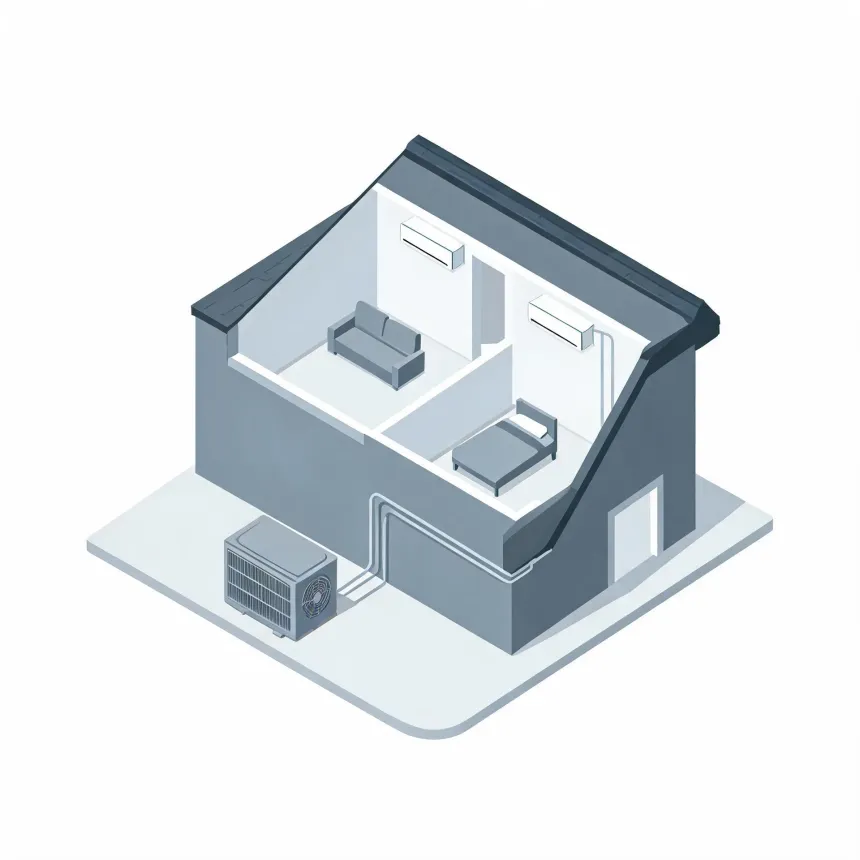
Isometric cutaway illustration of a two-room house showing two wall-mounted indoor air conditioning units connected by line sets to an outdoor condenser unit on the ground outside.
Your system heats September through May and cools July through August.

NOAA nClimDiv, 1991–2020 normals

Electricity in North Dakota ran 11.51 cents per kilowatt-hour in 2024, well below the national average.

A mini split here earns its keep by heating and cooling the room nothing else reaches well, not by cutting a power bill.

Two months of cooling a year means the outdoor unit isn't under much pressure

Cooling runs July through August
Summer afternoons average 81°F
62 damaging wind events from 2015 to 2024
Two months of cooling, easy to plan aroundCooling starts in July. June is the month to get the outdoor unit in.

Slope County sits in zone 6A, a cold climate zone with winters that run long. Any ductless mini-split put in here counts as a split-system heat pump under federal rule, so a unit built from 2023 onward has to clear 14.3 SEER2 for cooling and 7.5 HSPF2 for heating. That rule doesn't bend for ductless equipment, there's no separate minimum for it. Most mini splits sold now clear those numbers without issue, so the standard mostly narrows out older or bargain models. A system that qualifies may also open up the federal tax credit, worth checking against whichever unit you're considering before you settle on one.

Half these homes were built in 1961 or earlier. The system has to fit that house

Half the homes in Slope County were built in 1961 or earlier. A mini split doesn't ask much of a house that age, it needs a spot for the outdoor unit, a wall for the line set, and power nearby. No ducts to tie into, nothing about the rest of the house to work around. That's worth something when the house itself is the one part of this job you can't change.

Find a contractor
A man in a cap, gray shirt and tan work pants, seen from behind, carries a canvas tool bag up stone steps toward a red front door, with a potted plant beside the entry.
A beige split-system air conditioner outdoor condenser unit mounted on metal wall brackets atop a stucco wall.

Check the panel before the install, not during it

A mini split run from an older home's panel still has to pull its power from somewhere. Before the line set goes in, it's worth having the panel and the gas line checked for room, since that's the one step that can hold up the install if it gets skipped.

Where the line set runs decides a lot

The indoor and outdoor units connect through a small hole in the wall, so the distance between them and what's in the way matters. A straight run through one wall is a simple job. A run that has to turn corners, climb through a floor, or cross a longer stretch of house takes more line, more labor, and sometimes a bigger line set than the base install assumes.
One zone costs less than several

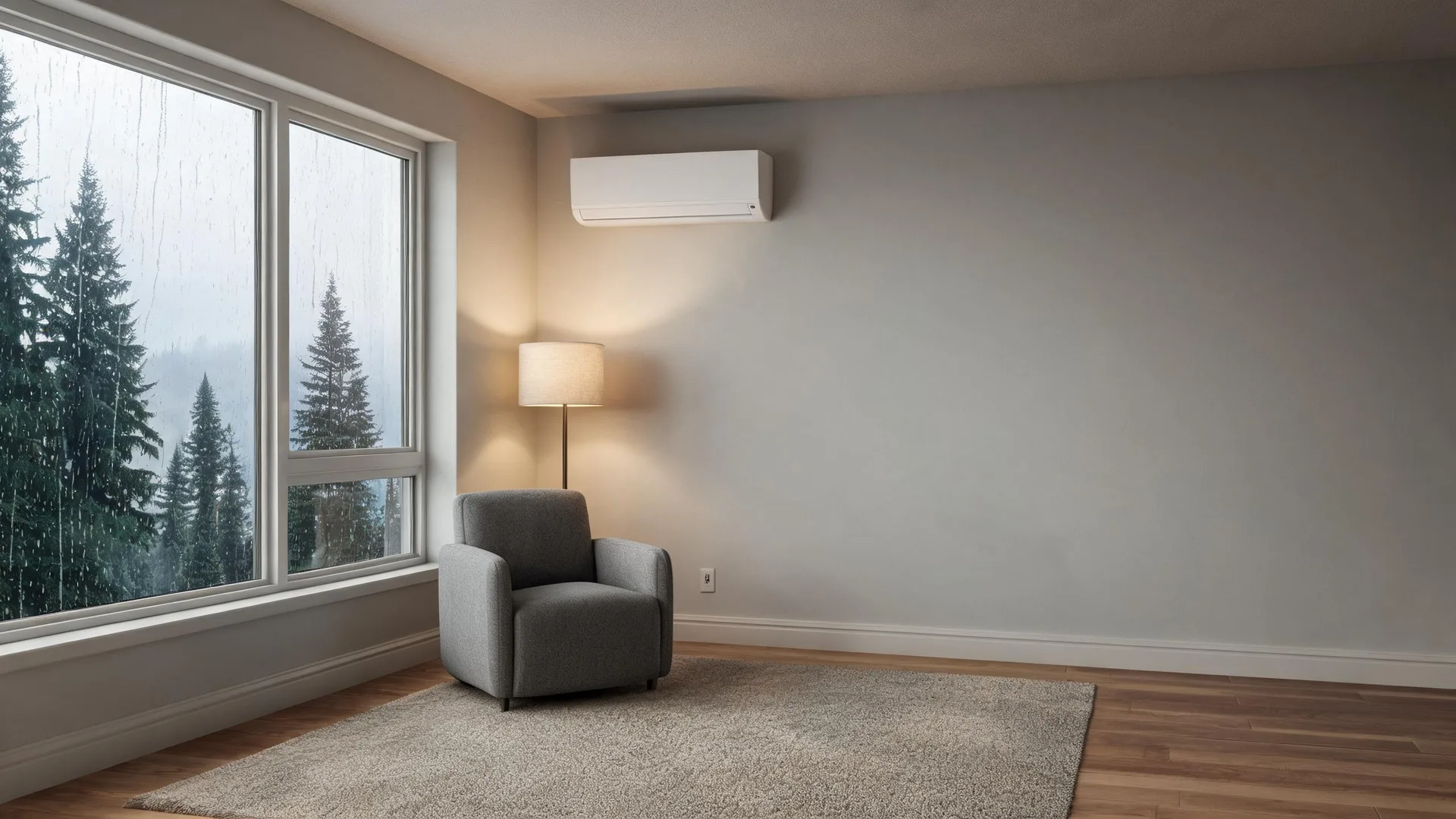
A single indoor head paired with one outdoor unit is the simplest version of this job. Once a second or third indoor head gets added to the same outdoor unit, the install needs more line set, more mounting work, and an outdoor unit sized to handle all the zones at once. Each head added after the first costs less than the one before it, but it still adds to the job.

The SEER2 number on a mini split's label is a cooling efficiency rating, not a measure of how much heat or cold it can put out. A higher number means the compressor is getting more cooling out of the same amount of electricity, so different units can cool the same room equally well and still cost different amounts to run. HSPF2 does the same job for heating. Both numbers only mean something if the unit is sized right for the space it's serving. A unit that's too big for the room will hit its target fast and shut off before it's run long enough to dehumidify or heat evenly, rating or no rating. The label tells you how the equipment performs. It doesn't tell you whether it's the right size for the job.

Install day starts outside. The contractor mounts a bracket on an exterior wall and sets the outdoor unit on it or on a pad at ground level, then drills a hole through the wall for the line set. That line set carries refrigerant lines, a condensate drain and electrical wiring between the outdoor unit and the indoor head, so it has to be run and insulated before anything gets connected. Once the indoor head is mounted and the lines are joined, the system gets evacuated with a vacuum pump to pull out air and moisture before the refrigerant is released into the lines. Skipping that step is what causes a unit to run poorly or fail early, so a careful contractor won't rush it. After that, it's a matter of powering up the system, checking refrigerant pressure, and testing the unit in both heating and cooling mode before calling the job done.