




A golden retriever sleeps on a neatly made bed in a minimalist bedroom equipped with a wall-mounted air conditioning unit.

Mini Split Installation in McClusky, ND

Tell us about the job

Takes about a minute. No obligation.

New system or replacementMini-splitSheridan County, ND
Step 1 of 2

What ZIP code is the job in?

Most homes in Sheridan County run on bottled, tank or LP gas, at 52.9 percent. Electricity heats another 36.1 percent. A mini split works alongside either setup rather than replacing it outright. In a gas-heated home, it takes over cooling and handles the shoulder months, so the furnace stays put for the coldest stretch. In an electrically heated home, it can do more of the work year round, since it moves heat instead of generating it. Either way, the install depends on where the condenser sits outside and which rooms need a line run to them.

9 months
September through May, your system heats
2 months
July through August, it cools
4°F
the average winter night it heats against
79°F
the average summer afternoon it cools against
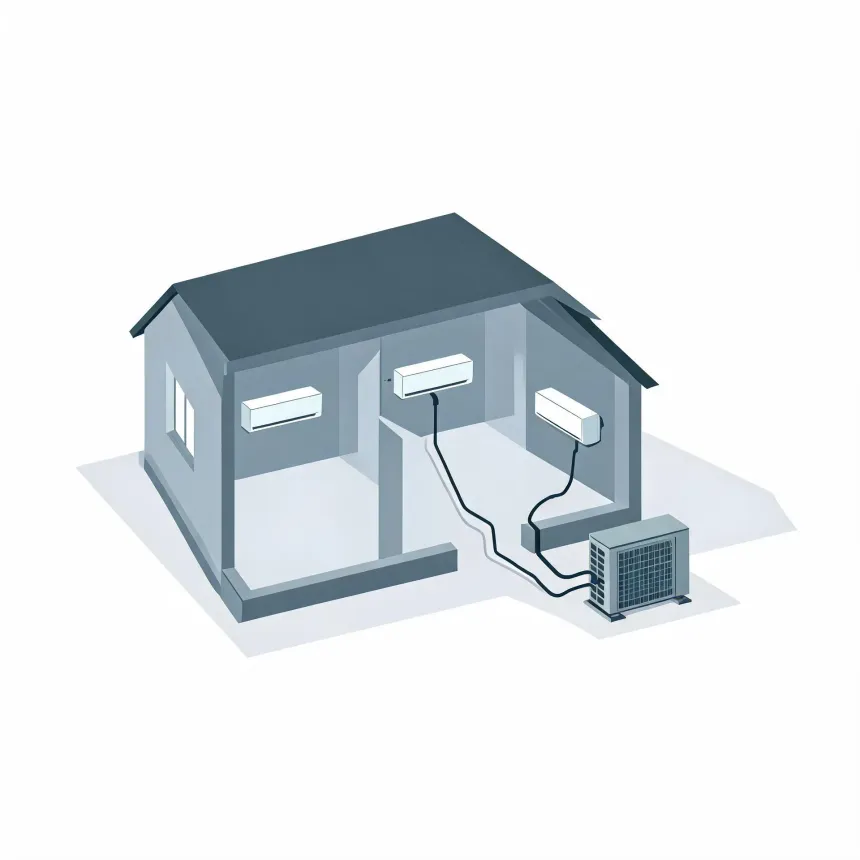
Isometric illustration of a cutaway single-story house with three wall-mounted indoor air conditioning units connected by lines to an outdoor condenser unit on the ground outside.
Your system heats September through May and cools July through August.

NOAA nClimDiv, 1991–2020 normals

Half the homes in Sheridan County were built in 1967 or earlier.

An old wall or chase was built for its own era, so the installer still has to find a clean path for the line set and drain.

Get it installed before July, so cooling is ready when you need it

Cooling runs July through August
Summer afternoons average 79°F
32 damaging wind events from 2015 to 2024

Sheridan County sits in climate zone 6A, a cold zone with winters that run long. A mini split installed here has to meet the federal minimum for a split-system heat pump. That means 14.3 SEER2 for cooling and 7.5 HSPF2 for heating, no matter who installs it or what brand it is. The standard covers the unit itself, not how it gets sized or where the lines run, so it narrows the equipment list without settling the rest of the job. There is also a federal tax credit available on qualifying equipment, separate from whatever the installer charges for labor.

Here, fit and reliability matter more than squeezing out every last point of efficiency

Electricity in Sheridan County ran 11.51 cents per kilowatthour in 2024, cheaper than most places. That changes the math on a mini split. The highest-efficiency models cost more up front and take longer to earn that back through savings here. Picking one that fits your rooms and holds up through a North Dakota winter matters more than chasing the top efficiency number.

Find a contractor
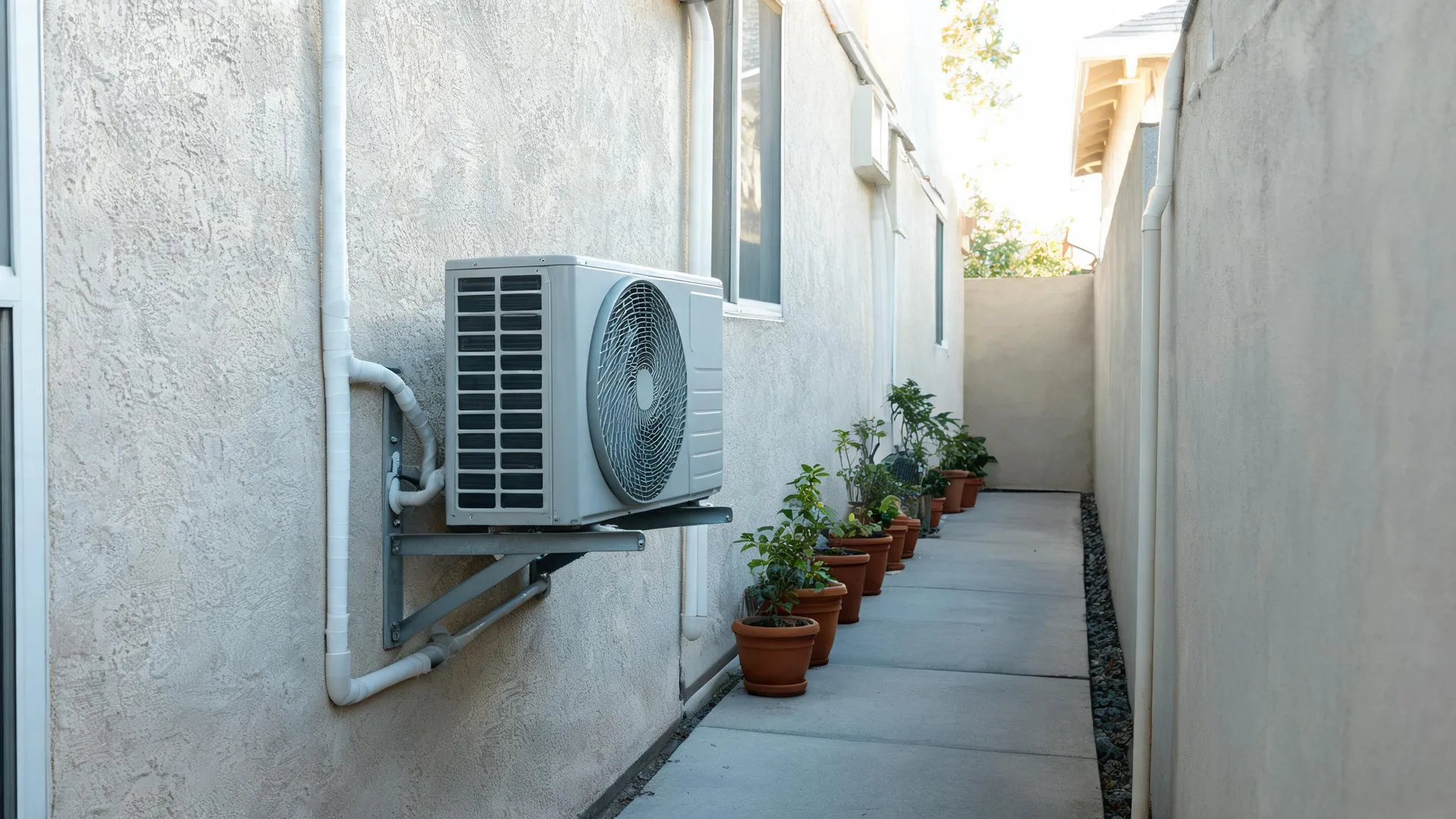
A white mini-split air conditioner outdoor condenser unit mounted on metal brackets against a beige stucco exterior wall, with a blue sky and scattered clouds in the background.

Sized to the room, not guessed at

A mini split that's too big for the room cools fast and shuts off before it pulls the moisture out of the air, so the room feels clammy even at the right temperature. One that's too small runs flat out and never quite catches up on the hottest afternoons. Sizing isn't a guess from the square footage. A contractor works out the heat load room by room, counting windows, insulation, ceiling height and which way the room faces, and sizes the indoor unit to that number. A room with a wall of west-facing glass carries a different load than one with no windows at all, even at the same size. Bigger isn't safer here. The unit that matches the load is the one that runs properly.

The rating is tested in one set of conditions

SEER2 and HSPF2 come from lab tests at set indoor and outdoor temperatures, run the same way for every unit. Your walls, your ductless lines, your exposure to wind all change what the system actually delivers. The number tells you how the equipment performs on a bench, not what your rooms will feel like.
Sizing and installation decide more than the label does

A high-rated unit installed with the wrong line length, the wrong refrigerant charge, or a condenser crammed too close to a wall will run worse than a lower-rated one put in right. The rating narrows which equipment is legal to install. Whether it actually holds that efficiency comes down to the work the installer does after the label stops mattering.

If this is replacing an old window unit or baseboard heat, that equipment usually comes out once the mini split is in, since the new system takes over the job. If it's going in alongside a furnace, the furnace stays. Nothing about a working heating system needs to change just because a mini split is handling cooling and the shoulder months now. An old window AC gets pulled from the sill and the opening gets sealed back up properly, not just stuffed with foam. Electric baseboard heaters, if they're being retired, need an electrician to cap the wiring, not just switch it off at the wall. Whatever comes out, the refrigerant lines and wiring for the new system run separately from whatever was there before.

Installation starts outside, deciding where the condenser sits. It needs clearance on all sides for airflow and a solid, level pad or mounting bracket underneath. From there, the installer runs a line set through a wall, a hole just wide enough for the refrigerant lines, the drain, and the electrical whip. Inside, the air handler goes up on a mounting plate, usually high on a wall, and gets leveled so the condensate drains the right direction. Once both ends are connected, the lines get pulled into a vacuum to clear out air and moisture before any refrigerant moves through them. That vacuum test matters more than almost anything else that day. Skip it or rush it, and moisture left in the lines causes problems months later, not on the day of install. Last comes the charge, checked against the line length, and then a run-through on both heating and cooling before anyone calls it done.