




A snow-covered residential street at twilight with illuminated houses, bare trees, and an orange horizon glow beneath a deep blue sky.

Mini Split Installation in Minot, ND

Tell us about the job

Takes about a minute. No obligation.

New system or replacementMini-splitWard County, ND
Step 1 of 2

What ZIP code is the job in?

Gas heats 56.7 percent of homes in Ward County, electricity another 34.5 percent. A mini split works alongside either one. Most people here are adding one to a room their furnace and ducts don't reach well, a bonus room, a garage, a basement finish, rather than pulling out the gas furnace altogether. The furnace keeps doing the heavy lifting through the coldest stretch, and the mini split handles the room that's always too hot or too cold, plus cooling that room all summer. That's a different job than a full system swap, and it's worth knowing which one you're asking for before a contractor quotes it.

9 months
September through May, your system heats
2 months
July through August, it cools
5°F
the average winter night it heats against
79°F
the average summer afternoon it cools against
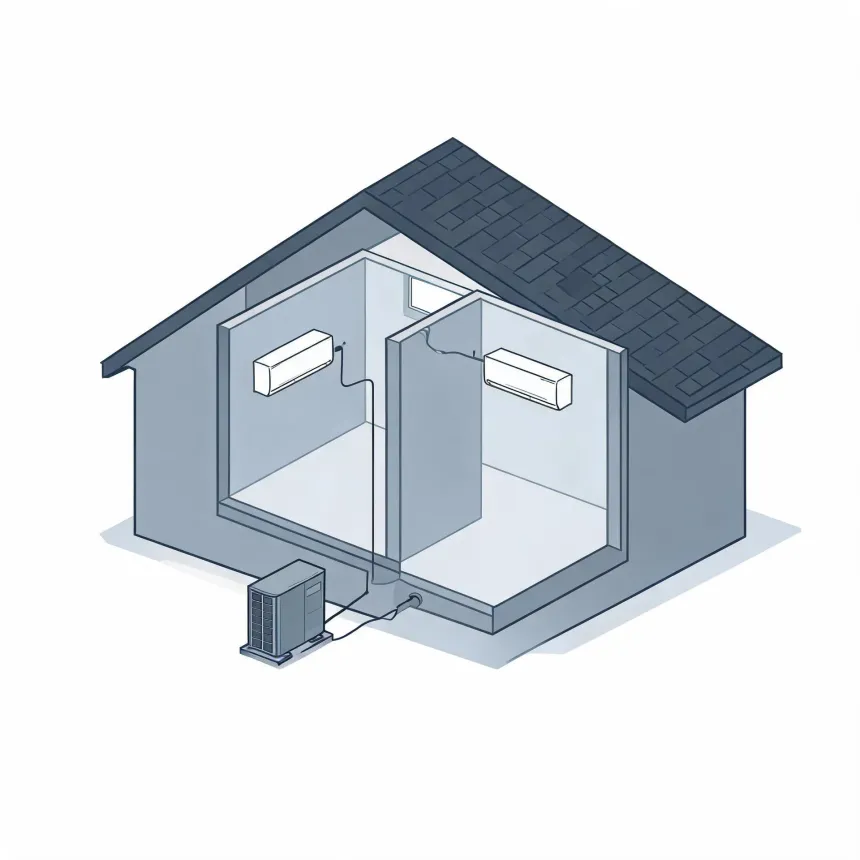
Isometric line illustration of a cutaway house with two rooms, each with a wall-mounted indoor air conditioning unit connected by lines to an outdoor condenser unit on the ground outside.
Your system heats September through May and cools July through August.

NOAA nClimDiv, 1991–2020 normals

Electricity in North Dakota runs 11.51 cents per kilowatt-hour, well below most of the country.

A mini split still costs less to run than electric resistance heat, but at this rate the highest-efficiency model won't earn back its price difference fast. Pick the unit that fits the room and holds up through a Minot winter first.

Two months of cooling means June is the month to get this installed

Cooling runs July through August
Summer afternoons average 79°F
51 damaging wind events from 2015 to 2024

Cooling only runs about two months here, July and August, with afternoon highs averaging 79. That's not much work for the outdoor unit. A mini split sized for this room won't spend the summer straining to keep up, so there's less wear on the compressor over the life of the system. The bigger risk to that unit isn't heat, it's what's in the air the rest of the year. Ward County sees hail and damaging wind on a regular basis, so where the outdoor unit sits matters as much as which one you buy. A contractor who mounts it with some cover, away from the open line of a storm, is doing more for its lifespan than a higher-efficiency model would.

Zone 7 sets the floor this system has to clear

Ward County sits in climate zone 7, so any mini split installed here has to meet 14.3 SEER2 and 7.5 HSPF2 at minimum, the same floor as any other split-system heat pump under the federal standard. That rules out the lowest-end units some suppliers still carry. It also means a system that meets code here is already built for cold, not just rated for it.

Find a contractor
A beige split-system air conditioner outdoor condenser unit mounted on metal wall brackets atop a stucco wall.

A pressure test you don't see is the part that decides if this lasts

Install day itself is short. The line set gets run, brazed at both ends, then pressure tested with nitrogen before anyone puts refrigerant in it. That test holds overnight or for a few hours, long enough to catch a slow leak before it becomes a problem. Only after it holds does the system get charged and switched on. Skipping that wait doesn't show up the day the unit goes in. It shows up later, as a charge that's slipped low and a system that runs but can't hold the room where it should.

Ask what happens at the coldest point outside

Every heat pump loses capacity as the outdoor temperature drops, and below a certain point it can't keep up on its own. Ask the contractor what this unit still puts out at the coldest stretch of winter, not just its rating at a mild temperature. Ask what takes over when it falls short, whether that's a furnace, a backup coil, or nothing at all. A unit that sounds fine on a spec sheet can still leave that room cold on the nights it matters most.
Ask who sized the room, not just the house

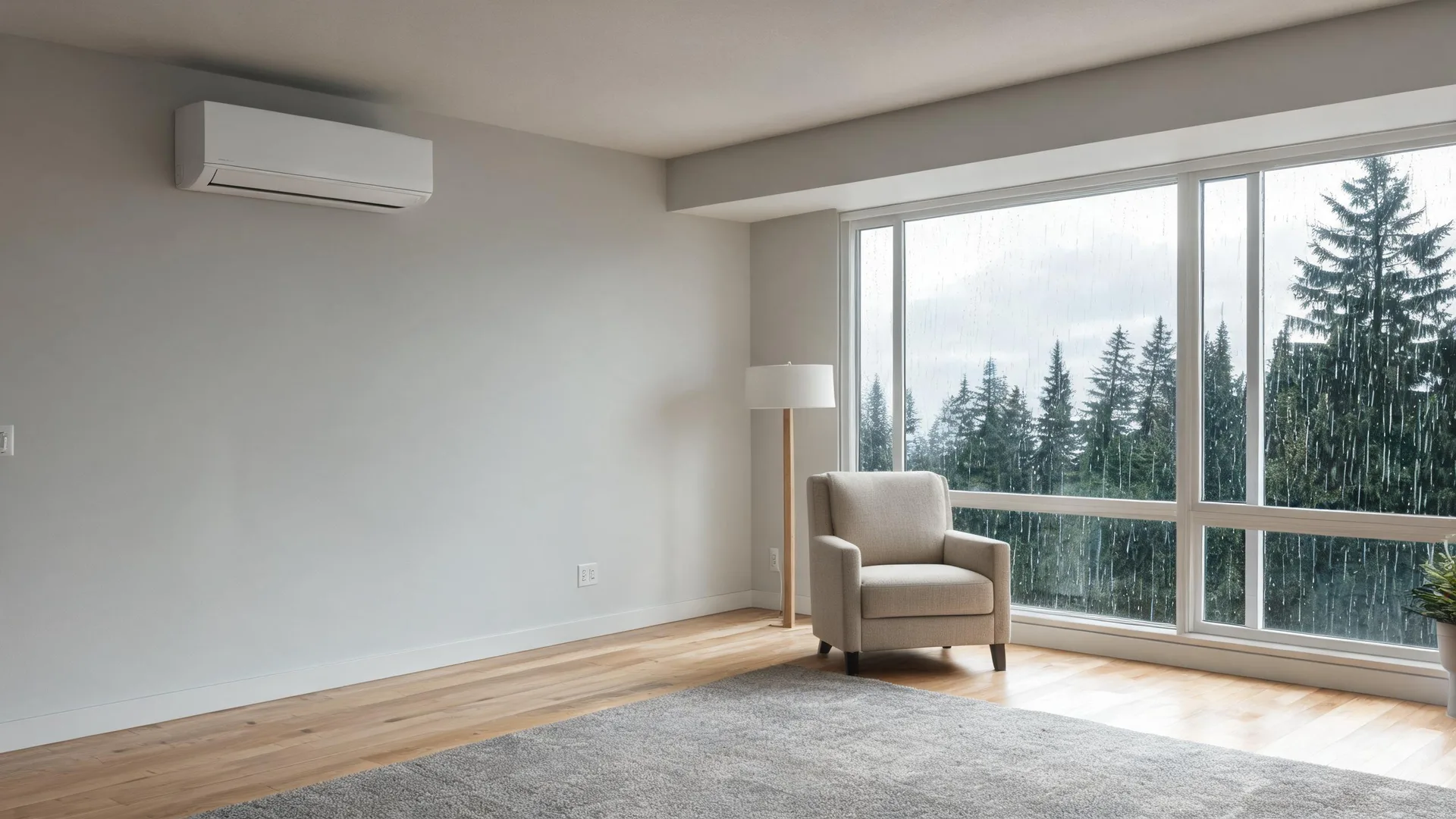
A mini split is sized to the room it's heating and cooling, not to a general rule of thumb. Window count, ceiling height, and what's on the other side of the walls all change the number. Ask how the contractor arrived at the size they're quoting, and be wary of an answer that comes fast and generic. A unit sized too big will short cycle and struggle to pull moisture out of the air in summer. One sized too small will run constantly and still lose ground on the coldest or hottest days.

Since this is going into a room the furnace doesn't reach, there's usually no old system to deal with. No line set to drain, no old refrigerant to recover, no thermostat wiring to pull out. If the room has a window unit or a space heater doing the job now, that just gets unplugged once the mini split is running. The only teardown involved is on the wall where the indoor unit goes, a small hole for the line set and a mounting bracket. If a contractor is pulling out an existing ducted system as part of this job, ask separately how they handle the old refrigerant. It can't be vented into the air, it has to be recovered with a pump and taken offsite, and that's a different scope than a simple add-on install.

What you're paying for with a mini split is mostly the line set and the labor to run it, not the box on the wall. The indoor and outdoor units connect with refrigerant lines that have to be run through a wall, insulated, and brazed at both ends, then the whole line set gets pressure tested before it's charged. A straight shot through an exterior wall is quick work. A line set that has to travel through an attic, drop down inside a wall cavity, or cross around framing takes longer and costs more, even though the unit itself hasn't changed. Electrical matters too. The outdoor unit needs its own circuit, and if the panel doesn't have room for one, that's its own job before the mini split goes in at all. Multi-zone systems, where one outdoor unit feeds more than one indoor head, add another line set and another indoor unit to mount for each zone. None of this shows up on the price tag of the equipment. It shows up in how much work the walls and the panel demand before the system can run.