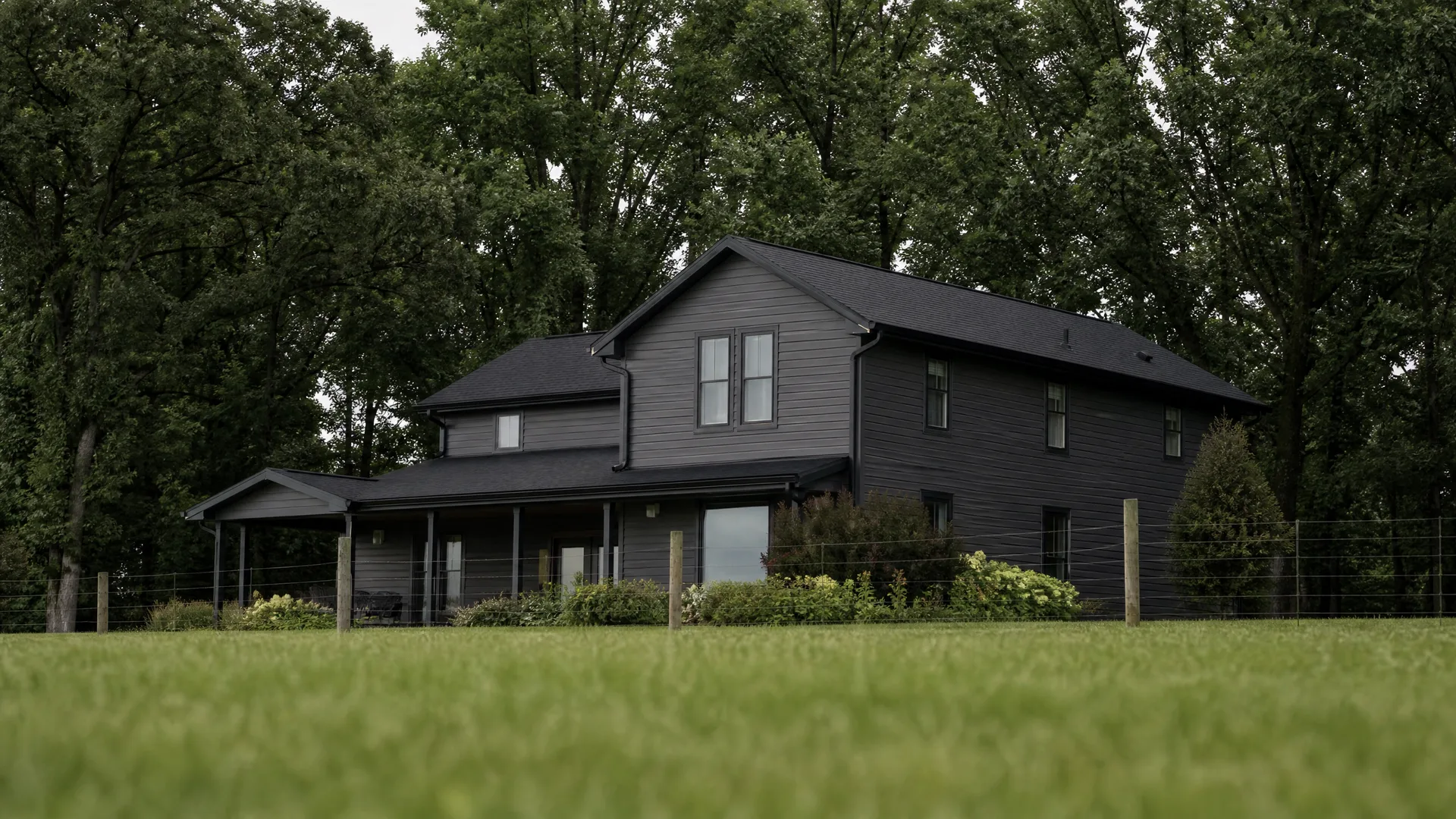





A two-story black-clad house with a wraparound covered porch stands in front of tall deciduous trees, behind a wire fence and a mown grass lawn.

Mini Split Installation in New Town, ND

Tell us about the job

Takes about a minute. No obligation.

New system or replacementMini-splitMountrail County, ND
Step 1 of 2

What ZIP code is the job in?

Electric heat leads in Mountrail County, at 43.9% of occupied homes. Another 31.4% run on bottled or LP gas, and utility gas covers 21.0%. A mini split fits well against that mix because it runs on electricity like most of the furnaces and baseboard setups already here. For a home on LP, swapping in a mini split for heating can mean using less propane, or none at all, outside the coldest stretches. Either way, the wiring question matters more here than the gas line question. Ask what your panel can support before you settle on a system size.

10 months
September through June, your system heats
2 months
July through August, it cools
4°F
the average winter night it heats against
79°F
the average summer afternoon it cools against
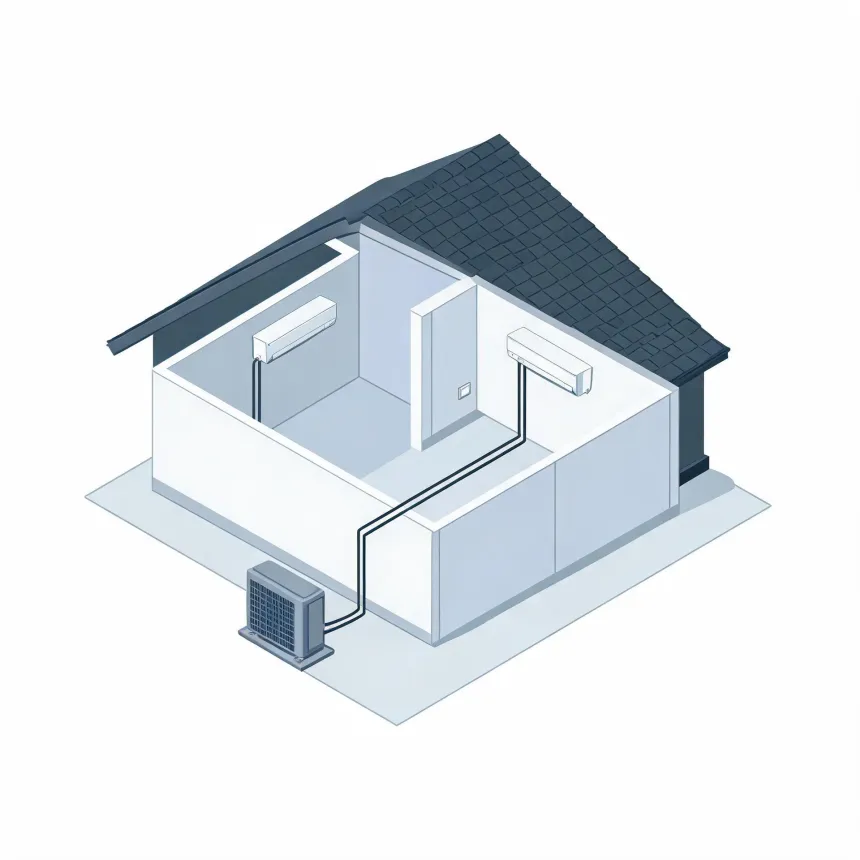
Isometric cutaway illustration of a small house with a dark shingled roof, showing two wall-mounted indoor air conditioning units in separate rooms connected by lines to an outdoor condenser unit on the ground outside.
Your system heats September through June and cools July through August.

NOAA nClimDiv, 1991–2020 normals

Cooling runs about two months a year here, July and August, with afternoon highs averaging 79°F.

A mini split here isn't fighting heat most of the year, so a mid-range unit will hold up fine.

June gets it installed before July needs it

Cooling runs July through August
Summer afternoons average 79°F
59 damaging wind events from 2015 to 2024
Built for this gridNorth Dakota power ran 11.51 cents per kilowatt-hour in 2024

If the old system is a window unit or wall sleeve, it comes out when the mini split goes in, and the opening gets sealed or patched. If it's a central system with ducts, those ducts usually stay. They're not wasted. A tech can cap off a zone or leave the old furnace and air handler in place as backup heat, especially if the home was running on propane and the mini split is there to carry most of the load. An old heat pump or AC condenser outside gets disconnected and hauled off, along with its line set if it's not being reused. Reusing the old line set is possible but not common, since mini splits run different tubing sizes and refrigerant amounts than a central system. Anything with refrigerant in it has to be recovered properly before it's removed, not just cut loose.

Pick it for fit, not for the power bill

At 11.51 cents a kilowatt-hour, a pricier high-efficiency model won't earn its keep fast here. Put the weight on sizing it right for this house and getting it installed well. That's what decides how it runs for years, not the SEER2 number on the box.

Find a contractor
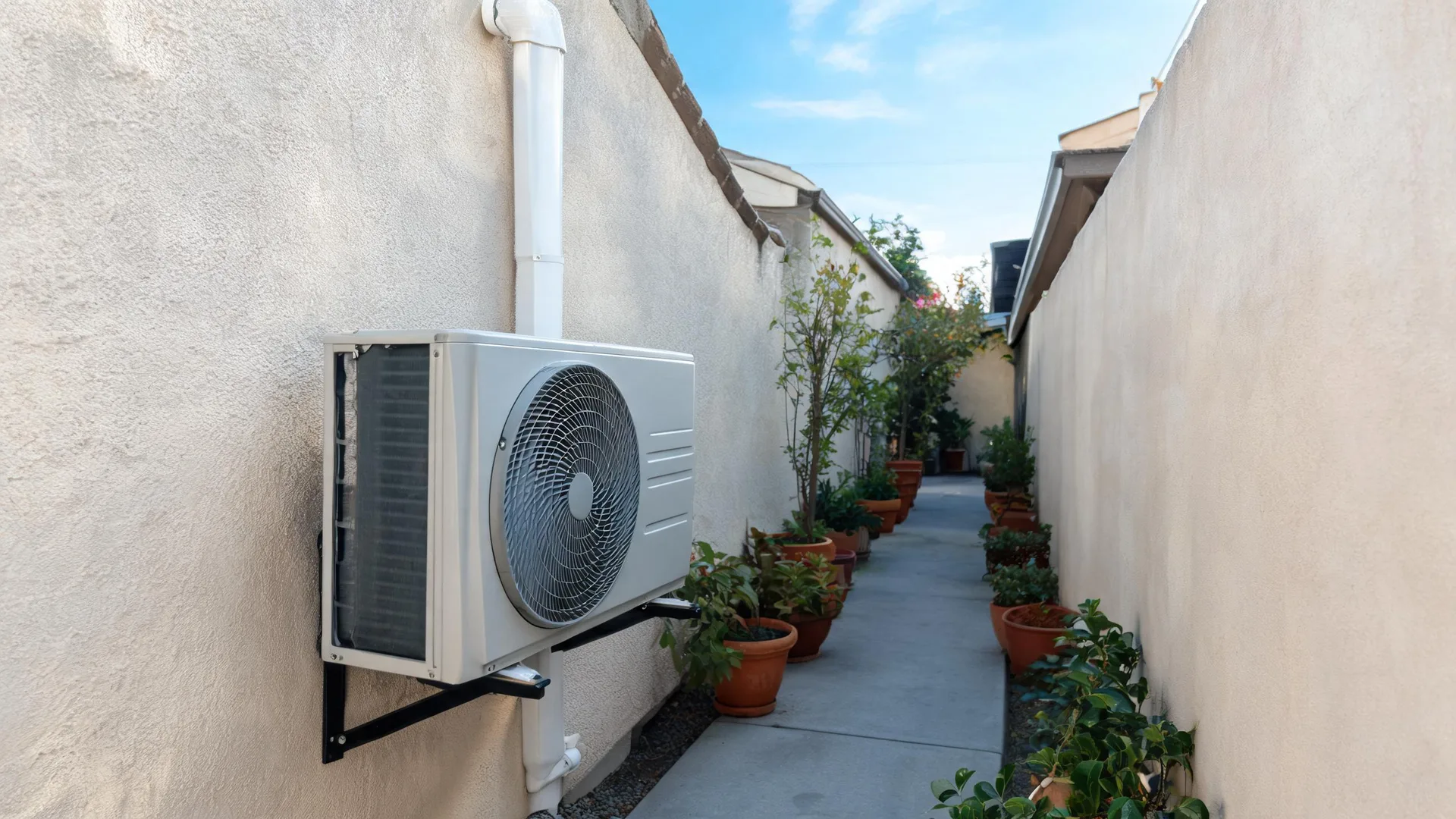
A white outdoor air conditioner condenser unit mounted on metal wall brackets against gray horizontal siding, with a blue sky and white clouds behind it.

On through the day, off most of the summer

Heating is the long job here, not cooling. A mini split earns its keep in the shoulder months, then rests through July and August before winter runs it hard again. That kind of year means the compressor spends most of its hours either off or working well under what it is rated for. When a part does fail, it is more likely age or something left unserviced than the unit being worked past what it can take. A mid-range system can carry this cycle for years without needing the top-tier build.

Ask what each zone is rated for, not just the whole system

A mini split system is really a set of indoor heads tied to one outdoor unit, and each head has its own capacity. A contractor sizing the job should walk through each room with you, not just quote a total number for the house. If one zone is undersized, that room runs cold or warm no matter how well the rest of the system performs.
Ask how many indoor heads the outdoor unit can actually run well

Outdoor units are built to support a certain number of zones at once. Pushing a system to its maximum zone count can mean every head gets a little less capacity when all of them are calling for heat or cooling at the same time. A good contractor will tell you where the unit sits against that limit, not just whether it technically fits.

Sizing a mini split means matching each indoor head to the room it serves, not just adding up square footage for the house. A contractor works out the load for a room by looking at its size, how many windows it has, which way it faces, and what sits above and below it. Get it too big and the unit short cycles, reaching the set temperature fast and shutting off before it's pulled any moisture out of the air, so the room feels cold and damp instead of comfortable. Get it too small and it runs flat out without ever catching up on the hottest or coldest days. Neither mistake shows up on a spec sheet. It shows up in how the room feels once the system is running.

What drives the price on a mini split job is mostly labor, not the equipment sitting in the box. Running a line set between the outdoor unit and each indoor head means drilling through the wall, routing refrigerant lines, a drain line, and power, then insulating all of it so the line set doesn't sweat inside the wall cavity. More indoor heads means more of that work repeated, not just more hardware. Where the outdoor unit can sit matters too. A long run between indoor and outdoor units, or one that has to go up a floor or around obstacles, takes more time and material than a short, straight shot. Electrical work adds to it as well, since most systems need a dedicated circuit and sometimes a new breaker. None of this shows up when you're just comparing unit specs side by side, but it's where the real difference between quotes usually comes from.