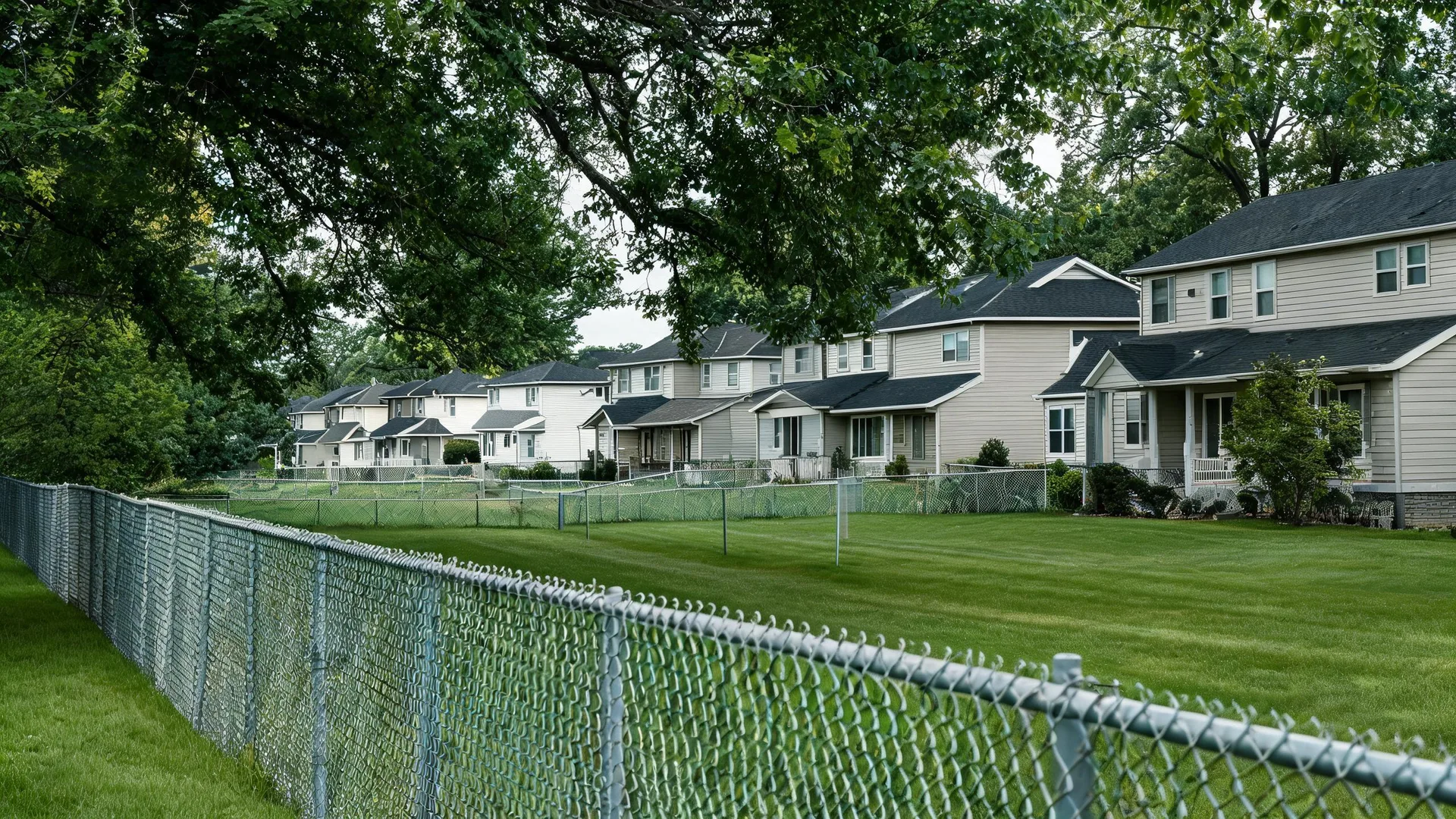






A chain-link fence runs along a mowed lawn beside a row of two-story houses with light siding and dark roofs, framed by large leafy trees.

Mini Split Installation in Oakes, ND

Tell us about the job

Takes about a minute. No obligation.

New system or replacementMini-splitDickey County, ND
Step 1 of 2

What ZIP code is the job in?

Electricity heats 46.1% of homes in Dickey County, more than any other fuel, with bottled or LP gas running second at 37.9%. A mini split fits into an electric home without adding a fuel line or a tank. For a home already on electric heat, it can take over the job room by room, and it cools in summer too. If your home runs on propane now, a mini split still works well as a second system for the rooms that need it most, without touching the furnace you already have.

9 months
September through May, your system heats
3 months
June through August, it cools
6°F
the average winter night it heats against
79°F
the average summer afternoon it cools against
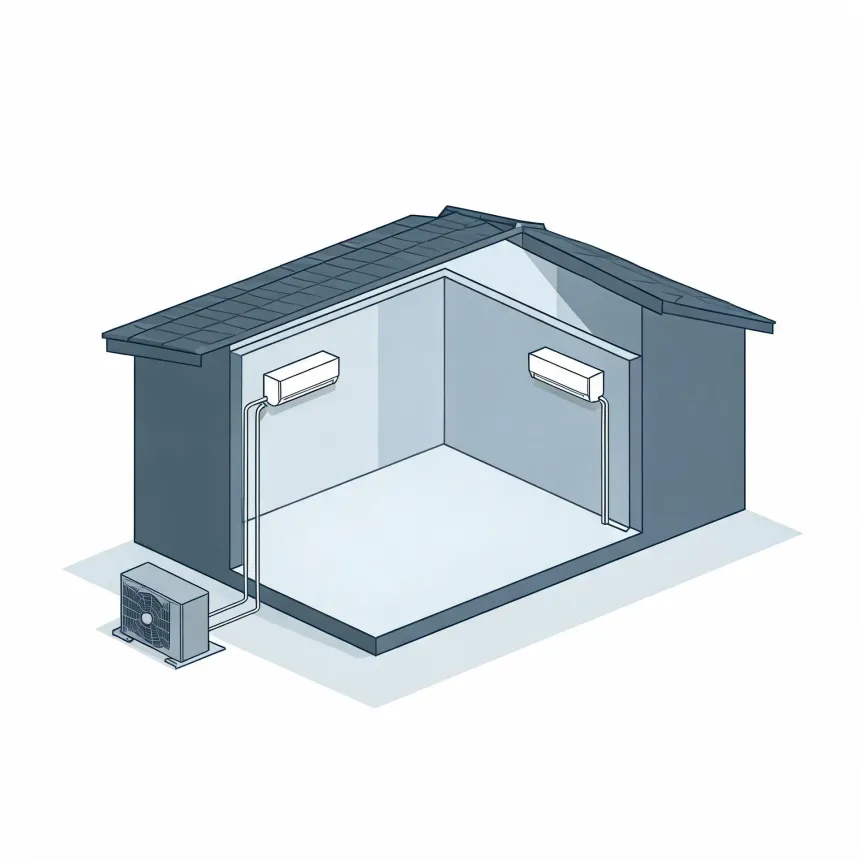
Cutaway isometric illustration of a small building interior showing two wall-mounted indoor air conditioning units connected by line sets running down to a single outdoor condenser unit on the ground outside.
Your system heats September through May and cools June through August.

NOAA nClimDiv, 1991–2020 normals

Half the homes in Dickey County were built in 1964 or earlier.

An older home may still have its original wiring, so the breaker and the line running to it need a look before a mini split goes in.

Cheap power here means payback is slow, so pick the mini split for comfort and fit, not for the electric bill

Power costs 11.51 cents a kWh statewide
Cooling runs June through August
Summer afternoons average 79°F
Three months of work a yearAfternoon highs average 79°F in June, July and August here, the only months a mini split runs for cooling.

Power here runs 11.51 cents a kilowatt-hour, below what most of the country pays, so the most efficient mini split on the shelf will not pay for itself in any hurry. Put the weight on fit instead. A head sized right for the room it serves will keep you more comfortable than a higher efficiency number on a unit that is too big or too small for the space. Ask the contractor about the system's low temperature rating too, since mini splits vary in how well they hold heat output once it gets cold outside. Line length and refrigerant charge matter as well. Both affect how the system performs once it is running, regardless of what the spec sheet promises.

Meet the standard here

A new system here has to meet this region's minimum efficiency, which limits what can go in.

Find a contractor
A man in a gray shirt, cap, and work pants carries a canvas tool bag up white porch steps toward a red front door, with a potted shrub beside the entry.
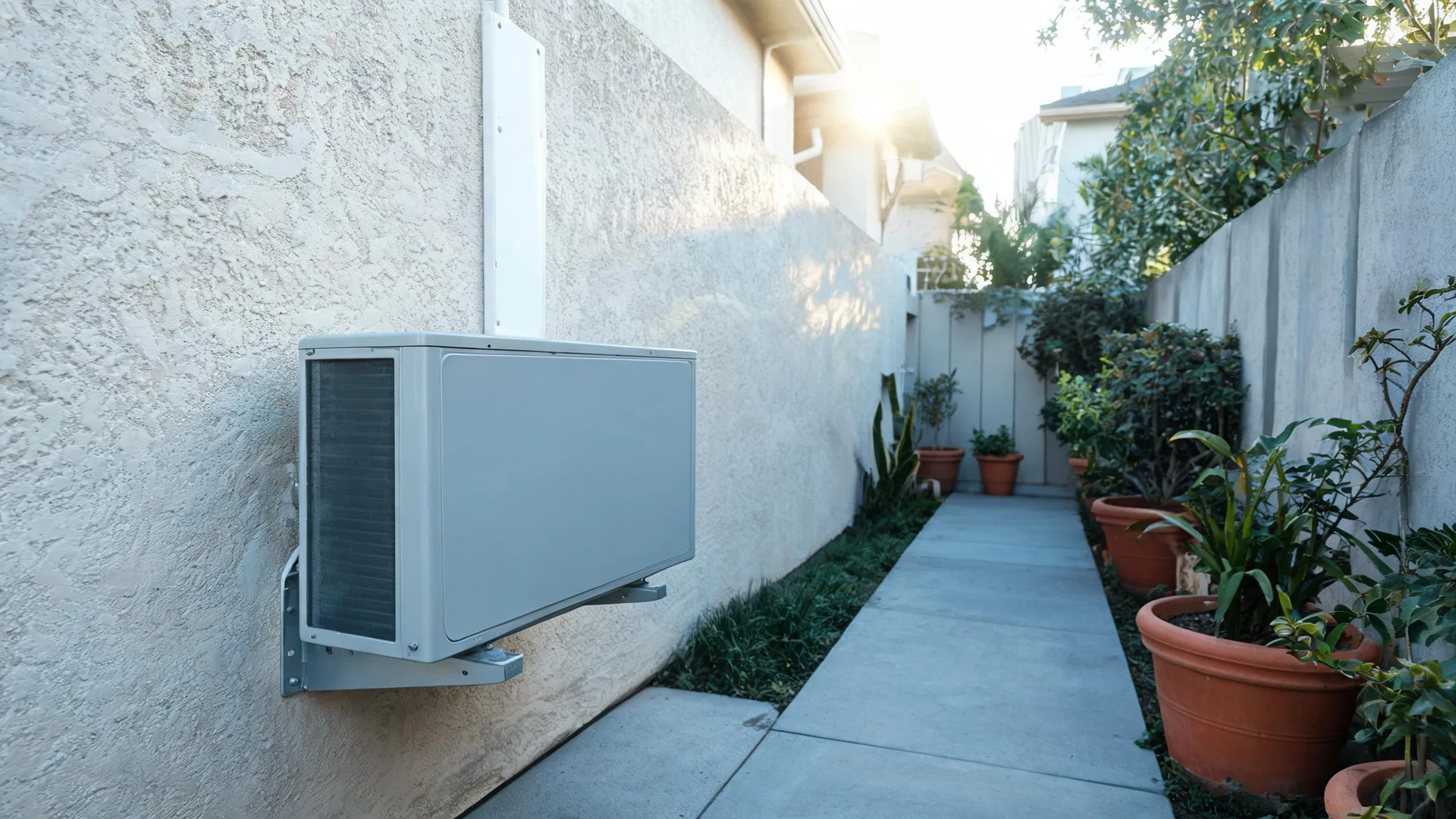
A white outdoor air conditioner condenser unit mounted on metal wall brackets against gray horizontal siding, with a blue sky and white clouds behind it.

Sitting idle doesn't mean nothing to maintain

Ask what the warranty covers on the compressor versus everything else. Manufacturers often split that out, with the compressor covered longer than the rest of the parts, and some back the controls board separately too. That board tends to be the first thing to fail in a unit that sits idle between runs. A system that's off more than it's on still needs the filter checked and the outdoor coil kept clear of leaves, idle time doesn't keep it clean. Ask any contractor you're comparing how the first service call works, and whether it's included or billed on top.

The old furnace or baseboard heat

A mini split does not require tearing out the heat already in the house. A furnace can stay in place for the coldest stretches, and electric baseboard can stay too, left alone or shut off at the breaker. A furnace that only runs a few times a year still needs its flue and gas line checked now and then, so it is worth asking the installer how the old system fits into the plan going forward.
A window unit or space heaters coming out

A window air conditioner or a room's worth of space heaters can just come out once a mini split is in. There is no ductwork to cap and no tank to drain. What is worth checking is the circuit those old units ran on. A mini split's outdoor unit and air handler need a dedicated line sized for the system, and that is rarely the same circuit a window unit or a space heater used.

The quote covers more than the equipment hanging on the wall. Running line set between the outdoor condenser and the indoor head takes labor, and the price moves with how far apart they sit and how many walls or floors the line has to pass through. A multi-zone system costs more to install than a single head because each indoor unit needs its own line run and its own place on the wall or ceiling, sized to the room it serves. The electrical work matters too. Running a new dedicated circuit costs more than tying into one that already has capacity, and that depends on what the panel can take. Mounting also plays into it. A bracket on an exterior wall is a simpler job than a condenser pad on uneven ground. None of this shows up on the price tag of the unit itself, but it is most of what a contractor is quoting when the number comes back.

Installation starts outside with where the outdoor unit sits and where the indoor head goes, since the line set between them drives most of the work that day. The installer runs refrigerant lines, a condensate drain and electrical through a small hole drilled in the wall, then connects both ends and seals the opening. Once the lines are joined, the system gets evacuated with a vacuum pump to pull out air and moisture before any refrigerant moves through it. Skipping that step is what leads to a system that runs weak or trips out early, so it is worth asking whether it was done. After the charge is set, the installer checks static pressure on the line and tests the system in both heating and cooling before calling the job finished. Mounting brackets, wall sleeves and a condenser pad all get set in place before any of that happens, so a good part of the day is prep work the homeowner never sees running.