



A chain-link fence runs along the left edge of a mowed grass lawn, with a row of two-story houses with porches and large leafy trees on the right under an overcast sky.

Mini Split Installation in Powers Lake, ND

Tell us about the job

Takes about a minute. No obligation.

New system or replacementMini-splitBurke County, ND
Step 1 of 2

What ZIP code is the job in?

Electricity heats close to half the homes in Burke County, and LP gas accounts for another third. Few homes here burn utility gas. That split matters for a mini split, since the system you're adding runs on electricity either way. In a home already heated electrically, a mini split can cover a room or a whole house without touching a fuel line. In a home on LP gas, it works alongside that furnace, taking over the mild months and leaving the furnace for the coldest stretch.

10 months
September through June, your system heats
2 months
July through August, it cools
2°F
the average winter night it heats against
78°F
the average summer afternoon it cools against
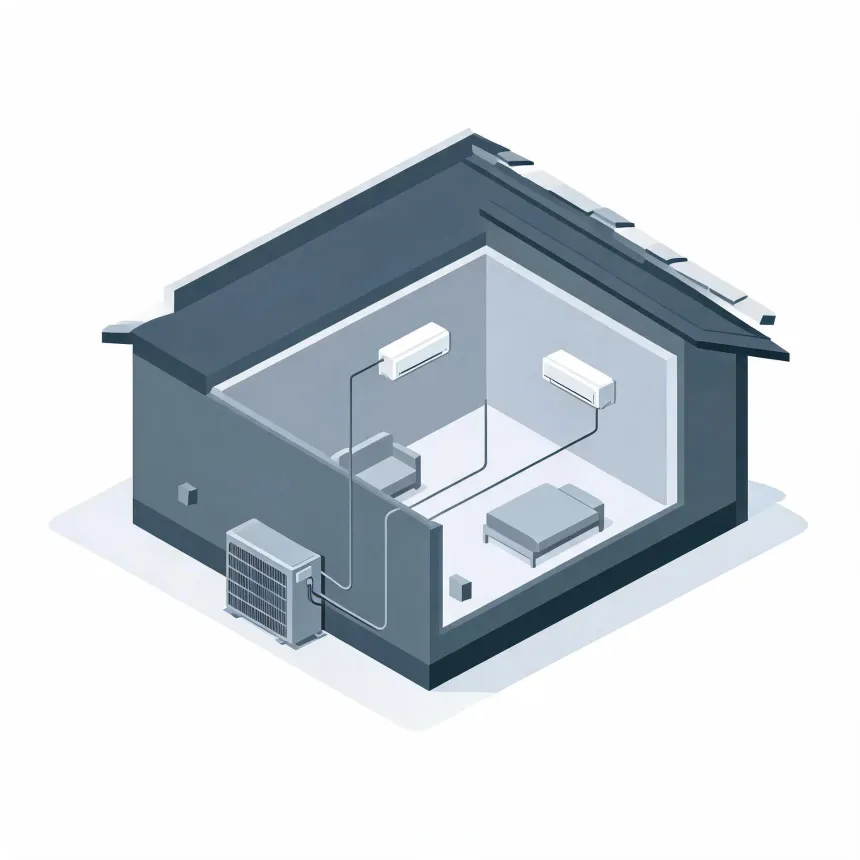
Isometric illustration of a cutaway house interior showing two wall-mounted indoor air conditioning units connected by line sets to an outdoor condenser unit beside the exterior wall.
Your system heats September through June and cools July through August.

NOAA nClimDiv, 1991–2020 normals

Half the homes in Burke County were built in 1969 or earlier.

Mounting a mini split on a wall that old starts with checking what that wall is made of, not picking the unit.

Two months of cooling a year means the compressor isn't what wears out here

Cooling runs July through August
Summer afternoons average 78°F
27 damaging wind events from 2015 to 2024

Cooling here only runs July and August, so there's no rush once summer starts. June is the month to get a mini split installed, before the first hot stretch hits. Wait until July and you're scheduling around whatever else is backed up that week. A unit put in during June gets tested and adjusted while the load on it is still light, not during the two months it actually has to keep up.

Pick it for fit, not for the power bill

Electricity in North Dakota runs 11.51 cents a kilowatt-hour, below what most of the country pays. A high-efficiency mini split still costs less to run than a low one, but the gap takes longer to pay back here than somewhere with pricier power. That makes reliability and the right fit for this house the bigger questions. Get a quote and talk through what matters for your home.

Find a contractor
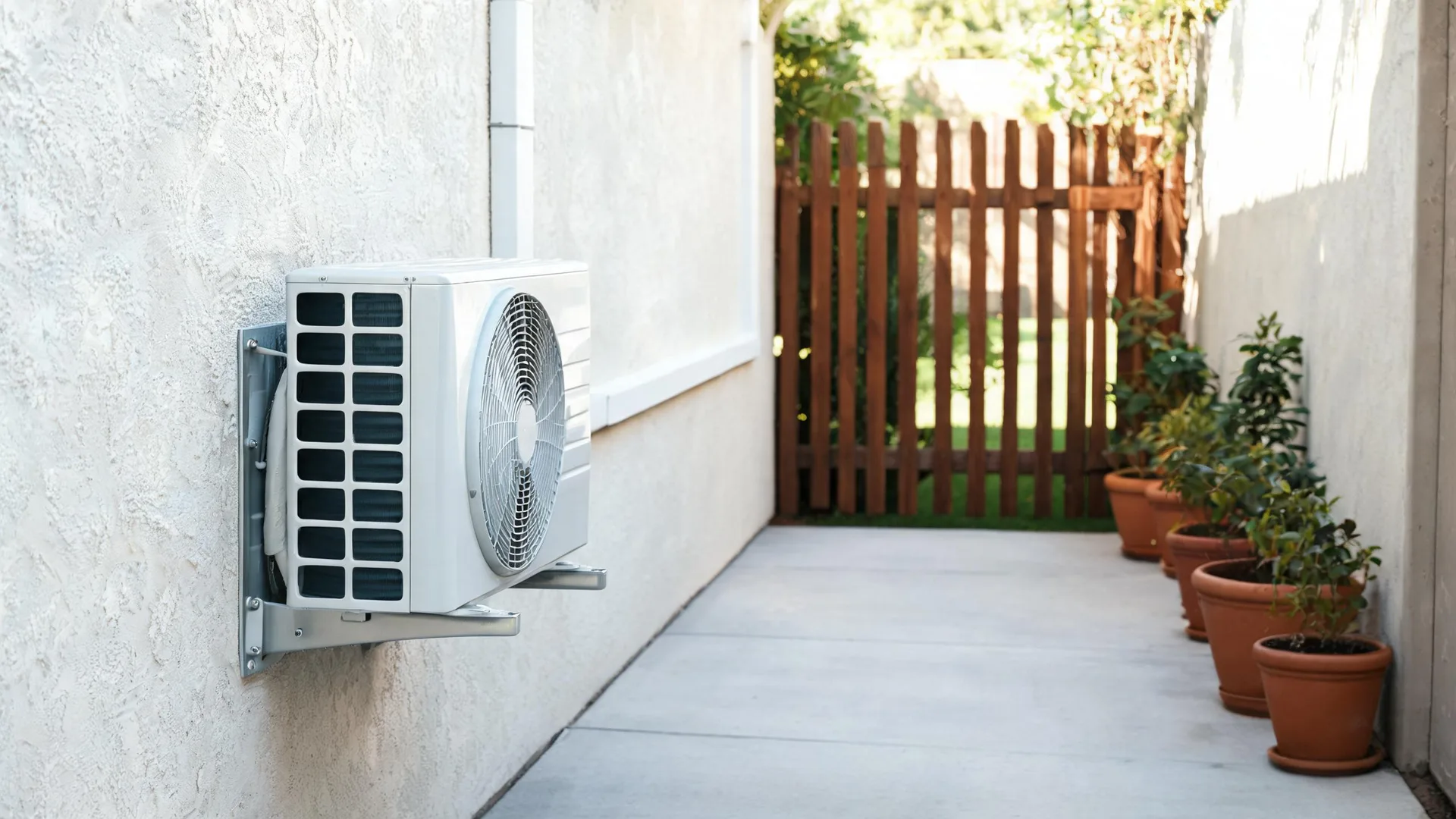
A beige split-system air conditioner outdoor condenser unit mounted on metal wall brackets atop a stucco wall.

A good install ends with a pressure test, not a handshake

Installation starts with the outdoor unit and the indoor head going up, but most of the day goes into the line set between them. The refrigerant lines get run through a wall, cut to length, and brazed, then the whole system gets pulled into a vacuum to clear out moisture and air before any refrigerant moves through it. Skip that step or rush it and moisture sits in the lines, which corrodes the coil from the inside over time. Once the vacuum holds, the system gets charged to the weight on the nameplate, not by feel. Then it runs through both modes while the tech checks the temperature split at the head and listens to the compressor outside. None of that depends on the season. A mini split put in correctly in the morning should be holding steady by the time the tech leaves, no matter what the thermometer says that day.

Bigger isn't better here

An oversized mini split cools the room fast, shuts off, and starts again a few minutes later. That short cycling leaves the room damp and never lets the system settle into a steady run. The right size runs longer and steadier, and that's what actually keeps the space comfortable.
The number comes from the room, not a chart

Sizing a mini split means working out how much heat the room gains and loses. That means the floor area, the ceiling height, how many windows face the sun, how much insulation sits behind the walls. Rooms that look alike on paper can need different sized units once those details get counted. Skip that work and the install starts off wrong no matter how good the equipment is.

When you're comparing systems, ask about the SEER2 and HSPF2 ratings, not just the price. Those numbers tell you how much the unit gets out of the electricity it uses, one for cooling and one for heat. Ask whether it's a single zone or multi zone, since a multi zone system runs several indoor heads off one outdoor unit and that changes how the whole place gets covered. Ask what sound rating the indoor and outdoor units carry, since mini splits sit in the room with you and a loud compressor outside gets noticed fast. And ask what the warranty actually covers, parts or labor or both, because a compressor failure after the parts warranty runs out is a different bill than one covered start to finish.

SEER2 measures cooling efficiency, HSPF2 measures heating efficiency, and both compare what a unit puts out against the electricity it draws to do it. A higher number means the compressor gets more cooling or heating out of the same draw of power. That matters most on the days the system works hardest, since that's when the difference between a high and low rated unit actually shows up on the bill. It doesn't tell you whether the unit is the right size for the room, or whether it was installed correctly. A high rating on a mini split with a bad charge or a leaky line set won't deliver what the label promises. The rating describes the equipment, not the job of putting it in.