Electricity already leads here
Electric heat is the most common setup in Barnes County, used in close to half of homes. A mini split fits into that pattern instead of fighting it, since it runs on electricity like the heat these homes already have.
Takes about a minute. No obligation.
Electric heat is the most common setup in Barnes County, used in close to half of homes. A mini split fits into that pattern instead of fighting it, since it runs on electricity like the heat these homes already have.
A little over a quarter of homes here heat with utility gas, and another chunk run on LP. If your house falls into either group, a mini split would be new territory for the place, worth asking the installer how it will work alongside what you already have.
NOAA nClimDiv, 1991–2020 normals
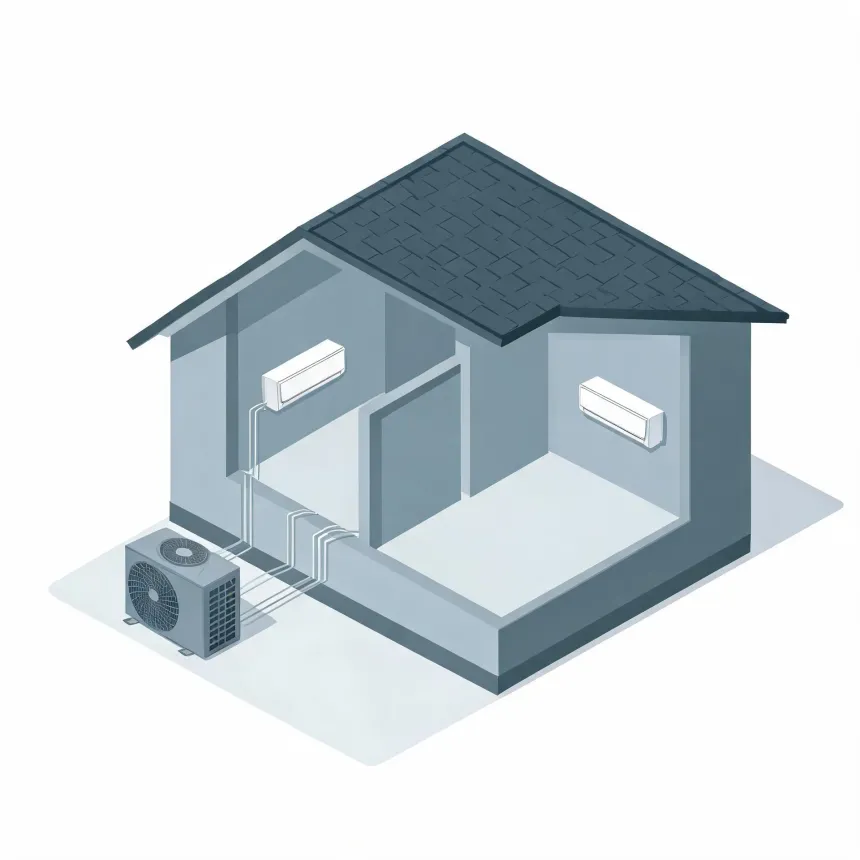
Cooling runs about two months here, July and August, with afternoon highs averaging 79°F.
A mini split in Barnes County isn't fighting triple digits all summer, so a mid-range unit holds up fine.




Electricity in North Dakota ran 11.51 cents a kilowatt-hour in 2024, cheap compared to most of the country. That changes the math on a mini split. The highest-efficiency models cost more upfront, and the payback comes slower when power is already this cheap. So pick on reliability and fit first. A unit sized right for your house, installed so it holds up to a North Dakota winter, is worth more here than squeezing out an extra point of SEER2.
Barnes County falls under zone 6A, and federal rules set the minimum efficiency for split-system heat pumps, mini splits included, at 14.3 SEER2 for cooling and 7.5 HSPF2 for heating. That's the floor for anything installed new. A federal tax credit is available on top of that, worth asking your installer about when you compare units.
Find a contractor
SEER2 tells you how much cooling a unit puts out for the power it draws, and HSPF2 does the same for heat. Higher numbers mean less electricity for the same comfort, but that rating is measured under set lab conditions, not whatever your house throws at it. A mini split sized wrong for the room it serves will run longer and less efficiently than the label suggests, no matter how high the rating. The number also doesn't move over time on its own. It reflects the equipment as built, so keeping the outdoor coil clean and the filter clear is what keeps a unit performing closer to its rating year after year, rather than drifting away from it.
An installer measures the room a mini split will serve. Square footage, window area and which way they face, insulation, ceiling height all go into it. That math gives a number for how much heat the room loses in winter and gains in summer, and the indoor head gets picked to match it. Square footage alone, or a rule of thumb off a chart, skips the parts of that math that actually change the answer.
Oversized, a mini split cools or heats the room fast and shuts off. It cycles on and off all day instead of running steady, and it never runs long enough to pull moisture out of the air. Undersized, it runs constantly trying to reach the temperature on the thermostat and still falls short on the coldest or hottest days. Either way the unit sees more wear than one matched to the room it serves.
If you're taking out a window unit or a baseboard heater to make room for the mini split, that part is simple. It unplugs or gets disconnected and hauled off. A furnace or boiler is a different job. If the mini split is replacing your main heat source outright, the old equipment still needs to come out, and if it ran on gas or LP, that line has to be capped off properly, not just shut at the valve. Ductwork is its own question. A mini split doesn't use any, so if the old system was ducted, those ducts either stay in place for a backup system or secondary zones, or they sit unused. None of this is hard, but it's worth asking the installer upfront what happens to what's already there, since removal and disposal of the old unit isn't always part of the installation.
Installation day starts outside. The outdoor unit gets mounted on a pad or brackets, in a spot with clear airflow on all sides and room to service it later. Inside, the installer runs a line set through a small hole drilled in the wall, usually behind where the indoor head will hang. That line set carries the refrigerant lines, the power wire and a condensate drain, all bundled and sealed where they pass through the wall. Once the indoor head is mounted and connected, the system gets evacuated with a vacuum pump. That pulls out air and moisture before the refrigerant is released into the lines. Air or moisture left behind causes problems months later, long after the installer is gone. The last part is commissioning. The installer checks the refrigerant charge, confirms the thermostat or remote talks to the head properly, and runs the system through heating and cooling to make sure it holds the set temperature.