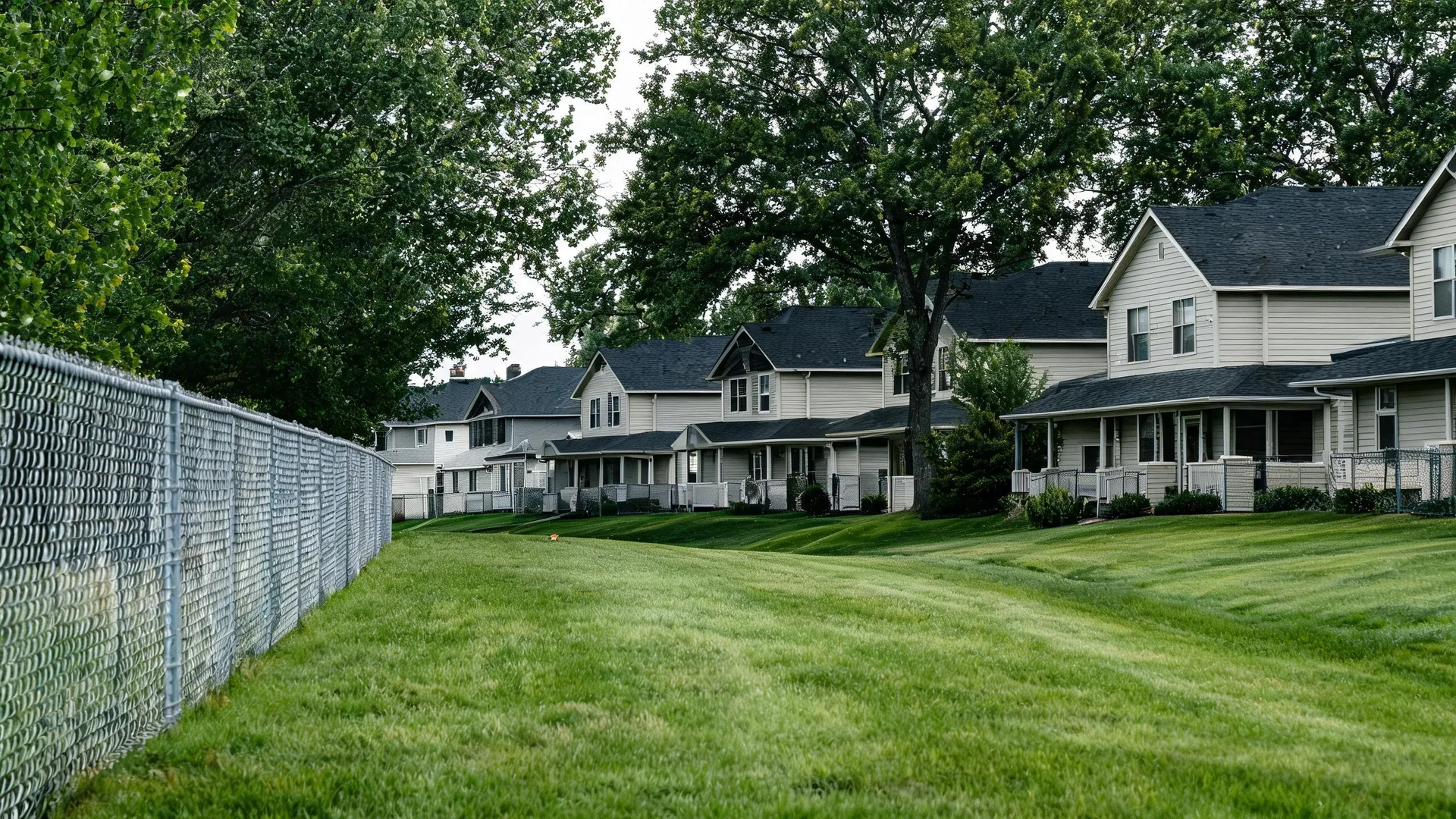





A mowed grassy field bordered on the left by a chain-link fence and on the right by a row of two-story houses with gray roofs and porches, with large leafy trees behind them.

Mini Split Installation in Velva, ND

Tell us about the job

Takes about a minute. No obligation.

New system or replacementMini-splitMcHenry County, ND
Step 1 of 2

What ZIP code is the job in?

Electricity in North Dakota runs 11.51 cents per kilowatthour, well under what a lot of the country pays. That changes the math on a mini split. The highest-efficiency models cost more up front, and with power this cheap it takes longer for the lower running cost to catch up. That doesn't make efficiency worthless, it just means it shouldn't be the only thing you're buying. What matters more here is whether the unit is sized right for the room and holds up through a North Dakota winter. A contractor can tell you what SEER2 and HSPF2 numbers make sense for your situation, and whether a mid-range model gets you most of the comfort for less money down.

9 months
September through May, your system heats
2 months
July through August, it cools
3°F
the average winter night it heats against
79°F
the average summer afternoon it cools against
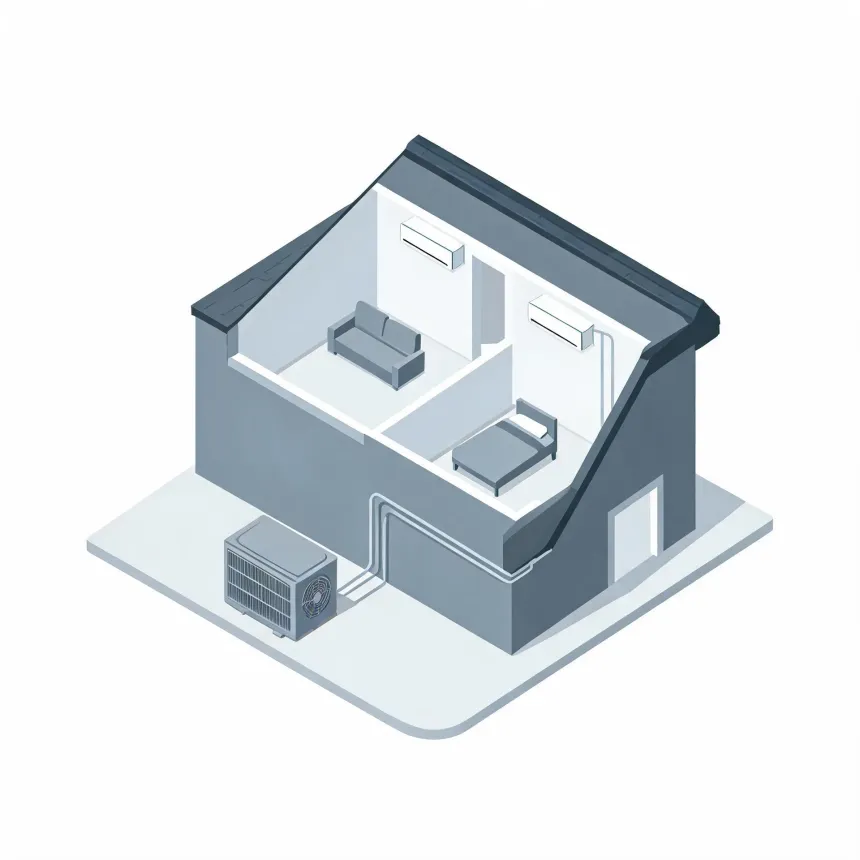
Isometric cutaway illustration of a two-room house showing two wall-mounted indoor air conditioning units connected by line sets to an outdoor condenser unit on the ground outside.
Your system heats September through May and cools July through August.

NOAA nClimDiv, 1991–2020 normals

Cooling here is July and August, with afternoon highs around 79.

A mini split isn't working against a long stretch of heat, so a mid-range unit can hold up fine.

Cooling is just two months here. Get the mini split in before July, not during it.

Cooling runs July through August
Summer afternoons average 79°F
41 damaging wind events from 2015 to 2024
Half the homes here were built in 1966 or earlierA mini split going into one of these has to work with a house built to older standards.

McHenry County sits in zone 7, the coldest band in the energy code, since heating runs most of the year here. Any ductless mini-split you install still has to meet the federal minimum for a split-system heat pump, 14.3 SEER2 for cooling and 7.5 HSPF2 for heating, whether or not it has ducts attached to it. That floor is the same one a ducted heat pump has to clear. Installing a unit that meets it, rather than chasing a higher number, may also qualify for the federal tax credit on heat pump installations. A contractor can tell you which models clear that bar and still hold up through a winter here.

Get it sized to the house you have

Half the homes here were built in 1966 or earlier, and a mini split going into one of them has to work with what that house already has, not what a new build would have. Have the contractor look at the wall and the room before they quote a unit, so the size matches the house you've got.

Find a contractor
A beige split-system air conditioner outdoor condenser unit mounted on metal wall brackets atop a stucco wall.

Sized to the room, not guessed at

A mini split sized too big for the room cools the air fast and shuts off. A few minutes later it starts again. The room never sits at a steady temperature, and the air never gets a chance to dry out. One sized too small just runs and runs. The compressor works hard through the coldest nights and the hottest afternoons and never quite catches up. Sizing comes from a heat loss and heat gain calculation done on the room itself. That means the window area, the wall construction, how the space gets used. Not a rule of thumb based on square footage. A unit matched to the room's real numbers runs long enough to settle the space, then rests. That's what keeps the compressor from short cycling on one end or straining on the other.

Ask for the heating output at low temperature, not just the rated capacity

A heat pump's capacity number is usually measured at a mild outdoor temperature. What matters is how much heat it still puts out once it's cold outside, because that's when the house needs it most. Ask to see that number, not just the headline rating, and ask how it compares to the room's heat loss at design temperature.
Ask what happens below the unit's rated cutoff

Every heat pump has a point where it can no longer pull enough heat from outside air, and the manufacturer lists how it behaves below that point, whether output falls off gradually or the compressor locks out. Some units switch to backup resistance heat, some just put out less. Know which one you're buying before the coldest night tells you.

The quote you get for a mini split install covers more than the box on the wall. Labor is a big piece of it, running the refrigerant line set between the outdoor unit and each indoor head, wiring a dedicated circuit, mounting the condenser on a pad or bracket outside. A single-zone system is simpler, one indoor head, one line set, one outdoor unit. Add zones and you add line sets, more wall penetrations, more labor hours, and an outdoor unit built to run multiple heads at once, which costs more than one sized for a single room. Line set length matters too. A short, straight run between indoor and outdoor units is cheaper to install than one that has to snake through walls or cover real distance, and every extra foot is more refrigerant and more time. The condenser's placement counts as well, since it needs clearance to pull in air and drain condensation, and awkward spots can mean extra mounting work. None of this is padding. It's what actually goes into getting the system running and keeping it running.

Installation starts with the outdoor unit and works inward. The condenser gets set on a pad or wall bracket first, somewhere it can pull in air freely and drain condensation without pooling against the house. Next comes the line set, the refrigerant lines and wiring run from outside to each indoor head, usually through a single wall penetration sealed and insulated once the lines are through. The indoor head mounts to a wall bracket, and the lines connect to it before anything gets charged. Once everything's connected, the system gets evacuated to pull moisture and air out of the lines, then charged with refrigerant to the manufacturer's spec. Only after that does the contractor run it, check the temperature split between the air going in and out, and confirm each zone is actually heating and cooling the way it should.