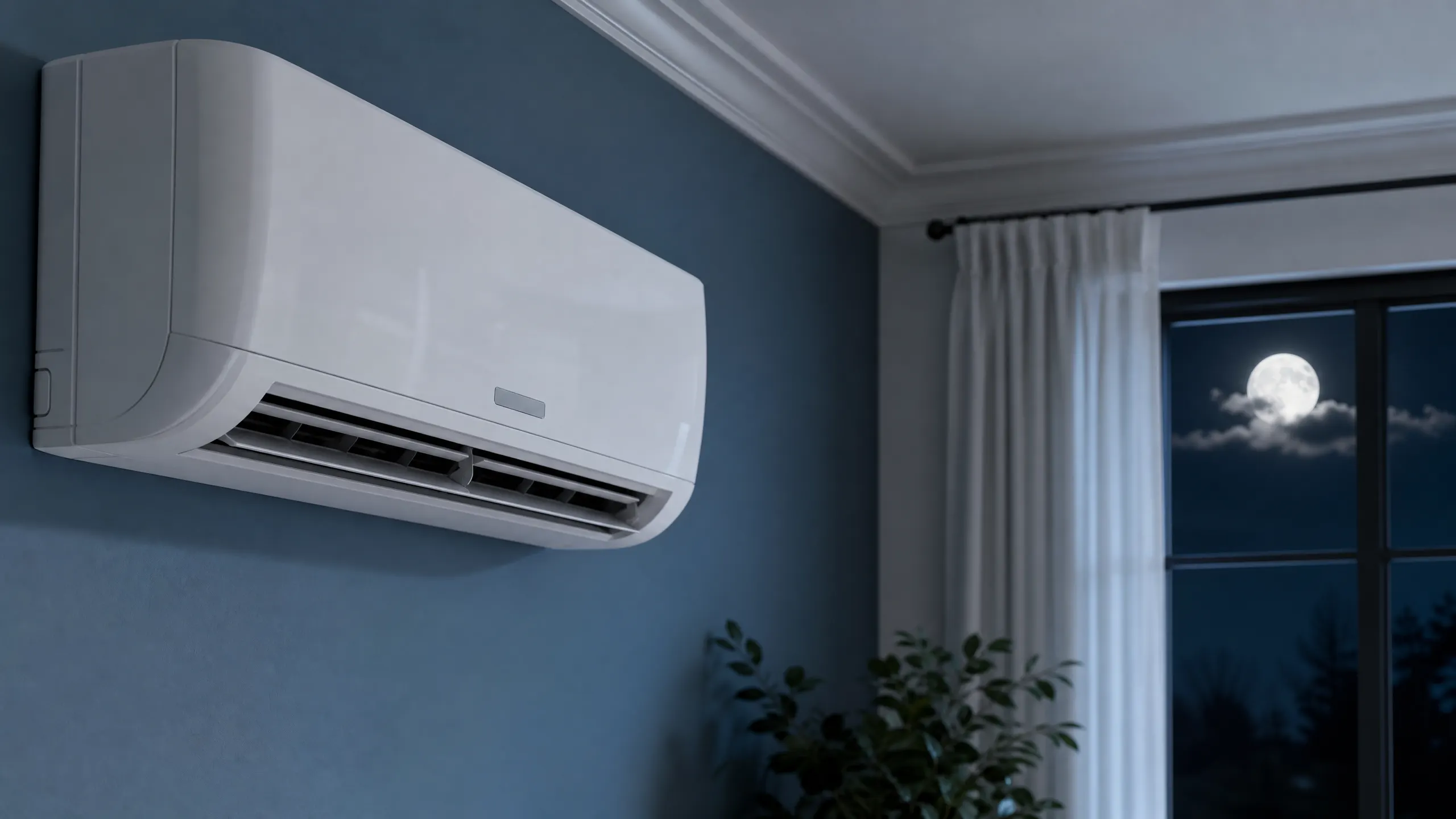





A white wall-mounted split-system air conditioner on a blue-grey wall, with a full moon visible through a curtained window at night.

Mini Split Installation in Wahpeton, ND

Tell us about the job

Takes about a minute. No obligation.

New system or replacementMini-splitRichland County, ND
Step 1 of 2

What ZIP code is the job in?

Close to half the homes in Richland County heat with electricity, more than any other fuel here. Gas, whether utility or LP, heats most of the rest. A mini split runs on electricity and needs no gas line, so it fits either setup. In a home already heating electric, it can take over for baseboard or wall heaters room by room. In a home on gas furnace heat, it works alongside that furnace, covering a room or addition the ductwork doesn't reach.

9 months
September through May, your system heats
3 months
June through August, it cools
5°F
the average winter night it heats against
80°F
the average summer afternoon it cools against
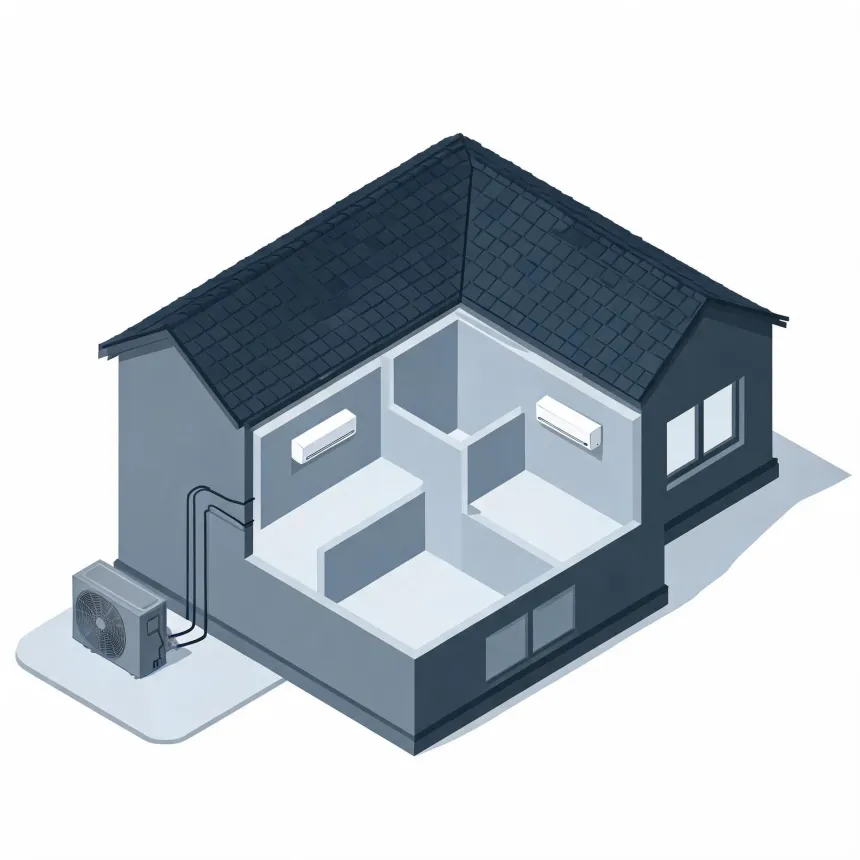
Isometric illustration of a cutaway single-story house with a dark shingled roof, showing two wall-mounted indoor air conditioning units connected by lines to an outdoor condenser unit on a pad beside the building.
Your system heats September through May and cools June through August.

NOAA nClimDiv, 1991–2020 normals

Half the homes in Richland County went up in 1972 or earlier.

A mini split going into a house that old has to match the rooms as they are, not as a newer floor plan would lay them out.

Power here runs 11.51 cents a kWh, so paying more up front for a higher-efficiency mini split takes longer to earn back

Power costs 11.51 cents a kWh statewide
Climate zone 6A
Cooling runs June through August

Cooling runs June through August here, three months total. May is the month to get a mini split installed, before the first hot stretch hits. Wait until June and you're one of many homeowners calling around at once, which means a longer wait for a slot. Installing ahead of the season also means the system gets tested and adjusted while there's no pressure to have it running that night. If it's replacing baseboard heat or filling in a gap the furnace doesn't reach, having it ready before June means it's doing both jobs, cooling and backup heat, right when the house needs the first one.

A standard mini split is the right call here

A standard-size mini split, sized the ordinary way, handles this house fine. Summers here top out around 80 degrees and only last three months, so there's no case for oversizing or paying up for a higher tier of equipment than the room needs. Get the sizing and the installation right and it'll do its job every June through August without strain.

Find a contractor
A man in a dark long-sleeve shirt and tan work pants, seen from behind, steps onto a porch toward a red front door while carrying a worn leather tool bag, with a shrub in a red planter beside him.
A white mini-split air conditioner outdoor condenser unit mounted on metal brackets against a beige stucco exterior wall, with a blue sky and scattered clouds in the background.

Built for the house you have, not a newer one

A mini split runs for years once it's in, so the install has to get the sizing and the layout right the first time. In a house built in 1972 or earlier, that means someone measuring the actual rooms, the actual wall space, and the actual exposure before picking equipment and a mounting spot, not working off a standard floor plan. Ask whoever quotes the job to walk the rooms with you and explain where the indoor unit is going and why.

One zone or several

A single indoor unit heats and cools one room. Covering more than one room means either a multi-zone system with several indoor heads tied to one outdoor unit, or separate single-zone systems. Multi-zone costs more to install but gives each room its own thermostat. Ask what happens to the whole system if one indoor head needs a repair, since on some multi-zone setups the other rooms keep running fine and on others the outdoor unit has to shut down.
Where the line set runs

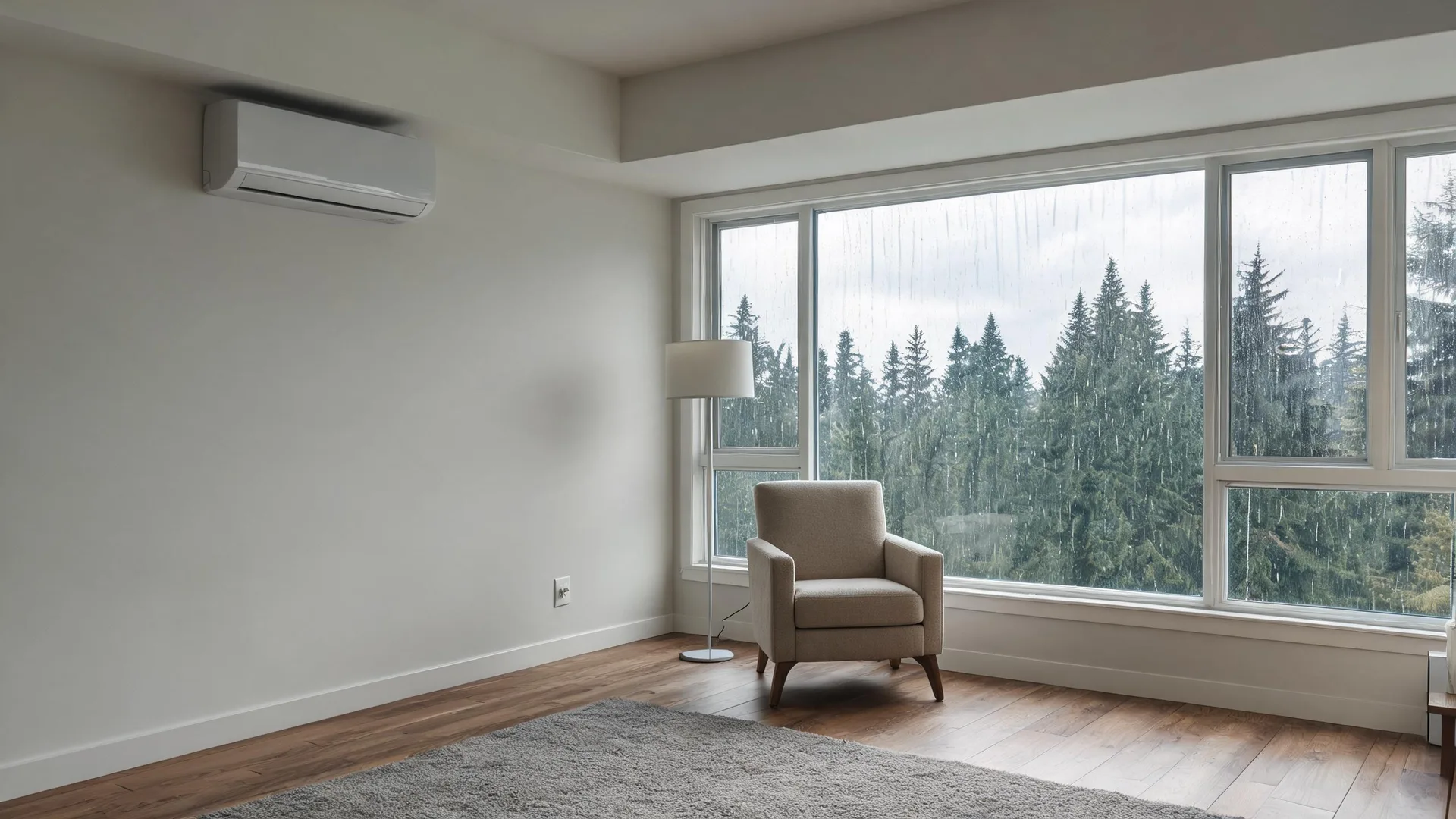
The indoor and outdoor units connect through a line set that has to pass through a wall, and the outdoor unit needs a mounting pad or bracket with clearance to pull in air. Ask where that wall penetration will be and where the outdoor unit will sit before you agree on equipment. A longer line set than the equipment is rated for can cost the system capacity, so the install location decides what's possible, not just what looks neatest from outside.

Sizing a mini split comes down to a load calculation, not square footage alone. A contractor worth hiring looks at how many windows a room has, which way they face, how much insulation is behind the walls, and what else gives off heat in that space, then works out how much cooling and heating the room actually needs. Skip that step and go by a rule of thumb instead, and the unit that gets picked is usually too big. An oversized mini split cools the room fast, shuts off, then starts again a few minutes later. That on-off cycling is harder on the compressor than running steadily, and it leaves the room clammy because the unit never runs long enough to pull moisture out of the air. Too small, and it runs constantly without ever catching up on the hottest days. The right size is the one that runs long steady stretches and keeps up without strain, and the only way to land on it is measuring the room, not guessing from its footprint.

Equipment is only part of what you're paying for. The outdoor unit, the indoor head, and the line set connecting them are a fixed cost once you've picked the size, but labor varies with the job itself. Running the line set through a wall takes longer if that wall is brick or block instead of wood frame, and longer still if the electrical panel is far from where the outdoor unit will sit and a new circuit has to be run to reach it. Mounting the outdoor unit costs more when the ground or wall it needs isn't a clean, level spot and a pad or bracket has to be built up first. A multi-zone system adds cost for every indoor head and every line set run, not just the outdoor unit. None of that shows up until someone's walked the house and seen where everything has to go.