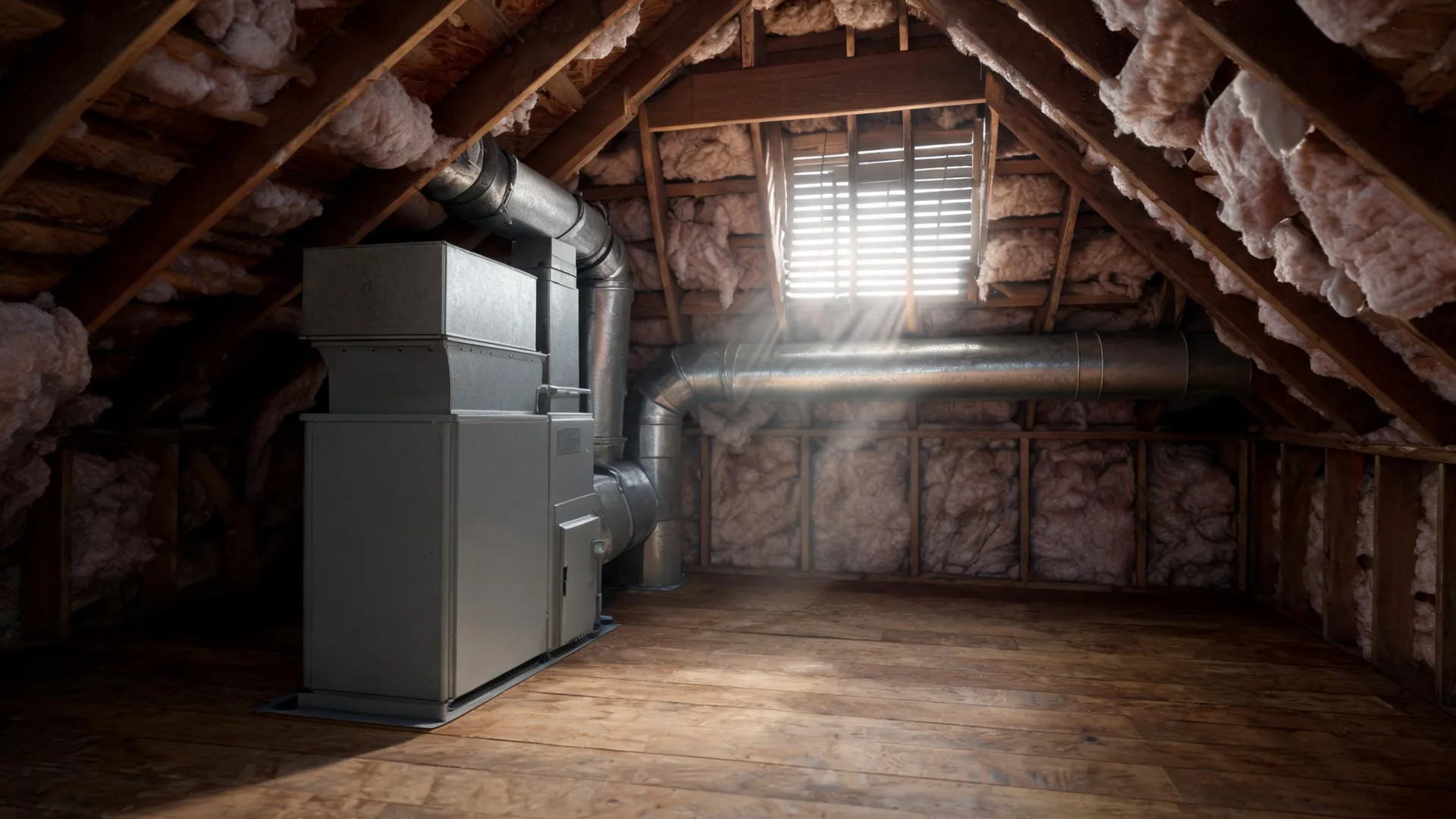
Gas is the fuel most homes here already have
56.9% of homes in Golden Valley County heat with utility gas. Add in the 23.5% on bottled or LP gas, and most of your neighbors already have a gas line or tank set up for a furnace.
Takes about a minute. No obligation.
56.9% of homes in Golden Valley County heat with utility gas. Add in the 23.5% on bottled or LP gas, and most of your neighbors already have a gas line or tank set up for a furnace.
An AC install here usually means a new outdoor unit paired with the existing gas furnace, since the furnace blower moves the cooled air through your ducts. If your home runs on gas heat, matching the new AC to that setup is the straightforward route.

NOAA nClimDiv, 1991–2020 normals
Electricity in North Dakota ran 11.51 cents per kilowatt-hour in 2024, below what most states pay.
A top-tier SEER2 unit takes longer to earn back its extra cost here, so pick your AC for how long it lasts and how well it fits your home, not just the rating.




Half the homes in Golden Valley County were built in 1957 or earlier. A house that age was almost never built with ductwork sized for central air. Whatever runs through the walls and floors now was laid out for a furnace moving heat, not for the airflow a new AC condenser needs to work right. That doesn't rule out installing one, but it means the install has to account for the house, not just drop a matching unit next to the furnace. A duct system that's too small or too leaky for the new unit will leave rooms uneven no matter how good the equipment is.
Golden Valley County falls in climate zone 6A, and federal rules set a floor on what can be installed. Any split-system central air conditioner under 45,000 Btu/h built from 2023 onward has to meet at least 13.4 SEER2. That sets the baseline for what a contractor can offer you, whatever else you choose to add on top of it.
Find a contractor
Have a contractor check the ductwork before they quote the equipment. If a duct run is too small for the new unit's airflow, that's the time to find out, not after the condenser is sitting outside. On a house from 1957 or earlier, that check is worth doing even if the furnace and ducts have worked fine for years of heating.
A contractor should run a room by room load calculation on the house, not just match the tonnage of what's already outside. An oversized condenser cools the air fast and shuts off before it pulls the moisture out, so rooms feel clammy even at the right temperature. An undersized one runs constantly and never quite catches up on the hottest days. The number should come from the house, not from what was there before.
The outdoor condenser is only part of the system. The indoor coil and the furnace blower that pushes air across it have to match the new unit's capacity and the refrigerant it uses. A new condenser paired with an old coil sized for a different unit will struggle no matter how good the equipment outside is. If the coil isn't being replaced too, ask why not.
Estimates for a typical Golden Valley County home, from EIA household energy data, North Dakota fuel prices and NOAA climate normals. Your home will differ.
Installation day starts outside at the pad. The old condenser comes out and the pad gets leveled or replaced if it's cracked. Refrigerant lines get run or reused, and a new electrical disconnect goes in next to the unit so it has its own shutoff. Inside, the coil above the furnace gets swapped to match the new condenser, since a mismatched coil undoes the work of a correctly sized one. Once everything is connected, the system gets charged with refrigerant to the exact weight the manufacturer specifies. The last part takes the longest. The contractor runs the system, checks airflow at the vents, and checks the temperature split between the air going in and the air coming out before calling the job done.