A mowed grass field bordered on the left by a chain-link fence, with a row of single-story houses and tall deciduous trees behind them under an overcast sky.

AC Installation in Beulah, ND

Tell us about the job

Takes about a minute. No obligation.

New system or replacementCentral ACMercer County, ND
Step 1 of 2

What ZIP code is the job in?

Most homes here run on propane

Propane heats 58.4% of homes in Mercer County, more than any other fuel. Electric heat accounts for another 36.9%. If your furnace runs on propane, a new AC installs alongside it as a separate system, the two don't share fuel.

The furnace and the AC are separate jobs

Your propane furnace handles heat, and central air handles cooling, so adding or replacing AC doesn't touch your gas line or tank. What matters for this job is the ductwork and the electrical hookup already in place, not which fuel heats the house.

2 months
July through August, your air conditioner is on duty
80°F
the average summer afternoon it cools against
41 hail events
in ten years, and hail bends the fins on outdoor coils
13.4 SEER2
the federal minimum any new unit must meet
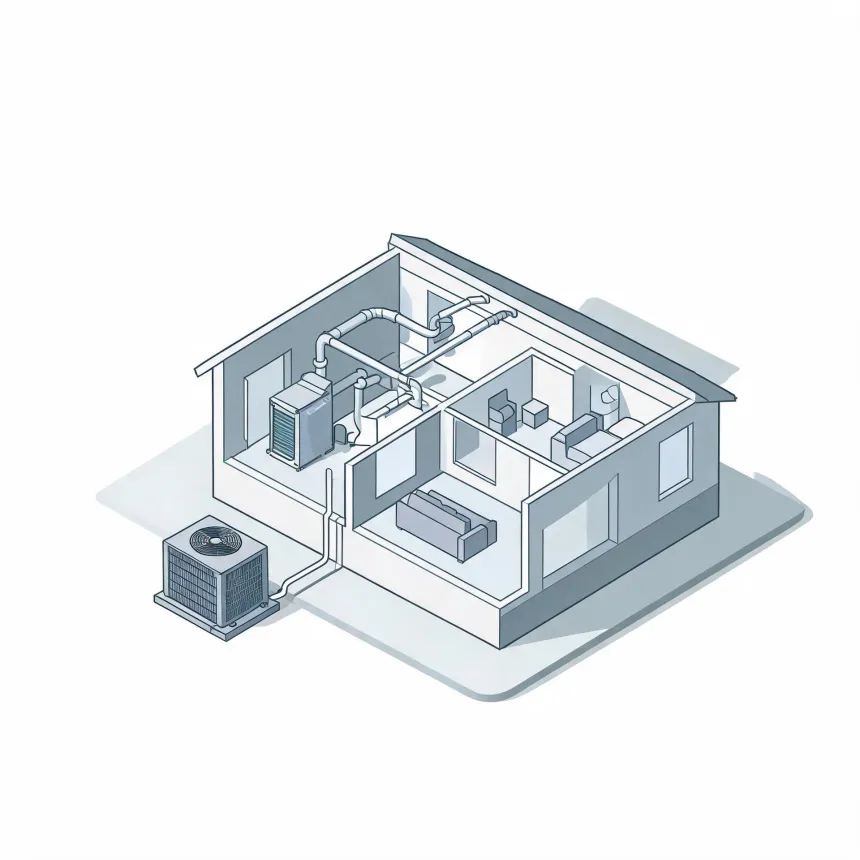
Isometric line illustration of a cutaway house showing interior rooms, a furnace or air handler with ductwork, and an outdoor condenser unit beside the building.
Your air conditioner works hardest from July through August.

NOAA nClimDiv, 1991–2020 normals

Electricity in North Dakota runs 11.51 cents per kilowatt-hour, well under the national average.

A high-efficiency AC costs more up front and takes longer to pay back here, so pick the unit that fits your ductwork and will hold up, not just the one with the highest SEER2 number.

Two months of real cooling a year, that's the job

Cooling runs July through August
Summer afternoons average 80°F
65 damaging wind events from 2015 to 2024
Two months a yearCooling runs July through August here. June is the month to get it installed.

A contractor sizing your AC should be looking at your ductwork, your home's square footage and your electrical panel before they look at the SEER2 rating on the box. If the duct runs are narrow or the panel is already full, the higher-efficiency unit may not even be an option, and chasing it can mean paying more for a system that still doesn't cool evenly. Ask what the installed unit is rated to handle and whether your existing ducts can move that much air. A mid-efficiency unit that matches your home will cool it the same two months a year as a premium one, and it will do it without strain on equipment that wasn't built to carry it.

Pick the AC built to last here, not the one with the highest rating

Two months of cooling a year is not much to ask of a machine. A mid-efficiency unit sized to your ductwork and your panel will handle it without strain, same as a premium one would. Pick the system built to last in this job, not the one with the highest rating on the box.

Find a contractor
An outdoor air conditioning condenser unit mounted on a concrete pad surrounded by gravel, photographed against a partly cloudy blue sky.

Sized to the house, not the box

Sizing starts with a load calculation, not a guess based on square footage alone. A contractor works out how much heat the house gains through the walls, the windows, the roof, and from the people and appliances inside, then matches a unit to that number. Too big and the AC cools the air fast but shuts off before it pulls the moisture out, so the house feels clammy even at the right temperature. It also cycles on and off more, and every start puts wear on the compressor. Too small and it runs flat out on the hottest days and never quite catches up. The right size runs long, steady cycles, moves air through the ducts at the rate they were built for, and wears evenly. Bigger is not safer here. It is just a different way to get it wrong.

Ask what happens to the ductwork, not just the unit

A contractor should check whether the existing ducts can handle the new system's airflow before quoting a number. Adding a return or sealing a leaky joint sometimes matters more than the equipment itself. If nobody mentions the ducts, ask why.

Get the load calculation in writing

Contractors sizing the same house should land on close to the same number, because the math comes from the house, not a guess. If a quote skips straight to a unit size with no explanation of how they got there, ask them to walk through it.

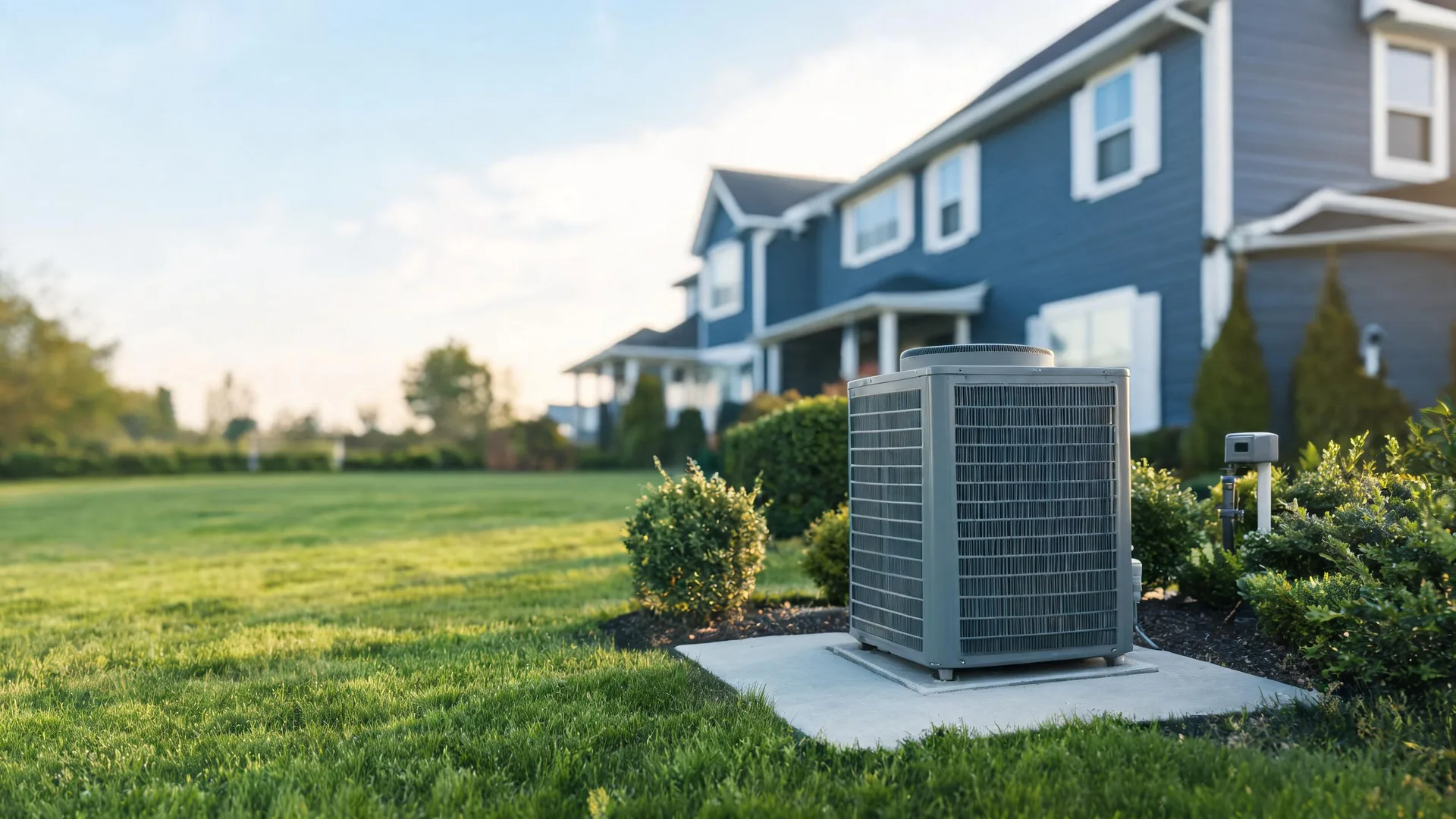
An outdoor air conditioning condenser unit positioned on a concrete pad next to a blue-sided house, surrounded by green shrubs and flowering hydrangeas at sunset.

Going above the federal minimum saves little here, about $10 a year.

  • A higher-efficiency unit$80 a year
  • A new unit at the federal minimum, 13.4 SEER2$90 a year

Estimates for a typical Mercer County home, from EIA household energy data, North Dakota fuel prices and NOAA climate normals. Your home will differ.

Installation day starts with the refrigerant lines and the electrical disconnect, not the new unit itself. The old condenser gets recovered and pulled before anything new goes in. Once the pad is clear, the new condenser sets outside and the coil goes in above the furnace, and a contractor brazes the line set and pressure tests it before anything gets charged with refrigerant. That pressure test matters more than it sounds like it should, since a leak at a bad joint will empty the system in weeks and bring a tech back out. After the charge goes in, the system runs through its paces, checking airflow at the vents, checking the temperature split between the air going in and the air coming out, and listening for anything that sounds like it is straining. A unit that is wired right and charged right should run quiet from the first cycle.