






A mown grass field bordered on the left by a chain-link fence, with a row of two-story light-colored siding houses and trees in the background under an overcast sky, framed by overhanging leafy branches.

AC Installation in Bottineau, ND

Tell us about the job

Takes about a minute. No obligation.

New system or replacementCentral ACBottineau County, ND
Step 1 of 2

What ZIP code is the job in?

Electricity heats 59.2% of homes in Bottineau County, more than any other fuel. That usually means baseboard heat or an electric furnace, with central air added onto the same ductwork or run as its own line. Bottled or LP gas comes next at 28.0%, often paired with central air sharing the same ducts. If you're putting in a new AC unit, matching what's already there is the simpler path. Whoever installs it can tell you whether your ductwork and panel can handle the new system or need work first.

2 months
July through August, your air conditioner is on duty
78°F
the average summer afternoon it cools against
65 hail events
in ten years, and hail bends the fins on outdoor coils
13.4 SEER2
the federal minimum any new unit must meet
Isometric cutaway illustration of a single-story house showing interior rooms, ceiling ductwork, an indoor air handler, and an outdoor condenser unit connected by lines, in gray and white tones on a white background.
Your air conditioner works hardest from July through August.

NOAA nClimDiv, 1991–2020 normals

Electricity in North Dakota runs 11.51 cents per kilowatthour, below the national average.

A high-SEER2 system costs more up front and takes longer to earn that back here, so pick for fit and reliability first.

Two months of real work a year is not much to ask of a system

Cooling runs July through August
Summer afternoons average 78°F
34 damaging wind events from 2015 to 2024
A standard system is the right call hereHalf the homes in Bottineau County were built in 1976 or earlier, half later. Sizing doesn't change either way.

Cooling runs July through August here, so June is the month to put in a new system. Wait until the first hot stretch and you're installing on whoever has an opening, not on your schedule. Go in June and the contractor has time to size the unit to your home and check the ductwork before any of it matters. A system put in under pressure can pick up shortcuts that don't show until the first real heat. Two months is a short season, but it still runs better when the work behind it wasn't rushed.

New systems here start at 13.4 SEER2

Any new AC installed here has to meet 13.4 SEER2, the federal minimum for this size of system. That floor applies no matter who installs it, so it's one less thing to compare across quotes. Bottineau is zone 7, rated for cold climates where heating carries most of the year and cooling is the short exception. A federal tax credit exists for equipment that goes well above that minimum, but given how little this system runs here, the standard efficiency floor is the practical choice.

Find a contractor
A man in a gray shirt, cap, and work pants carries a canvas tool bag up white porch steps toward a red front door, with a potted shrub beside the entry.
An outdoor air conditioning condenser unit mounted on a concrete pad surrounded by gravel, photographed against a partly cloudy blue sky.

Ask about the install, not just the unit

Comparing quotes, put the equipment specs aside for a minute and ask what each contractor's install includes. Ask whether they'll do a load calculation or just match the old tonnage. Ask what happens to the line set, whether it gets replaced or flushed, and whether they pull a vacuum before charging refrigerant. Ask how they size the ductwork to the new unit, since a bigger coil moving less air than it needs will struggle no matter how good the condenser is. A warranty on parts means less if the labor to use it isn't covered too, so ask about both. The contractor who answers these without hesitation is the one who does this the same way every time.

Sizing comes from a load calculation, not a chart

A contractor works out the right size by figuring how much heat your home picks up on a hot afternoon. Square footage matters, but so does window area, insulation, and how much shade the walls get. That work points to a tonnage. Nobody should be sizing a system off square footage alone or matching whatever the old unit happened to be.

Bigger isn't a safety margin, it's a different problem

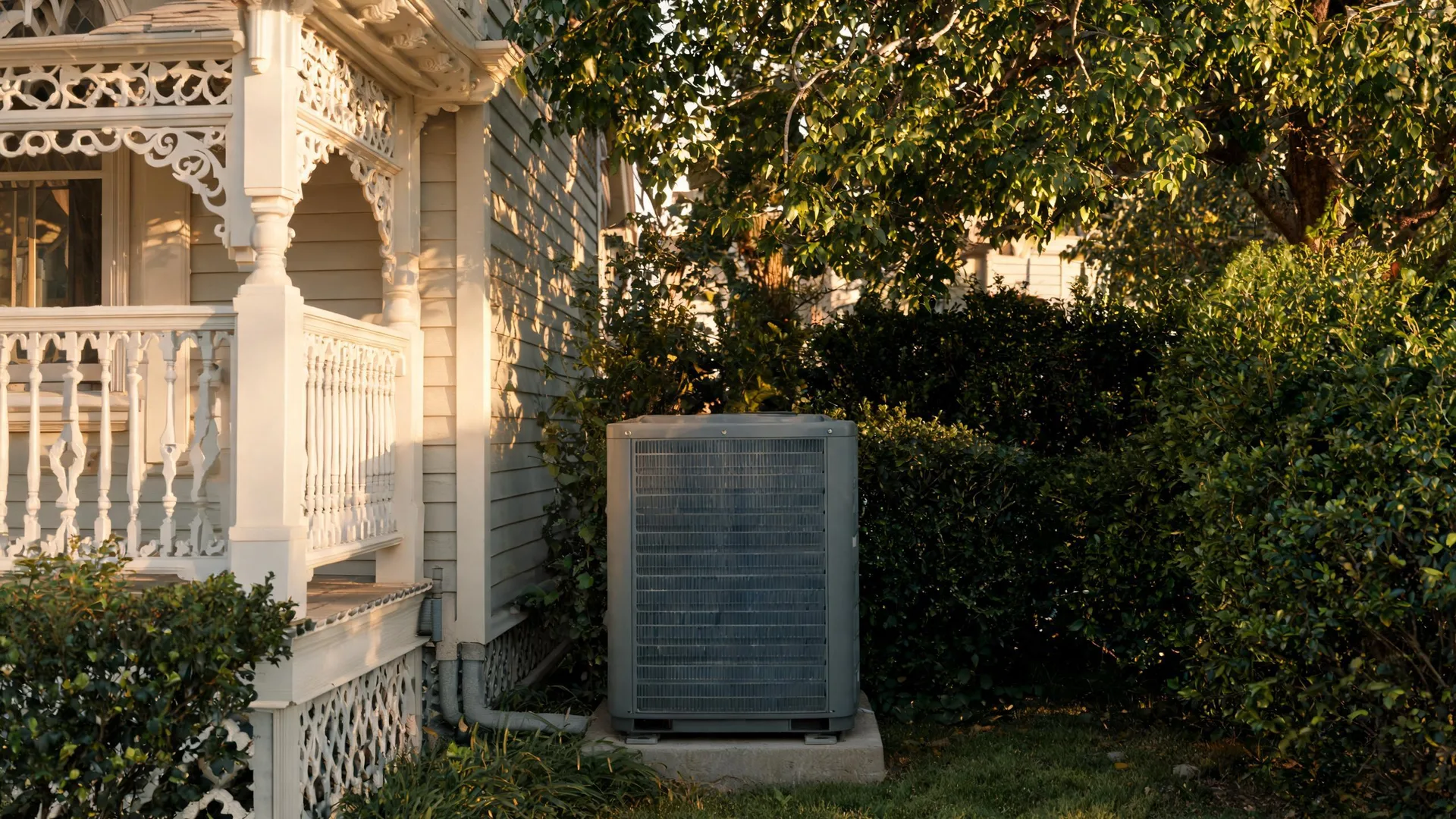
An oversized condenser cools the air fast and shuts off before it pulls the moisture out, so the house ends up cold and damp at the same time. It also cycles on and off more often, and every start puts wear on the compressor. The unit that matches the load runs longer, steadier cycles and does the job it was built for.

Overhead view of an air conditioning condenser unit on a concrete pad next to a house with asphalt shingle roofing and vinyl siding.

Going above the federal minimum saves little here, about $10 a year.

  • A higher-efficiency unit$60 a year
  • A new unit at the federal minimum, 13.4 SEER2$70 a year

Estimates for a typical Bottineau County home, from EIA household energy data, North Dakota fuel prices and NOAA climate normals. Your home will differ.

Install day starts with the old equipment coming out, the condenser outside and the coil that sits on top of the furnace or air handler. The line set gets replaced or flushed out, because oil and debris left behind from the old system will shorten the life of the new compressor. Once the new coil and condenser are in place, the technician pulls a vacuum on the line set to clear out moisture and air before any refrigerant goes in. That step matters more than people expect. Any moisture left in the system turns corrosive once it mixes with refrigerant, and that's a slow way to kill a compressor. After charging the system to the right weight, the technician checks airflow across the coil and tests the system through a full cooling cycle before calling it done.