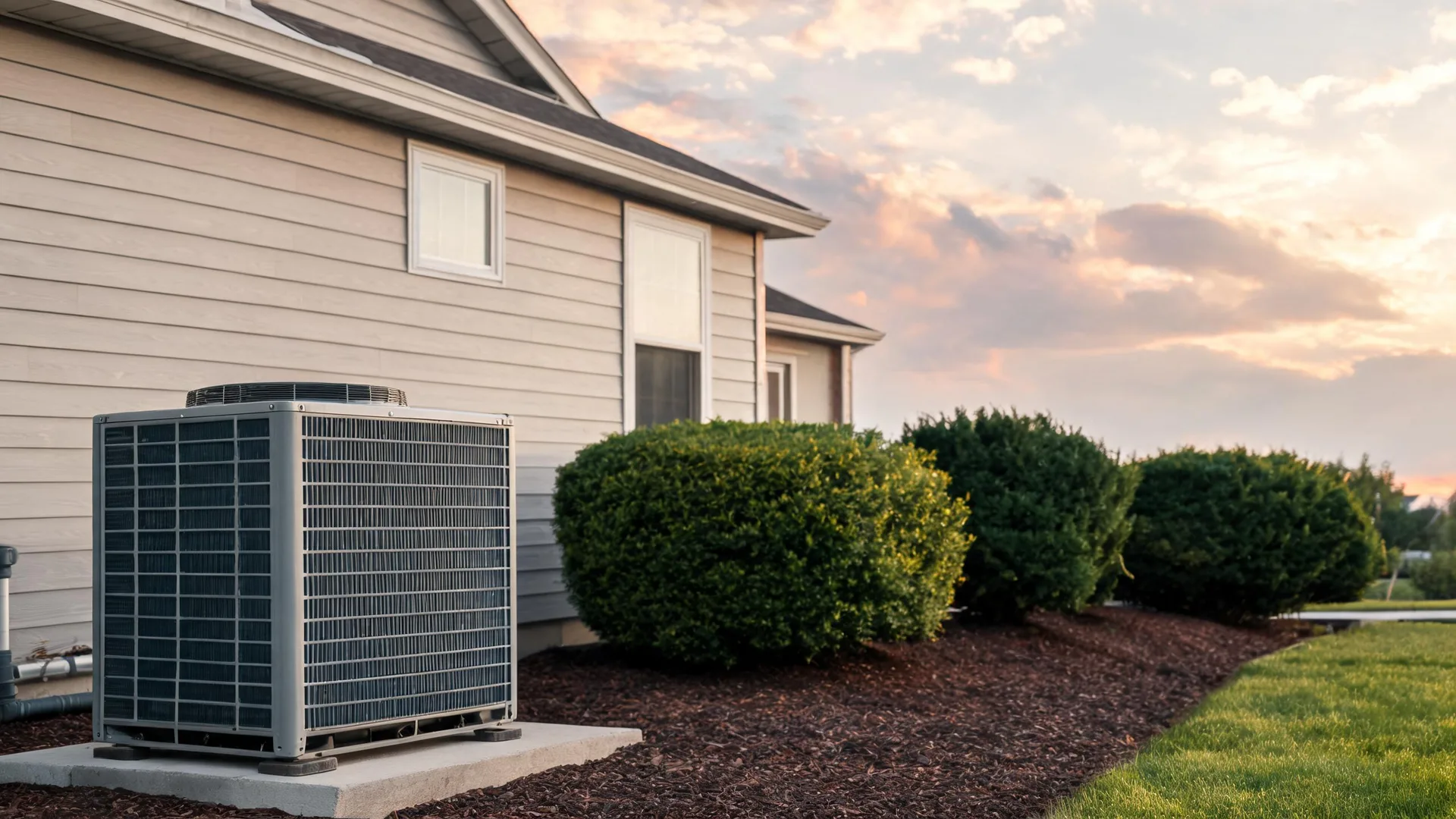
Gas furnaces are the common pairing here
Half the homes in Bowman County heat with utility gas. A new air conditioner here usually ties into a system built around a gas furnace, not an all-electric setup.
Takes about a minute. No obligation.
Half the homes in Bowman County heat with utility gas. A new air conditioner here usually ties into a system built around a gas furnace, not an all-electric setup.
If your furnace runs on gas, the job is about matching the new coil and ductwork to what is already there, not rethinking how the house is heated. That keeps the planning straightforward.

NOAA nClimDiv, 1991–2020 normals
North Dakota homes paid 11.51 cents per kilowatthour in 2024, well under what most of the country pays.
A high-SEER2 system takes longer to earn back its extra cost here, so picking one for reliability and fit matters more than chasing the top efficiency number.




Half the homes in Bowman County were built in 1972 or earlier. That matters for an AC installation because the ductwork already in the house was likely sized for a furnace blower, not for cooling, and the new coil and condenser have to work with what is there. A contractor sizing the system will look at the ducts, the windows, and the insulation you actually have rather than going by the square footage alone. In a newer house that work is more predictable. Here it takes a walkthrough to get right.
Bowman County falls in zone 6A, and any split-system air conditioner installed here has to meet 13.4 SEER2 at minimum. That rules out older, less efficient units regardless of what a contractor might otherwise recommend for the house. Worth asking what the federal tax credit covers before you settle on a model.
Find a contractorTwo months a year, with afternoons averaging 81. That is not a system working against itself all summer. The condenser outside and the coil in the plenum do not need to be the highest SEER2 model on the lot to get through a season like that. What matters more over the long run is whether the unit is built well and sized right for the house, since a reliable system run this lightly should hold up for years before it needs attention.
A contractor disconnects the refrigerant lines, pulls the old condenser from its pad, and takes the evaporator coil out of the plenum above the furnace. The refrigerant gets recovered into a tank, not released. That is a legal requirement, not a courtesy.
If the concrete pad outside is still level and sound, the new condenser can sit right on it. Old line sets get replaced rather than reused in most installs, since residue and old oil in the lines can contaminate a new system. Matching the new equipment to clean lines protects the warranty.
Estimates for a typical Bowman County home, from EIA household energy data, North Dakota fuel prices and NOAA climate normals. Your home will differ.
Once the old equipment is out, the new coil goes into the plenum and the condenser sets on the pad outside. The line set gets connected, then the system is pressure tested before any refrigerant goes in. A good contractor pulls a vacuum on the lines first. That clears out moisture and air, and either one left behind will damage the compressor over time. Only after the vacuum holds does the refrigerant go in, charged to the weight the manufacturer specifies for that line length. Airflow at the vents gets checked. The temperature split between the return and supply air gets checked. The thermostat gets confirmed to be wired so it runs the system correctly. A system that is sized right and charged right on day one is the one that does not call for a service visit the first hot week it runs.