




A two-story black-clad house with white-trimmed windows and a dark shingled roof stands behind a mowed lawn and low shrubs, backed by dense deciduous trees under an overcast sky.

AC Installation in Center, ND

Tell us about the job

Takes about a minute. No obligation.

New system or replacementCentral ACOliver County, ND
Step 1 of 2

What ZIP code is the job in?

Most homes in Oliver County run on bottled, tank or LP gas, at 62.6 percent. That's the fuel for heat, and it matters here because your AC installation is separate from that system either way. Central air runs on electricity no matter what heats your home, so adding or replacing a system means matching it to the ductwork and electrical setup already in place, not the furnace fuel. If your home has gas heat with a furnace and ducts, a central AC usually ties into that same ductwork. Worth checking what you have before deciding what to install.

2 months
July through August, your air conditioner is on duty
80°F
the average summer afternoon it cools against
32 hail events
in ten years, and hail bends the fins on outdoor coils
13.4 SEER2
the federal minimum any new unit must meet
Isometric line illustration of a cutaway house showing interior rooms with furniture, ductwork leading to an indoor air handler, and an outdoor condenser unit connected by a line set.
Your air conditioner works hardest from July through August.

NOAA nClimDiv, 1991–2020 normals

Cooling in Oliver County runs July through August.

June is when to put in a new system, before the heat asks anything of it.

Cheap power here means payback matters less than picking the right size

Power costs 11.51 cents a kWh statewide
Cooling runs July through August
Summer afternoons average 80°F

Any central air system installed here now has to meet 13.4 SEER2 at minimum, the federal floor for split systems under 45,000 Btu/h. Oliver County falls under zone 6A, a cold climate with cold winters that stretch long past the two months AC runs here. That zone is part of the same energy code that sets the efficiency floor for cooling equipment. A system rated below 13.4 SEER2 isn't legal to install new, whatever the price tag says. Ask what SEER2 rating a unit carries before you agree to anything.

Built for two mild months, not a harder climate

Two months of cooling a year is not much to ask of a system. Afternoons average 80 degrees, nothing extreme, so the AC here is not working against hard heat the way it would further south. A reliable system built for that two-month stretch is enough. You don't need to chase the top efficiency tier to get a system that holds up.

Find a contractor
A gray residential air conditioner condenser unit mounted on a concrete pad in an open grass field.

The install is the job, not just the unit

Installation cost mostly comes down to what the job takes, not just the equipment sitting in the truck. Matching the new unit to the existing ductwork is the first thing that drives price up or down. Ducts sized for an old system sometimes need rework to carry the right airflow for a new one, and that labor can cost more than the unit itself. The electrical hookup matters too. A new condenser might need a dedicated circuit or a panel that has room for it, and if the panel is already full, that's its own job. Where the outdoor unit goes affects the line set run between it and the indoor coil, and a longer run costs more in material and labor than a short one. Removing and disposing of the old system is part of the quote as well, not an afterthought. None of this shows up on a price tag at the store. It shows up when someone looks at the house and figures out what the install actually requires.

The rating is an average, not a guarantee

SEER2 is worked out over a stretch of warm weather, mixing mild afternoons with hot ones. It tells you how the system performs across all of that, not what it draws on the one afternoon you happen to check the power bill. A high rating does not mean the unit sips power every hour it runs.

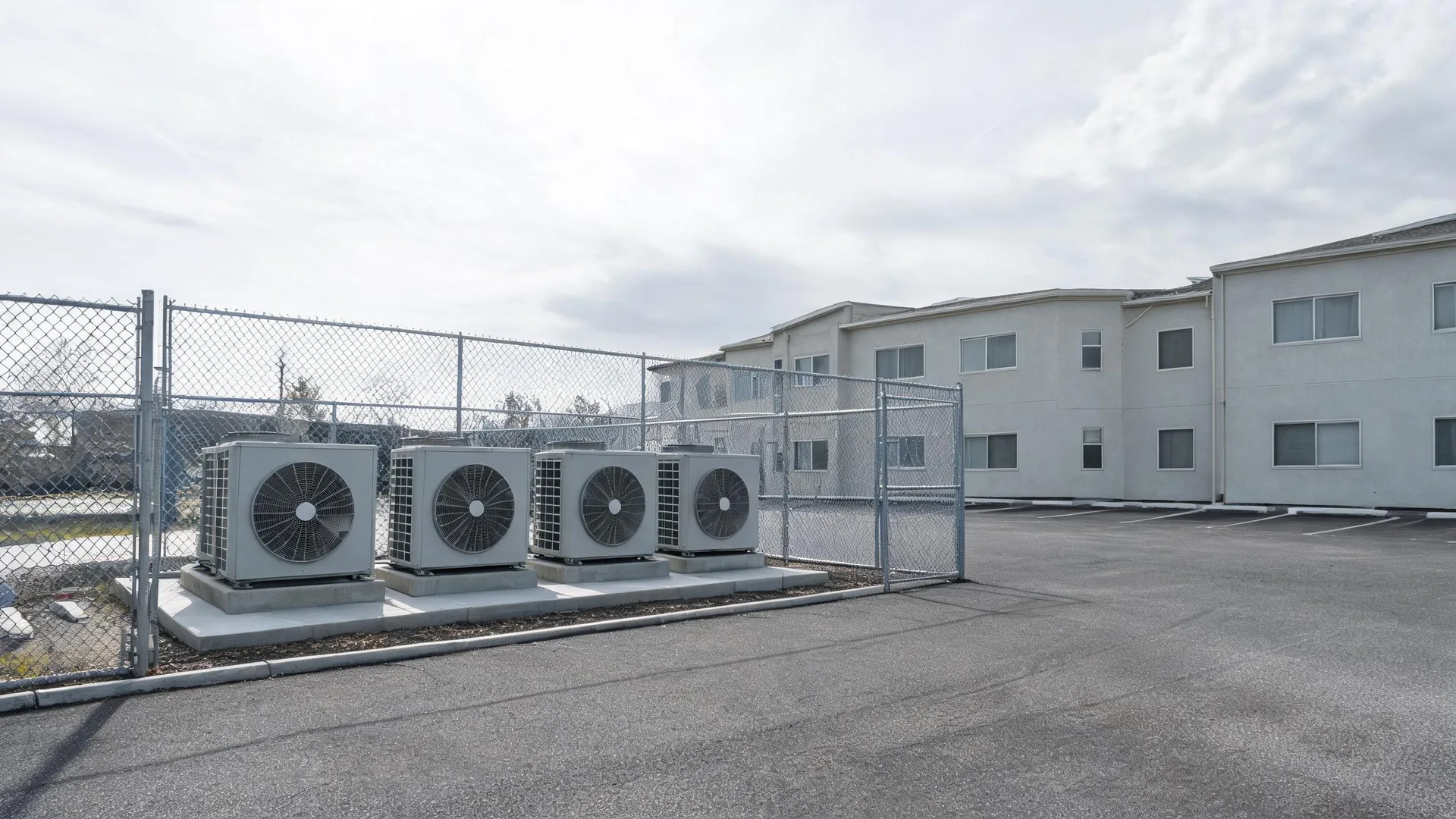
The rating does not tell you how it will feel indoors

SEER2 says nothing about how fast a system cools a room or how well it pulls moisture out of the air. A unit sized wrong for the ductwork can carry a strong rating and still run long and hard to hit the thermostat setting. The rating is one thing to weigh, not the whole decision.

Aerial view of a gray outdoor air conditioning condenser unit mounted on a concrete pad next to a house with vinyl siding.

Going above the federal minimum saves little here, about $10 a year.

  • A higher-efficiency unit$80 a year
  • A new unit at the federal minimum, 13.4 SEER2$90 a year

Estimates for a typical Oliver County home, from EIA household energy data, North Dakota fuel prices and NOAA climate normals. Your home will differ.

Install day starts with the old system coming out, not the new one going in. The outdoor unit gets disconnected and the refrigerant lines drained. If the indoor coil is being swapped too, that comes out as well. Once the old equipment is clear, the crew checks that the ductwork and electrical are actually ready for what's about to connect to them. Plans made from an inspection can still turn up a surprise once a panel is open or a duct run is exposed. Setting the new condenser and running the line set to the indoor coil is the physical work. After that comes pressure testing the lines, pulling a vacuum to clear out moisture and air, and charging the system with the amount of refrigerant that unit calls for. The last step takes the least time but matters the most. The system runs through a full cycle while someone checks the temperature drop at the vents and listens for anything that sounds wrong.