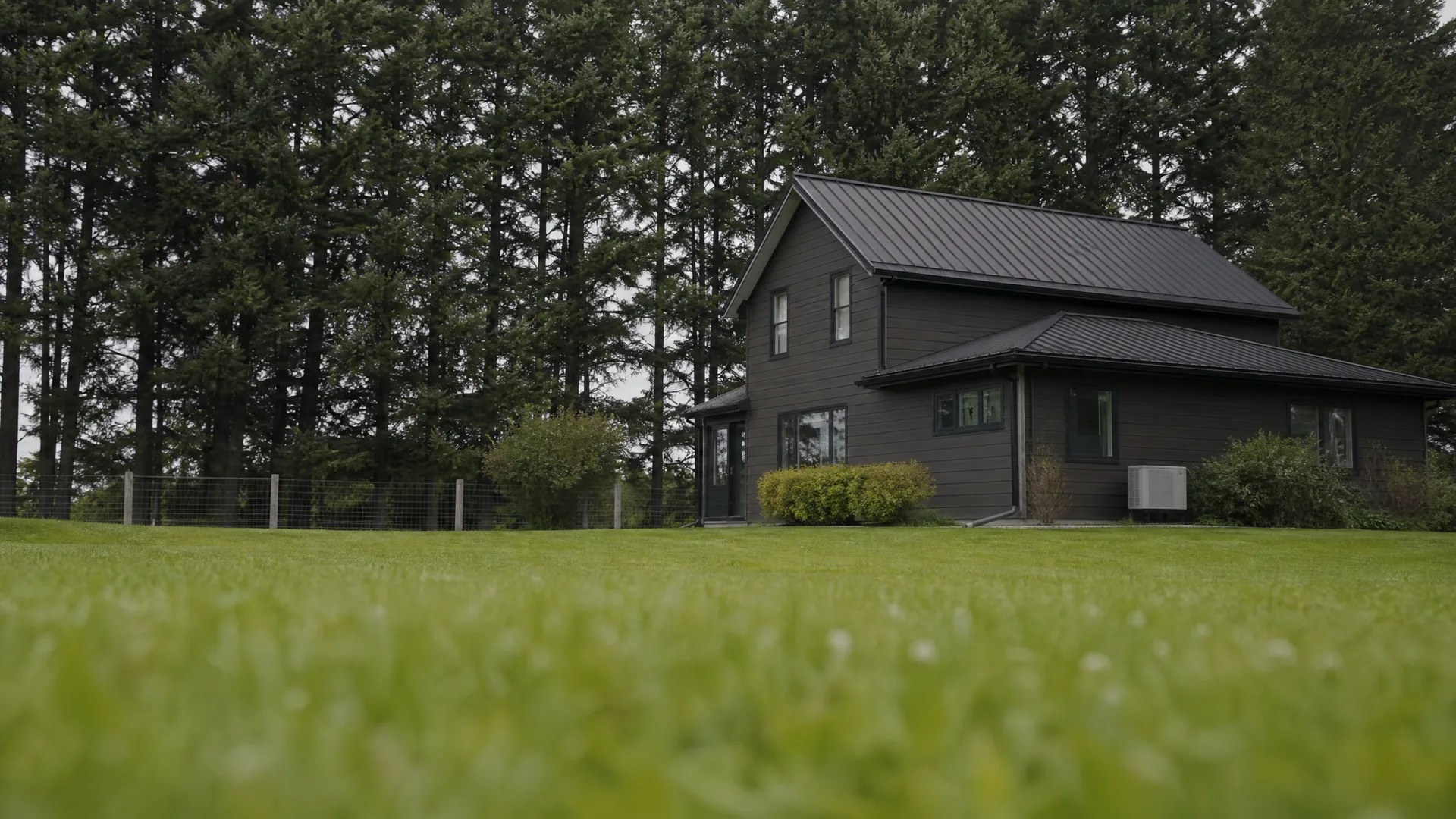



A dark-clad two-story house with a metal gable roof stands in front of tall evergreen trees, viewed low across a mown green lawn.

AC Installation in Cooperstown, ND

Tell us about the job

Takes about a minute. No obligation.

New system or replacementCentral ACGriggs County, ND
Step 1 of 2

What ZIP code is the job in?

Electricity heats 46.9 percent of homes in Griggs County, more than any other fuel. Bottled, tank or LP gas comes next at 34.7 percent, and fuel oil or kerosene heats another 10.1 percent. That electric majority matters for an AC installation because the wiring and panel capacity a heat-pump or central air system needs are already common in homes here. If your home heats with electricity now, adding or replacing cooling equipment usually fits what's already in place rather than asking for new infrastructure.

2 months
July through August, your air conditioner is on duty
78°F
the average summer afternoon it cools against
41 hail events
in ten years, and hail bends the fins on outdoor coils
13.4 SEER2
the federal minimum any new unit must meet
Isometric cutaway illustration of a single-story house showing interior rooms with furniture, attic ductwork connected to an indoor air handler, and an outdoor condenser unit on a pad linked by refrigerant lines.
Your air conditioner works hardest from July through August.

NOAA nClimDiv, 1991–2020 normals

Half the homes in Griggs County were built in 1958 or earlier.

A new AC system has to work with the ductwork and electrical panel already in that house, not the house it would get built into today.

Get it in before JulyCooling in Griggs County runs July through August. June is the month to have it done.

Air conditioners here only have to work July and August, and even then the afternoon high averages 78°F. That's a short, mild stretch compared to what a system would face further south. It means the equipment isn't cycling against long stretches of real heat year after year, so a mid-range system holds up fine without needing the top efficiency tier on the shelf. What matters more than chasing a high SEER2 number is a unit sized right for the house and installed well, since most of its life here is spent sitting ready rather than working hard.

Cheap power means fit matters more than the efficiency rating

At 11.51 cents a kilowatt-hour, electricity here costs less than it does in most of the country. Running cost won't carry an efficiency upgrade on its own, so what pays off is picking a system sized right for your house and installed well. That's worth getting a quote on.

Find a contractor
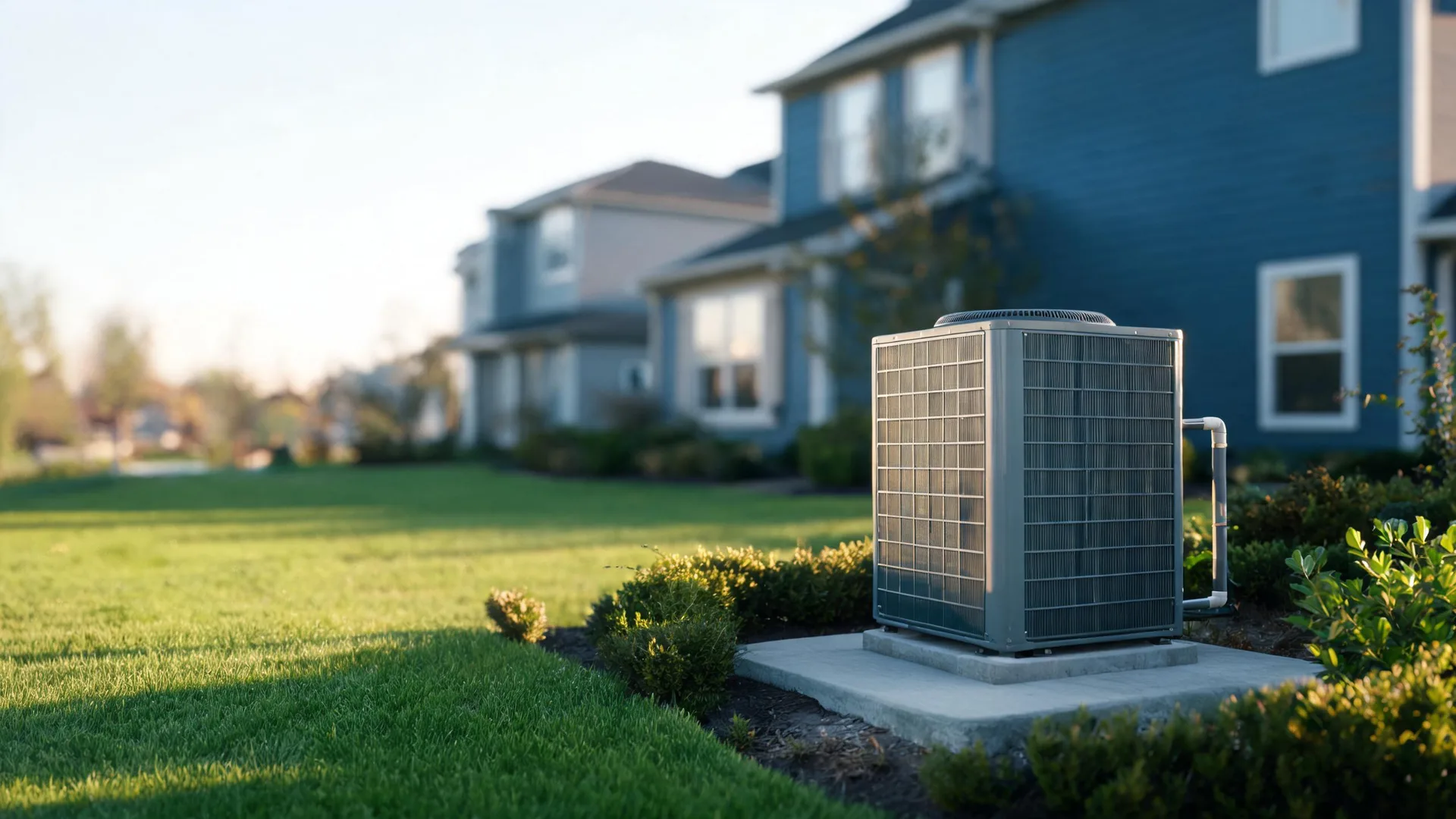
A gray cylindrical air conditioning condenser unit mounted on a concrete pad next to a light-colored vinyl-sided house exterior.

Idle most months, working two

Most of the year this unit does nothing but sit there. When July and August come, a mid-range system sized right for the house will handle what this climate asks of it. The thing worth paying for is the sizing and the installation, not a higher spec sheet. Ask the contractor what load calculation they're using for your house, and whether the ductwork already there can move the air a new system needs.

Ask for the load calculation, not a guess off square footage

A contractor should walk the house, check the windows and insulation, and run a room by room load calculation before naming a system size. A quote based only on square footage or on matching the old unit can land on the wrong size, and an oversized system cools the air fast without pulling the moisture out, so the house feels clammy even at the right temperature.

Ask what happens to the ductwork already in the house

New equipment still has to push air through old ducts. A contractor should check whether the existing ductwork can carry the airflow the new system needs, not just bolt a new unit onto what's there. Undersized or leaky ducts choke a system no matter how good the equipment is, and that's a question worth asking before the quote, not after installation.

Overhead view of a gray outdoor AC condenser unit on a concrete pad beside a mulched garden bed and a house with vinyl siding.

Going above the federal minimum saves little here, about $10 a year.

  • A higher-efficiency unit$70 a year
  • A new unit at the federal minimum, 13.4 SEER2$80 a year

Estimates for a typical Griggs County home, from EIA household energy data, North Dakota fuel prices and NOAA climate normals. Your home will differ.

Installation day starts with the old equipment coming out. The contractor recovers the refrigerant from the old system rather than venting it. That's required, and a good contractor will tell you that without being asked. The new outdoor unit usually sits on the existing pad if it's in good shape, and the line set gets reused if it checks out or replaced if it doesn't. Before any refrigerant goes in, the lines get evacuated to pull out moisture and air. After that comes startup, where the contractor checks the refrigerant charge against the manufacturer's numbers, confirms air is moving properly across the coil, and makes sure the thermostat is actually calling for cooling and getting it. A system that skips the evacuation or runs on a guessed charge instead of a measured one tends to show it later, running longer than it should without really cooling the house.