





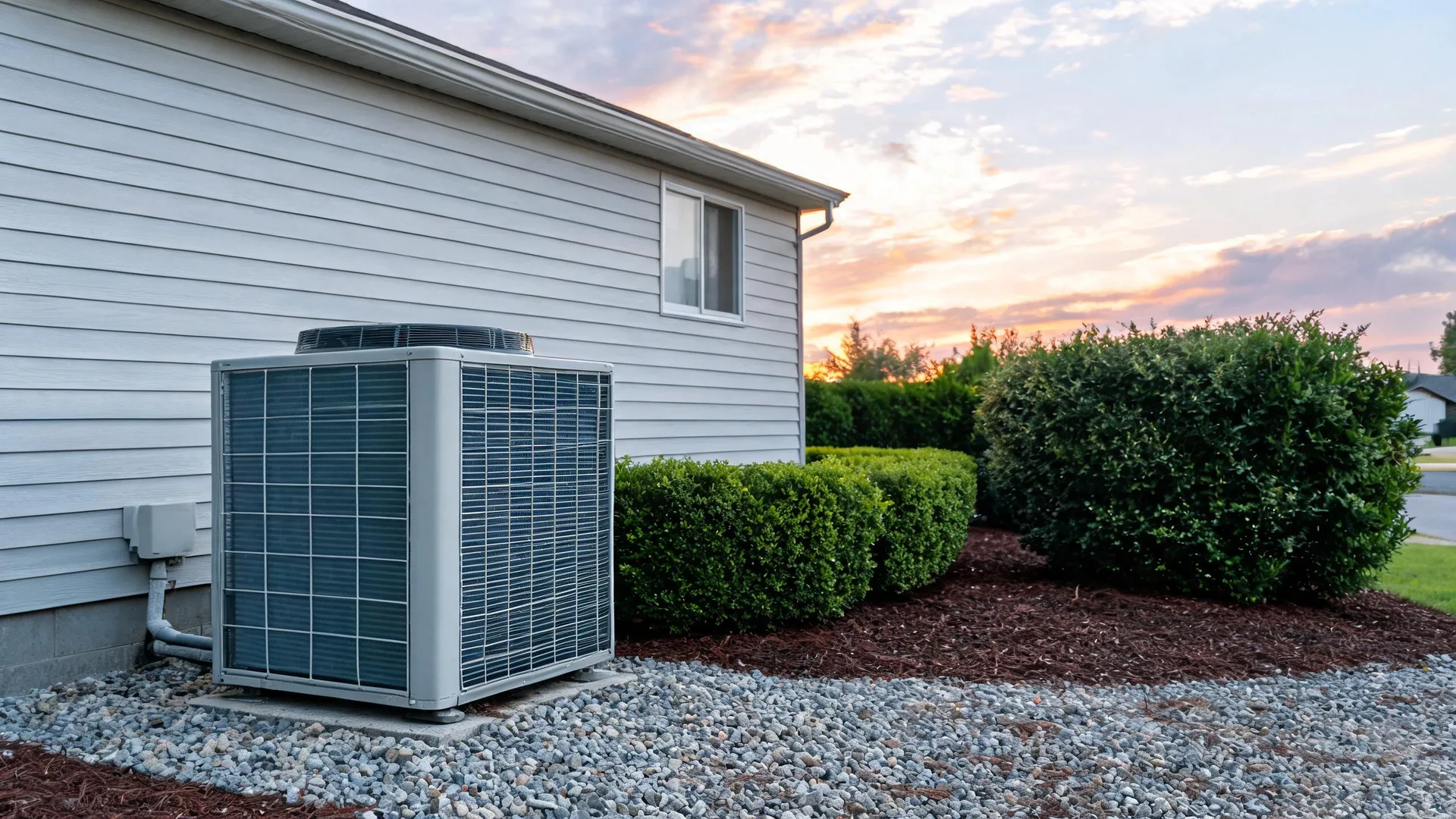
An outdoor air conditioning condenser unit installed beside the exterior wall of a blue vinyl-sided house at sunset.

AC Installation in Crosby, ND

Tell us about the job

Takes about a minute. No obligation.

New system or replacementCentral ACDivide County, ND
Step 1 of 2

What ZIP code is the job in?

June is the month to get this done here. Cooling only runs two months a year in Divide County, July and August, so there's a real window beforehand when nobody needs the air on yet. A new system put in during June gets checked out and running before the first hot day asks anything of it. Wait until July and you're installing while the house already needs cooling, which means more pressure to rush a decision that deserves some thought. Get it in during June and it's just sitting there ready when August's heat actually arrives.

2 months
July through August, your air conditioner is on duty
78°F
the average summer afternoon it cools against
20 hail events
in ten years, and hail bends the fins on outdoor coils
13.4 SEER2
the federal minimum any new unit must meet
Isometric line illustration of a cutaway house showing interior rooms, ceiling ductwork connected to an indoor air handler, and an outdoor condenser unit linked by refrigerant lines.
Your air conditioner works hardest from July through August.

NOAA nClimDiv, 1991–2020 normals

Electricity in North Dakota runs 11.51 cents per kilowatthour, well under what most of the country pays.

A high-efficiency AC costs more up front and takes longer to earn that back here, so pick the system that holds up, not just the one with the best rating.

Two months of work a year is not a hard life for a cooling system

Cooling runs July through August
Summer afternoons average 78°F
36 damaging wind events from 2015 to 2024

Any central air conditioner going in here now has to meet 13.4 SEER2 at minimum, if it's a split system under 45,000 Btu/h. That's a federal floor, not something a contractor can size down from. Divide County sits in the coldest zone under the energy code, which is mostly about how the furnace handles winter rather than the AC. But it tells you something about the systems built for this place. They need to hold up through a long winter and still cool well for the two months they're asked to. If a system qualifies for the federal tax credit, that's worth asking about before you settle on a model.

Get the new system sized to the house you actually have

Half the homes in Divide County were built in 1963 or earlier. A system going into a house that age has to match the ductwork and electrical already there, not the other way around. That's a sizing and fit question a contractor needs to walk through before anything gets installed, not after.

Find a contractor
An outdoor air conditioning condenser unit mounted on a concrete pad beside a house, with electrical conduit running to a wall-mounted disconnect box.

The box costs less than what it takes to make it fit

Installation cost comes down to what has to change before the new unit ever gets set in place. If the existing ductwork is the right size and in good shape, that keeps cost down. If it's undersized, leaky, or was built for a different kind of system, it has to be reworked first, and that's labor before the AC even enters the picture. The condenser and the indoor coil need to be matched to each other and to the size of the house, not just bought as a pair off a shelf. A unit too big for the space cycles on and off too often and never runs long enough to dehumidify right. One sized too small runs constantly and still doesn't keep up on the hottest days. The electrical panel matters too. Some installs need a new circuit or an upgraded disconnect, and that's work an electrician handles alongside the HVAC side. Where the condenser sits outside and how far the line set has to run to the indoor coil also plays into labor. A straightforward swap, same footprint, same ductwork, same electrical, is a different job than one where all of that has to be brought up to what the new system needs.

Ask what the warranty actually covers

The compressor warranty and the labor warranty are not the same thing, and most manufacturers only cover the part itself. If the installer doesn't offer their own labor warranty on top of that, a failure a few years in means you're paying someone to show up even though the part is free. Ask how long the labor is covered and whether it's the installer backing that or the manufacturer.

Ask who is pulling the permit

A permitted install means someone other than the contractor who did the work checks it once it's in. That inspection is what confirms the refrigerant charge, the electrical work, and the unit's connection to the house were all done to code. A contractor who skips the permit is asking you to trust their work with no one checking it, and that gap doesn't show up until something goes wrong.

Aerial view of a square outdoor air conditioning condenser unit on a concrete pad beside a house wall with a sliding glass door.

Going above the federal minimum saves little here, about $10 a year.

  • A higher-efficiency unit$60 a year
  • A new unit at the federal minimum, 13.4 SEER2$70 a year

Estimates for a typical Divide County home, from EIA household energy data, North Dakota fuel prices and NOAA climate normals. Your home will differ.

Installation day starts with the old unit coming out, the condenser outside and the coil in the air handler or furnace. The line set gets disconnected and usually replaced rather than reused, since old copper can carry contamination into a new system. Once the new condenser is set and the new coil is in, the lines get connected, and the whole system gets pulled down into a vacuum before any refrigerant goes in. That vacuum step pulls out moisture and air, and skipping it is what causes a lot of early failures. The refrigerant charge gets weighed in to the manufacturer's spec, not just filled until the pressure looks right. Once it's running, a tech checks the temperature drop across the coil and the amp draw on the compressor to confirm it's working the way it's supposed to before anyone calls the job done.