






A two-story dark gray sided house with a shingled hipped roof stands behind shrubs and a lawn photographed from ground level, with dense green trees behind it and a wire fence to the right.

AC Installation in Dickinson, ND

Tell us about the job

Takes about a minute. No obligation.

New system or replacementCentral ACStark County, ND
Step 1 of 2

What ZIP code is the job in?

Just over half the homes in Stark County heat with utility gas, and most of those furnaces sit paired with central air off the same ductwork. That matters for an AC install, because the ducts and the air handler are often already there waiting for a coil and a condenser. Electricity heats another 37.9% of homes here, usually through a heat pump or electric furnace, and those setups can work with central air too, just through a different connection. If your system came with the house, it's worth checking which of these you have before you get quotes, since the right unit depends on what it needs to tie into.

2 months
July through August, your air conditioner is on duty
81°F
the average summer afternoon it cools against
64 hail events
in ten years, and hail bends the fins on outdoor coils
13.4 SEER2
the federal minimum any new unit must meet
Isometric cutaway illustration of a house interior showing ducted air handling equipment and duct runs through rooms, connected by piping to an outdoor condenser unit on a pad outside the wall.
Your air conditioner works hardest from July through August.

NOAA nClimDiv, 1991–2020 normals

Cooling in Stark County runs July through August.

June is the month to get a new system in, before your AC has to work.

Two months of real heat a year is not a hard job for an AC

Cooling runs July through August
Summer afternoons average 81°F
95 damaging wind events from 2015 to 2024
Electricity here runs 11.51 cents a kilowatt-hourThat's below the national average, so a high-efficiency unit takes longer to pay for itself here.

Dickinson falls under zone 6A, the cold side of the energy code, with a long winter and enough summer humidity to matter. Any split-system air conditioner installed here has to meet a federal minimum of 13.4 SEER2. That rule narrows what a contractor can offer you, since anything below that rating simply can't be sold new for this kind of install. A federal tax credit is also available for qualifying high-efficiency equipment, worth asking about when you're comparing units. The SEER2 number tells you efficiency, not how much cooling capacity you're getting, so it's one piece of the decision, not the whole thing.

Put the money into the right fit, not the efficiency rating

Since power here won't pay back a high-efficiency unit fast, spend your attention on fit instead. Get a system sized to match your ductwork and your house, installed by someone who'll stand behind the work.

Find a contractor
A man in a cap, dark shirt and tan pants walks up porch steps toward a red front door, carrying a brown canvas tool bag, with a potted shrub beside the entry.
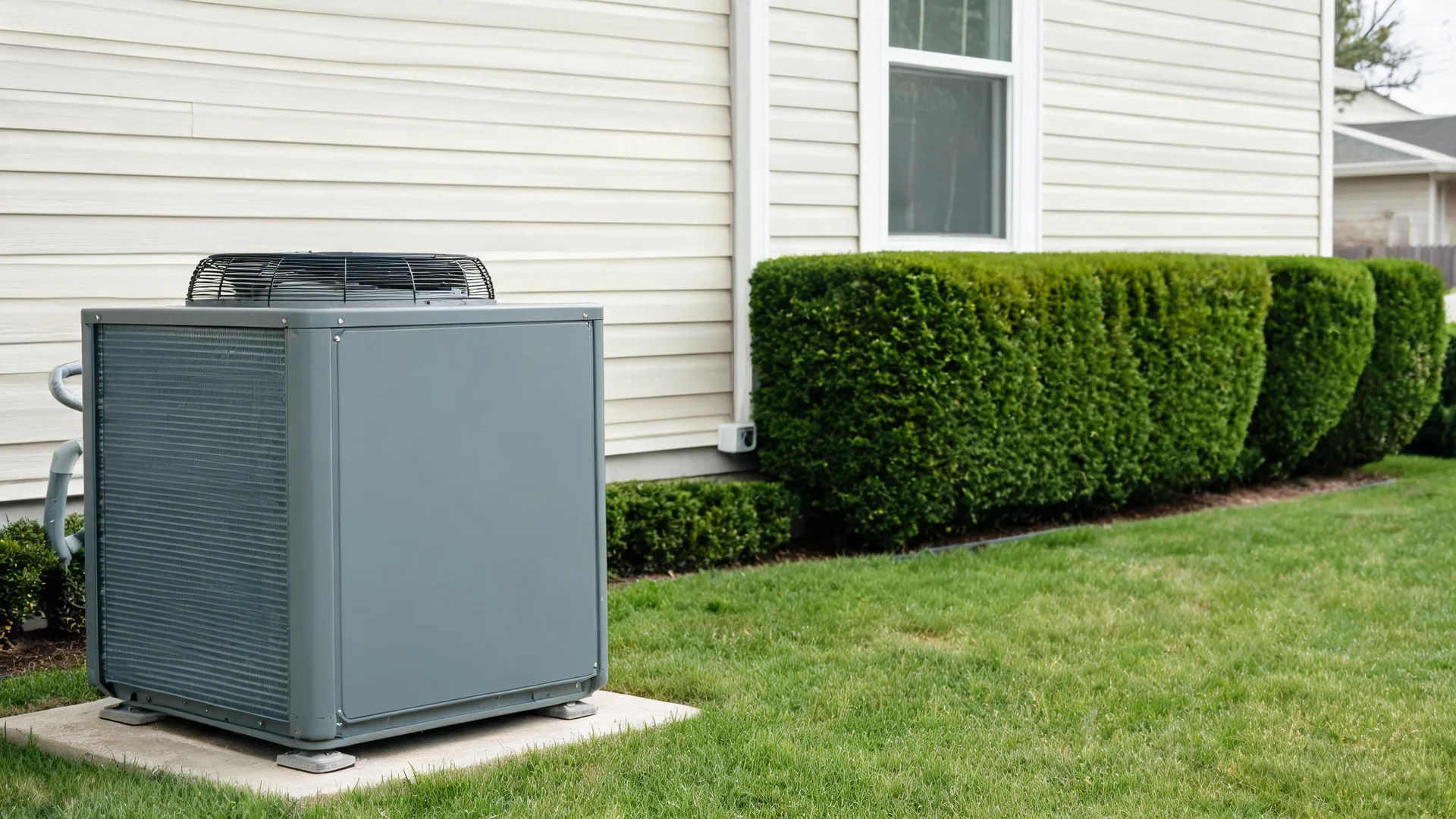
A gray cylindrical air conditioning condenser unit mounted on a concrete pad next to a light-colored vinyl-sided house exterior.

Two months a year, running easy

Two months of real work a year doesn't ask much of a system. With highs around 81 in June, July and August, a straightforward unit sized right for your ductwork will keep up without strain. Put the money toward a brand and install you trust rather than the highest SEER2 number on the sheet.

The number on the label is tested, not guaranteed

SEER2 comes from lab testing under set conditions, with the coil and condenser matched exactly as tested. Swap in a different coil, undersize the return, or leave the charge off a little, and the system won't deliver that number in your home. The rating tells you what the equipment is capable of, not what it will actually do once it's installed.

A higher rating usually means more to go wrong

Higher-efficiency condensers often run variable-speed compressors and more complex controls to hit their rating, where a lower-rated unit runs a simpler single-speed compressor. More parts managing the process means more that can need service down the road. That's not a reason to avoid them, just something to weigh against how much you expect to save on power.

An overhead view of a residential air conditioning condenser unit mounted on a concrete pad next to a house with vinyl siding.

Going above the federal minimum saves little here, about $10 a year.

  • A higher-efficiency unit$80 a year
  • A new unit at the federal minimum, 13.4 SEER2$90 a year

Estimates for a typical Stark County home, from EIA household energy data, North Dakota fuel prices and NOAA climate normals. Your home will differ.

A tech usually starts by walking the system before touching it. That means checking the ductwork, the electrical panel, and where the old condenser sits versus where the new one will go. Removing the old equipment comes first. The refrigerant gets recovered, not vented, and the old line set and pad usually come out too. Setting the new condenser means a level pad outside and clean connections to the line set, then the indoor coil gets matched into the plenum above or beside the furnace. The line set gets brazed, pressure tested, and pulled into a vacuum before any refrigerant goes in. Trapped air and moisture are what ruin a compressor early, so that step doesn't get skipped. Once the charge is weighed in, the tech runs the system and checks the temperature split between the return and supply air to confirm the airflow matches what that coil needs.