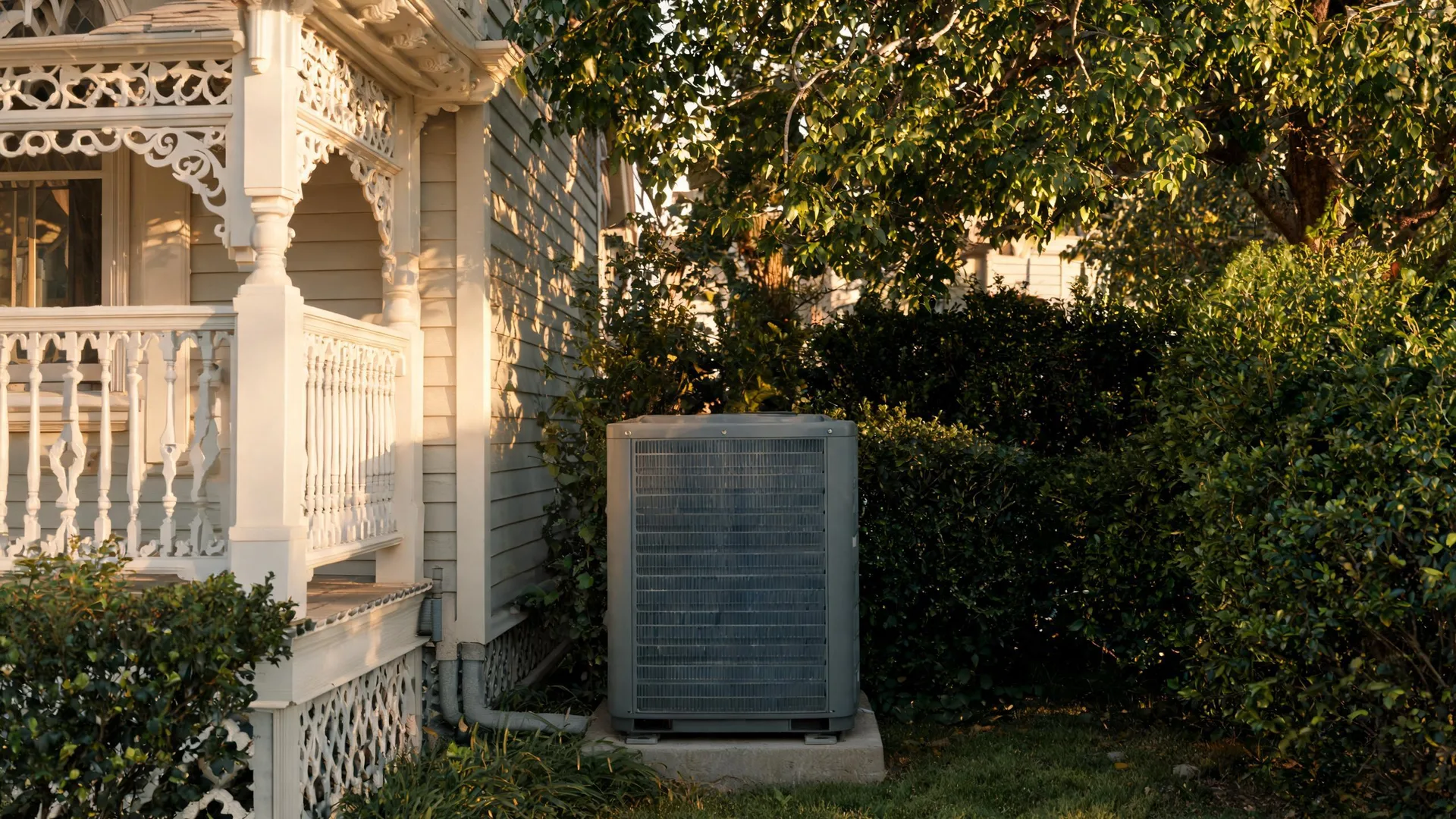
Gas furnaces are what most contractors here work on
Utility gas heats 42.5% of homes in McLean County, more than electricity or propane. An AC installed here usually pairs with a gas furnace, sharing the same ductwork and air handler.
Takes about a minute. No obligation.
Utility gas heats 42.5% of homes in McLean County, more than electricity or propane. An AC installed here usually pairs with a gas furnace, sharing the same ductwork and air handler.
Whether your home runs on gas, electric heat or propane, the air conditioner itself is a separate system. What matters for sizing and install is your ductwork and your home, not what fuel heats it in winter.

NOAA nClimDiv, 1991–2020 normals
Electricity in North Dakota ran 11.51 cents per kilowatthour in 2024, cheaper than most of the country.
A high-SEER2 system costs more up front and takes longer to earn that back here, so pick the AC for how well it fits and holds up, not just its rating.



McLean County is zone 6A, a cold, humid climate with winters that run long. That classification sets a floor for cooling equipment too. Any split-system air conditioner under 45,000 Btu/h installed here now has to meet 13.4 SEER2 at minimum, a federal rule for units built from 2023 on. That rules out the older, lower-efficiency units some contractors still have sitting in a warehouse. It does not mean you need to buy above the minimum. A system rated right at 13.4 SEER2 is legal to install and will cool your home fine, so the choice above that floor comes down to the unit itself, not the zone.
Half the homes in McLean County were built in 1975 or earlier, half in 1975 or later. Age doesn't change what a system has to do here. A correctly sized air conditioner will cool a house built either year, as long as it matches the ductwork already in place. There's nothing about this county that calls for sizing up or paying for more than you need.
Find a contractorAn air conditioner that's too big cools the room fast and shuts off before it pulls the moisture out of the air. That cycle repeats all day, and the house ends up cold and clammy at the same time. Short cycling also means the compressor starts and stops more often than it should, and starting is the hardest thing it does. Too small, and it runs flat out on the hottest afternoons and still can't keep up. Either mistake wears on the equipment. Sizing is worked out with a load calculation, which looks at the square footage, the windows, the insulation and the ductwork together, not a rule of thumb based on the size of the old unit. A contractor who skips that step and quotes a system before seeing the house is guessing.
A contractor recovers the refrigerant from the old system before cutting it loose. That refrigerant can't be vented into the air, it has to be captured with a recovery machine and taken off site. The electrical disconnect and any line set connections come apart once that's done.
Taking out the old condenser usually means checking the slab or pad it sat on, since a new unit needs a level, stable base. The line set running to the air handler gets inspected too. If it's the wrong size for the new system, it gets replaced rather than reused.
Estimates for a typical McLean County home, from EIA household energy data, North Dakota fuel prices and NOAA climate normals. Your home will differ.
Once the new condenser and coil are set, the installer connects the line set and pulls a vacuum on it before any refrigerant moves. That vacuum pulls out moisture and air, both of which cause problems if they stay trapped in the lines. Skipping it is how a system ends up with a leak or a compressor failure down the road, sometimes not for months. After that comes the charge, weighed in to match what the unit calls for, then a check of airflow across the coil and the temperature split between the air going in and the air coming out. The thermostat gets wired and set last, and the whole system runs through a cycle before the installer leaves so any issue shows up that day instead of the first hot week it has to work for real.