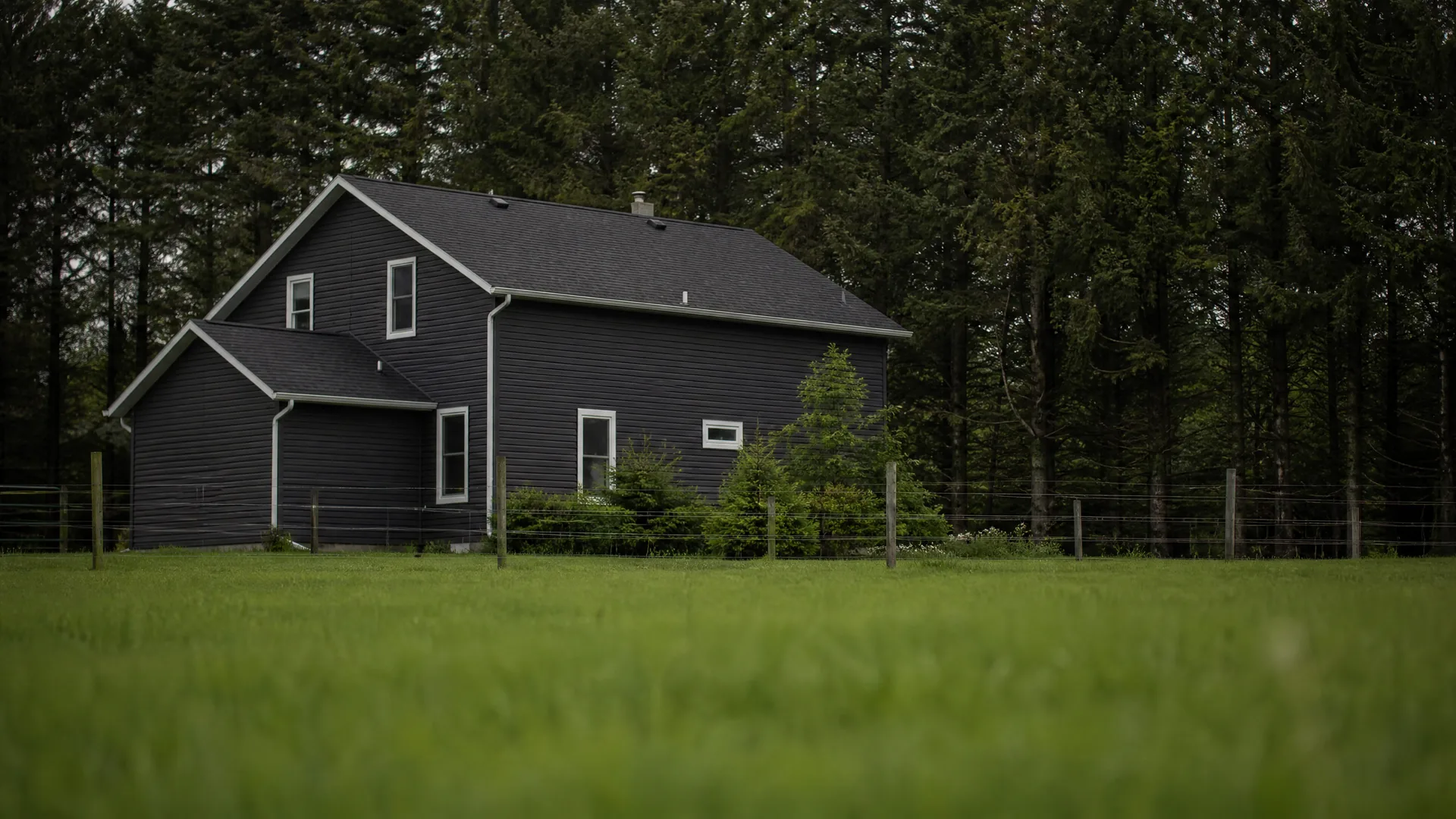
A dark-sided two-story house with white-trimmed windows and a gray shingled roof stands behind a wire fence in a green grass field, backed by a dense conifer forest.

AC Installation in Gwinner, ND

Tell us about the job

Takes about a minute. No obligation.

New system or replacementCentral ACSargent County, ND
Step 1 of 2

What ZIP code is the job in?

Electric heat is the most common setup here

Electricity heats 44.9% of occupied homes in Sargent County, more than gas or propane. Central air paired with an electric furnace or heat pump is a familiar combination for installers working in this area.


Propane has a real share too

Bottled, tank or LP gas heats a third of homes in the county. If that's what your house runs on, check what your current furnace or boiler can pair with before assuming the same AC setup as a neighbor's electric-heat home.

3 months
June through August, your air conditioner is on duty
80°F
the average summer afternoon it cools against
21 hail events
in ten years, and hail bends the fins on outdoor coils
13.4 SEER2
the federal minimum any new unit must meet
Isometric line illustration of a cutaway single-story house showing interior rooms, attic ductwork and an air handler, connected by a line to an outdoor condenser unit on a pad.
Your air conditioner works hardest from June through August.

NOAA nClimDiv, 1991–2020 normals

AC here runs June through August.

May is the month to get a new system in, before the first hot day asks it to work.

A standard system is the right call here

Half the homes here were built by 1975
Climate zone 6A
Power costs 11.51 cents a kWh statewide
Three months of work a yearJune through August, afternoons near 80°F. That's the job here.

A contractor sizes your system with a load calculation, not a tape measure on the house. Square footage plays a part, but so does how many windows you have and which way they face, how much insulation is in the attic, and how many people live there. Too big and the unit short cycles, cooling the air fast then shutting off before it pulls the humidity out, so the house feels clammy even at the temperature you set. Too small and it runs constantly on the hottest days and still can't keep up. Either mistake wears the system out faster than running the right size would. The load calculation also accounts for your ductwork, since a system sized perfectly for the house can still underperform if the ducts can't move that much air to every room.

Cheap power means fit matters more than efficiency

Electricity in North Dakota ran 11.51 cents per kilowatthour in 2024, cheaper than most of the country. A high-efficiency AC costs more up front and takes longer to earn that back here than it would somewhere with pricier power. Picking the right size and a unit that holds up matters more than chasing the highest efficiency rating on the shelf.

Find a contractor
A man seen from behind in a gray long-sleeve shirt and dark pants carries a canvas duffel bag up a porch step toward a red front door of a gray shingled house, with a potted shrub to the right.
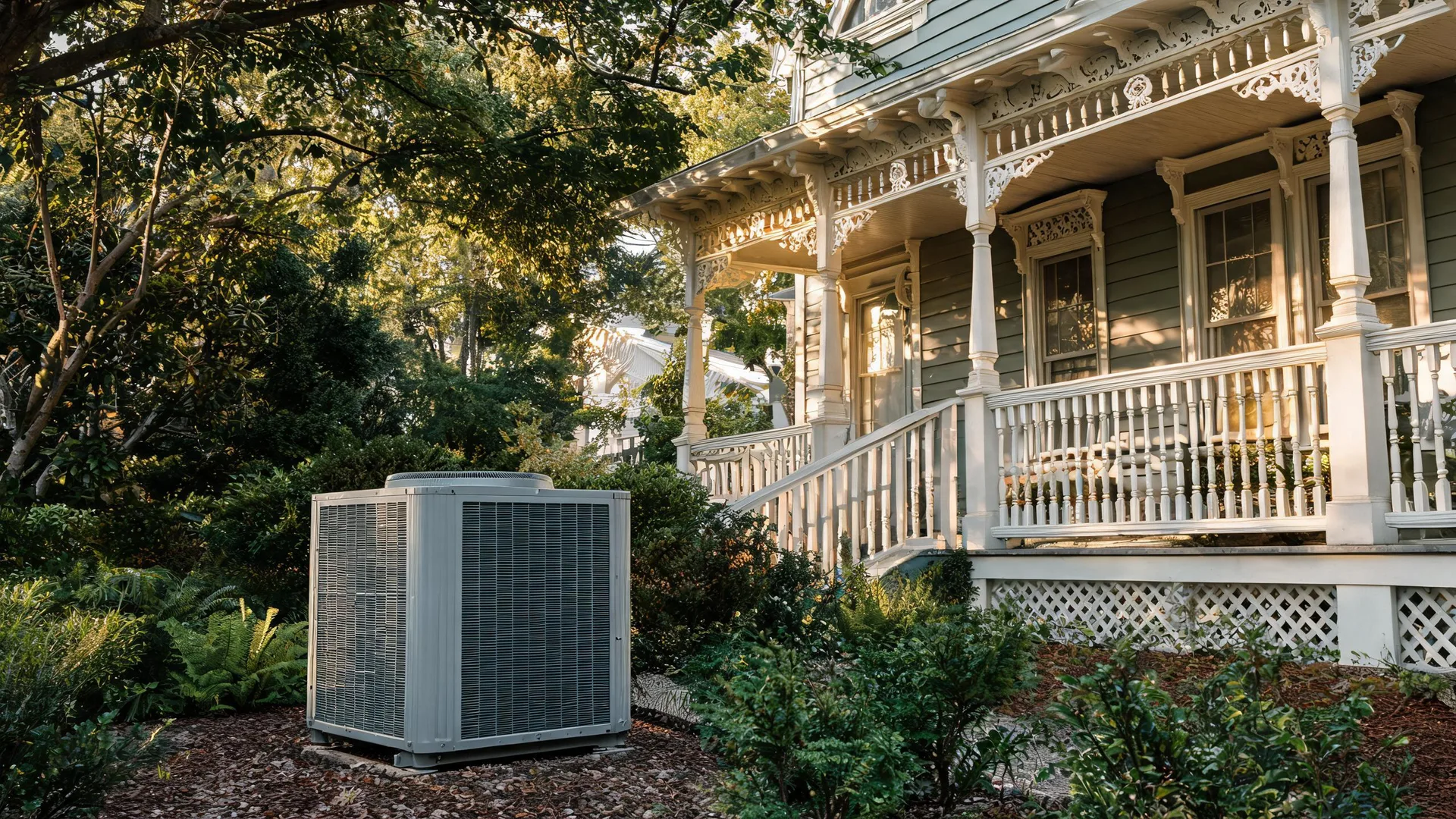
An outdoor air conditioning condenser unit mounted on a concrete pad beside a house, with electrical conduit running to a wall-mounted disconnect box.

Light duty, so build for reliability, not for a rating

Three months of work a year is not much to plan around. Pick a system sized right for the house and built well, and it will handle what this climate asks of it without trouble. The money is better spent there than on a top efficiency tier it will not run enough to earn back.

Ask what the warranty actually covers

Most manufacturer warranties cover parts but not the labor to replace them, and some require online registration within a set window after install or the coverage drops to a shorter default term. Ask the installer to show you the registration is done, not just promise it. If a compressor fails under warranty years from now, you still pay someone to pull it out and put the new one in unless the installer's own labor warranty covers that too.

Ask who services the brand locally

A unit is only as good as the parts supply behind it. If the compressor or control board fails and the nearest distributor for that brand is far off, a repair that should take a day can take a week waiting on the part. Ask the installer which brands they stock parts for and how they handle a breakdown on a system they didn't sell, in case you ever need a second opinion or they're no longer around.

An outdoor air conditioning condenser unit mounted on a concrete pad next to a blue-sided residential house at sunset.

Going above the federal minimum saves little here, about $20 a year.

  • A higher-efficiency unit$90 a year
  • A new unit at the federal minimum, 13.4 SEER2$110 a year

Estimates for a typical Sargent County home, from EIA household energy data, North Dakota fuel prices and NOAA climate normals. Your home will differ.

Installation day starts with the old equipment coming out, not the new one going in. The outdoor unit gets disconnected and hauled off, the old coil in the plenum comes out, and if the line set is being reused, a contractor flushes it before touching new equipment to it. Reusing a line set with the wrong residue left behind is how a brand new compressor fails early. Setting the new outdoor unit means a level pad, enough clearance around it for airflow, and copper lines run and brazed to the new coil. Once it's connected, the system gets charged with refrigerant to the exact weight the manufacturer specifies, checked against the pressures for the outdoor temperature that day, not just filled until a gauge looks about right. Before anyone leaves, it should run through a full cooling cycle while the contractor checks supply air temperature at a vent and walks the ductwork for anything that was disturbed during the swap.