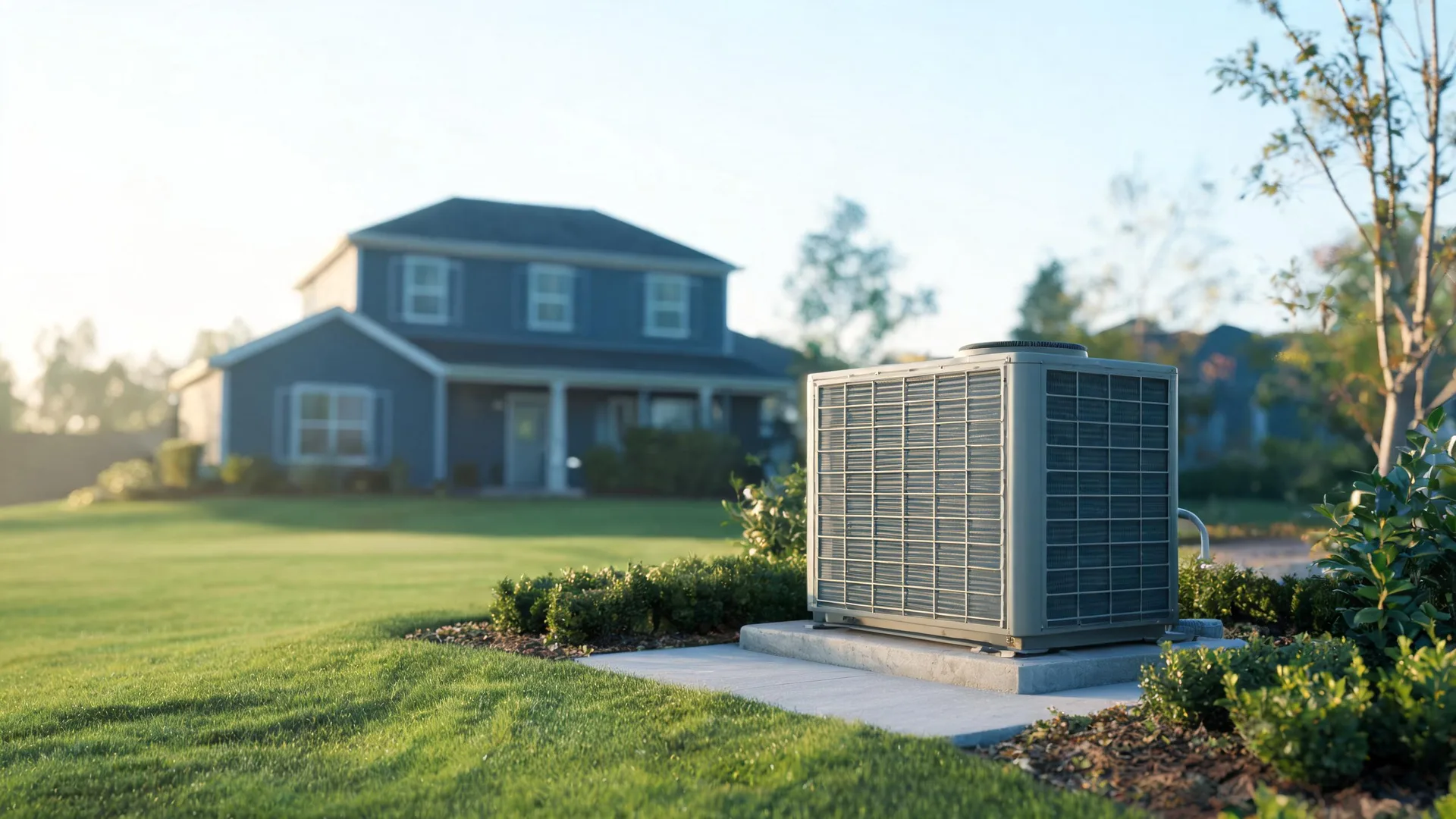
Aerial view of a gray outdoor air conditioning condenser unit mounted on a concrete pad next to a house with vinyl siding.

AC Installation in Jamestown, ND

Tell us about the job

Takes about a minute. No obligation.

New system or replacementCentral ACStutsman County, ND
Step 1 of 2

What ZIP code is the job in?

Gas furnaces are what most AC goes in alongside

Just under half the homes in Stutsman County heat with utility gas, more than any other fuel. A new AC unit here usually pairs with an existing gas furnace, sharing the ductwork and the air handler the furnace already uses.

The furnace and the AC are separate jobs

Adding or replacing central air does not mean touching the gas side of the system. The contractor working on your AC install will check that your existing ducts and air handler can handle the new unit, whatever heats your home.

2 months
July through August, your air conditioner is on duty
79°F
the average summer afternoon it cools against
59 hail events
in ten years, and hail bends the fins on outdoor coils
13.4 SEER2
the federal minimum any new unit must meet
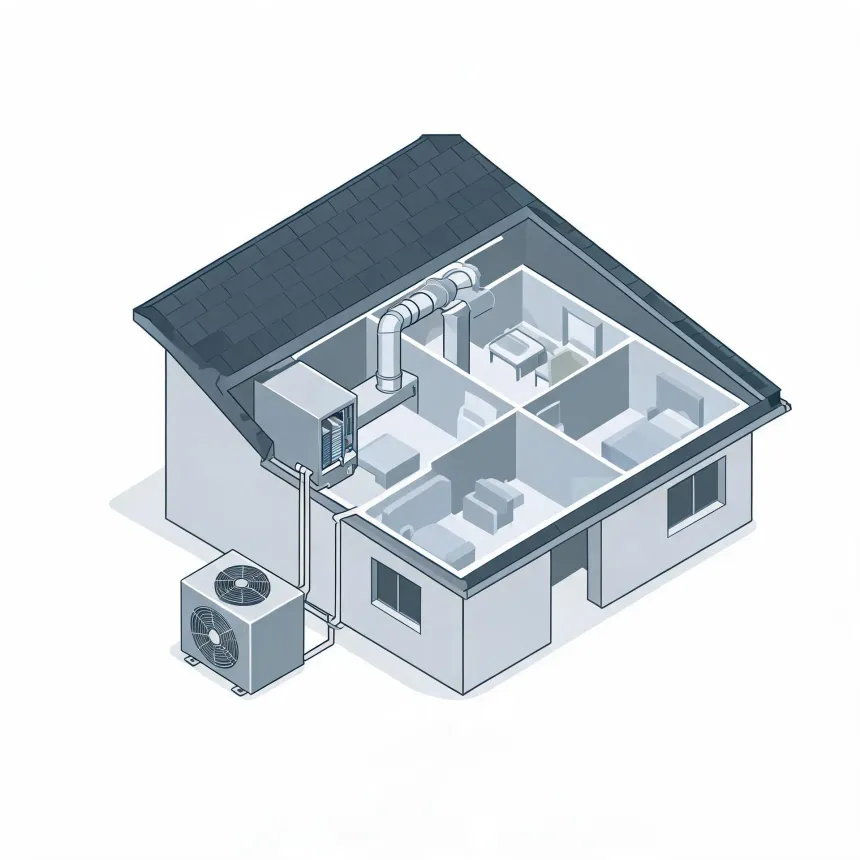
Isometric cutaway illustration of a single-story house showing interior rooms, ceiling ductwork connected to an indoor air handler, and an outdoor condenser unit beside the exterior wall.
Your air conditioner works hardest from July through August.

NOAA nClimDiv, 1991–2020 normals

Cooling in Stutsman County only runs July and August.

June is the month to get a new AC unit installed, before the heat shows up.

Two months of summer work, so this unit never has to prove much

Cooling runs July through August
Summer afternoons average 79°F
82 damaging wind events from 2015 to 2024

Half the homes in Stutsman County were built in 1973 or earlier. If your house is one of them, an AC installer still needs to work with what's already there, usually the same ductwork and the same air handler your furnace uses. Older homes weren't all built to one standard, and what's behind your walls now depends on whether anyone's updated it since. A new unit sized for a different house won't cool yours right, so the install has to start with what your ducts and air handler can actually carry.

Replace it before the season

Replace it before the season starts, so it happens on your schedule, not in a hurry.

Find a contractor
A gray residential air conditioning condenser unit mounted on a concrete pad outdoors, surrounded by green grass under a partly cloudy blue sky.

Size it to the house, not the old unit

Before an installer quotes a number, have them measure what your ducts can carry. That means pulling static pressure readings, not eyeballing the vents and guessing. A load calculation for the house, not a swap for the unit that's already there, is what tells you the right size. If your home is one of the older ones here, this step matters more, not less.

The old unit gets hauled away

Once the new outdoor unit is set and the line set is connected, the old condenser comes out. The refrigerant inside has to be recovered first, not vented, so the old unit doesn't run again after that point even if someone wanted it to.

The refrigerant matters more than the metal

Older units often ran on a refrigerant that's being phased out, and a contractor can't just top off a system built for one refrigerant with another. That's part of why repairing an old unit gets harder over time, and why replacement stops being optional once a leak shows up in an old coil.

Aerial view of a gray central air conditioning condenser unit on a concrete pad next to a house with vinyl siding.

Going above the federal minimum saves little here, about $10 a year.

  • A higher-efficiency unit$70 a year
  • A new unit at the federal minimum, 13.4 SEER2$80 a year

Estimates for a typical Stutsman County home, from EIA household energy data, North Dakota fuel prices and NOAA climate normals. Your home will differ.

On install day, the old outdoor unit comes out first, then the indoor coil if that's being replaced too. The line set gets swapped or flushed, since leftover oil and debris from the old system can damage a new compressor. Everything gets connected, the system gets charged with refrigerant to the exact amount the manufacturer specs, and then it runs through a check. That means confirming the airflow across the coil, checking the refrigerant charge against the target pressures, and testing that the thermostat is actually talking to the system. A unit that looks installed but was never checked this way can run for a while before a low charge or weak airflow shows up as a problem.