A snow-covered residential street at twilight with illuminated houses, bare trees, and an orange horizon glow beneath a deep blue sky.

AC Installation in Langdon, ND

Tell us about the job

Takes about a minute. No obligation.

New system or replacementCentral ACCavalier County, ND
Step 1 of 2

What ZIP code is the job in?

Bigger isn't better

An oversized air conditioner cools the air fast and shuts off before it pulls the moisture out of the room. The house ends up cold and clammy at the same time, and the compressor spends its life switching on and off instead of running steady. That short cycling wears on the parts that are hardest to replace.


The size comes from a load calculation

A contractor works out the right size by looking at the square footage, the windows, the insulation, and how much shade the house gets, not by matching whatever unit was there before. If you're replacing a system, ask whether this was done or whether the new unit is just sized to match the old one.

1 months
July through July, your air conditioner is on duty
76°F
the average summer afternoon it cools against
38 hail events
in ten years, and hail bends the fins on outdoor coils
13.4 SEER2
the federal minimum any new unit must meet
Isometric grayscale illustration of a cutaway house with the roof lifted, showing interior rooms, ductwork, an indoor air handler, and an outdoor condenser unit beside the building.
Your air conditioner works hardest from July through July.

NOAA nClimDiv, 1991–2020 normals

Cooling in Cavalier County only runs in July.

June is the month to put in a new system, before the one month it has to work.

Half the homes here were built by 1968, and a new system has to fit the house, not the other way around

Half the homes here were built by 1968
Cooling runs July through July
Summer afternoons average 76°F

July is the only month cooling runs here, and even in summer the afternoon high averages just 76 degrees. That is not much heat for a compressor to work against. A system here spends most of the year idle, so you don't need the highest-efficiency unit on the lot to get your money's worth. Put the budget toward a unit that is sized right and installed well. Wind and hail are the bigger risk to anything sitting outside, with dozens of damaging wind events and dozens of hail events on record for the county, so a cabinet built to hold up outdoors matters more here than a high SEER2 number.

A new system here has to clear a 13.4 SEER2 floor, and the federal credit can offset the cost of going higher

Any central air conditioner installed new here has to meet 13.4 SEER2 at minimum, the federal floor for units this size. A federal tax credit is available for qualifying high-efficiency equipment, worth checking into alongside whatever a contractor quotes you.

Find a contractor
A man in a cap, dark shirt and tan pants walks up porch steps toward a red front door, carrying a brown canvas tool bag, with a potted shrub beside the entry.
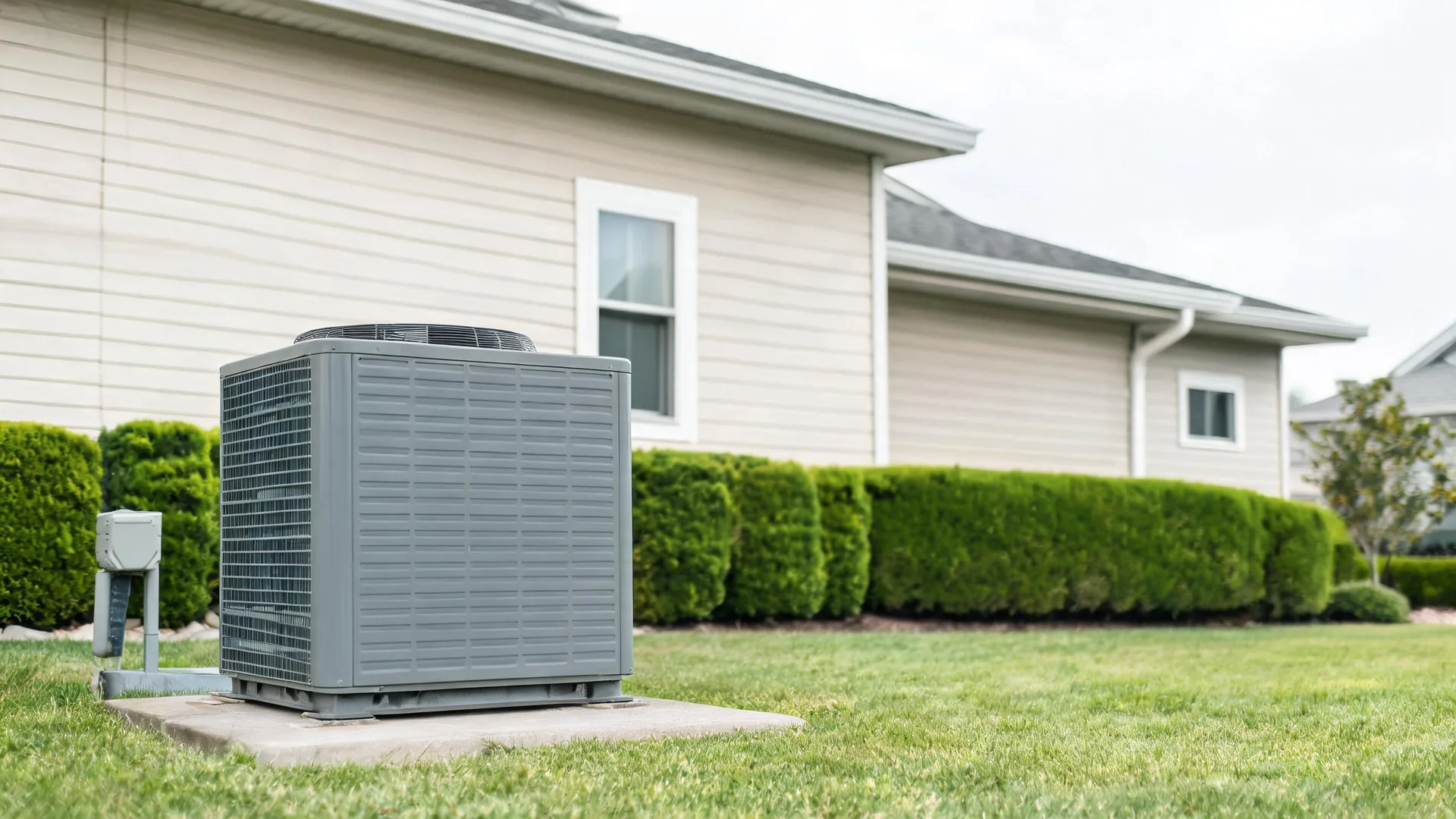
A gray cylindrical air conditioning condenser unit mounted on a concrete pad next to a light-colored vinyl-sided house exterior.

One month of work a year

One month of real work a year is not much of a life for a compressor. That is the whole case for spending less on efficiency and more on the cabinet and the installation. When a contractor sizes the unit right and seals the ducts properly, you've covered what actually determines how it runs day to day. The outdoor unit is what takes the beating here, sitting through the wind and hail that hit this county dozens of times over the past decade, so ask what the cabinet is made of and how it is anchored down before you ask about the SEER2 number.

The ductwork decides more than the unit

If the ducts are too small, leaky, or poorly laid out, even the right size air conditioner will struggle to deliver air where it needs to go. A contractor may need to seal joints, add a return, or resize a trunk line before the new unit goes in. That work is part of the installation even though it isn't the equipment itself, and skipping it means the new system fights the same problems the old one did.

The line set and electrical hookup aren't automatic carryovers

A new outdoor unit doesn't always match the refrigerant line, breaker size, or disconnect that served the old one. If the new system needs a different charge or draws power differently, the line set may need replacing and the electrical panel may need a new circuit. Whether the old infrastructure can be reused or has to be swapped out changes what the job involves before the unit is even set in place.

Aerial view of a gray central air conditioning condenser unit on a concrete pad next to a house with vinyl siding.

Going above the federal minimum saves little here, about $10 a year.

  • A higher-efficiency unit$50 a year
  • A new unit at the federal minimum, 13.4 SEER2$60 a year

Estimates for a typical Cavalier County home, from EIA household energy data, North Dakota fuel prices and NOAA climate normals. Your home will differ.

Install day starts outside, with the old condenser disconnected and hauled off before the new one gets set on its pad. Inside, the coil above the furnace or air handler usually gets swapped too, since the old coil was matched to the old unit and not the new one. The refrigerant lines get connected, pressure tested, and pulled down to a vacuum to clear out any air and moisture before the system is charged. Electrical hookups and the disconnect box outside get checked against what the new unit actually draws, not just reused as they were. Once it's wired, charged, and the ducts are confirmed to be moving air where they should, the contractor runs it through a full cycle and checks the temperature split at the vents before calling it done. None of that happens if the ductwork or line set needs rework first, so a straightforward swap and a job that turns up a hidden problem can take very different amounts of time.