






A snow-covered residential street at twilight with illuminated houses, bare trees, and an orange horizon glow beneath a deep blue sky.

AC Installation in Lisbon, ND

Tell us about the job

Takes about a minute. No obligation.

New system or replacementCentral ACRansom County, ND
Step 1 of 2

What ZIP code is the job in?

Electricity heats more homes in Ransom County than any other fuel, at 48.1%. Bottled or LP gas comes next at 32.0%, and fuel oil heats a smaller share. Gas furnaces are rare out here. Central air runs on electricity no matter what heats the house, so the furnace fuel matters less for AC than what's already feeding the system. If your home already runs on electric heat, the wiring and panel may need less rework to add central air or a heat pump than a home built around a gas or oil furnace.

3 months
June through August, your air conditioner is on duty
80°F
the average summer afternoon it cools against
28 hail events
in ten years, and hail bends the fins on outdoor coils
13.4 SEER2
the federal minimum any new unit must meet
Isometric cutaway illustration of a single-story house showing interior rooms with ductwork and an air handler, connected by refrigerant lines to an outdoor condenser unit on the left.
Your air conditioner works hardest from June through August.

NOAA nClimDiv, 1991–2020 normals

Half the homes in Ransom County were built in 1969 or earlier.

A new AC system in a house that old has to work with the ductwork and panel already there, not a blank slate.

May is the month to get it done, before June turns the heat on

Cooling runs June through August
Summer afternoons average 80°F
46 damaging wind events from 2015 to 2024
Three months of real work a yearCooling runs June through August here, with afternoon highs around 80°F

Lisbon sits in climate zone 6A, cold with winter running long. That zone doesn't put any limit on air conditioners. Federal rule does. Any new split-system central AC has to meet at least 13.4 SEER2. That's the floor, not a target, so whatever a contractor installs now will already clear it. If you're replacing an older system, it may sit well below that number, which is worth asking about when you compare what's coming out to what's going in.

Cheap power here means fit matters more than the efficiency number

At 11.51 cents per kilowatthour, electricity here costs less than it does in most states. That changes what's worth paying for. A high-SEER2 system saves more on paper than it will on your bill, since the power behind it is already cheap. What matters more is a system sized and installed to match the ductwork and panel already in your house. Get a quote and talk through what fits.

Find a contractor
An outdoor residential air conditioning condenser unit mounted on a concrete pad, surrounded by gravel with a blue sky in the background.

What's already there decides the job

An old house doesn't mean old ductwork, and it doesn't mean the panel can't take the load. Some have been updated over the years. Some haven't. Before a new system gets sized, a contractor should look at what's actually there. The duct runs, the shape they're in, what the panel can handle. That's what decides whether a system goes in clean or needs work first to make room for it.

Bigger isn't better

An oversized air conditioner cools the air fast and shuts off before it pulls the moisture out of it. The room feels cold and clammy at the same time. A unit sized right runs longer, steadier cycles and actually dries the air while it cools it.

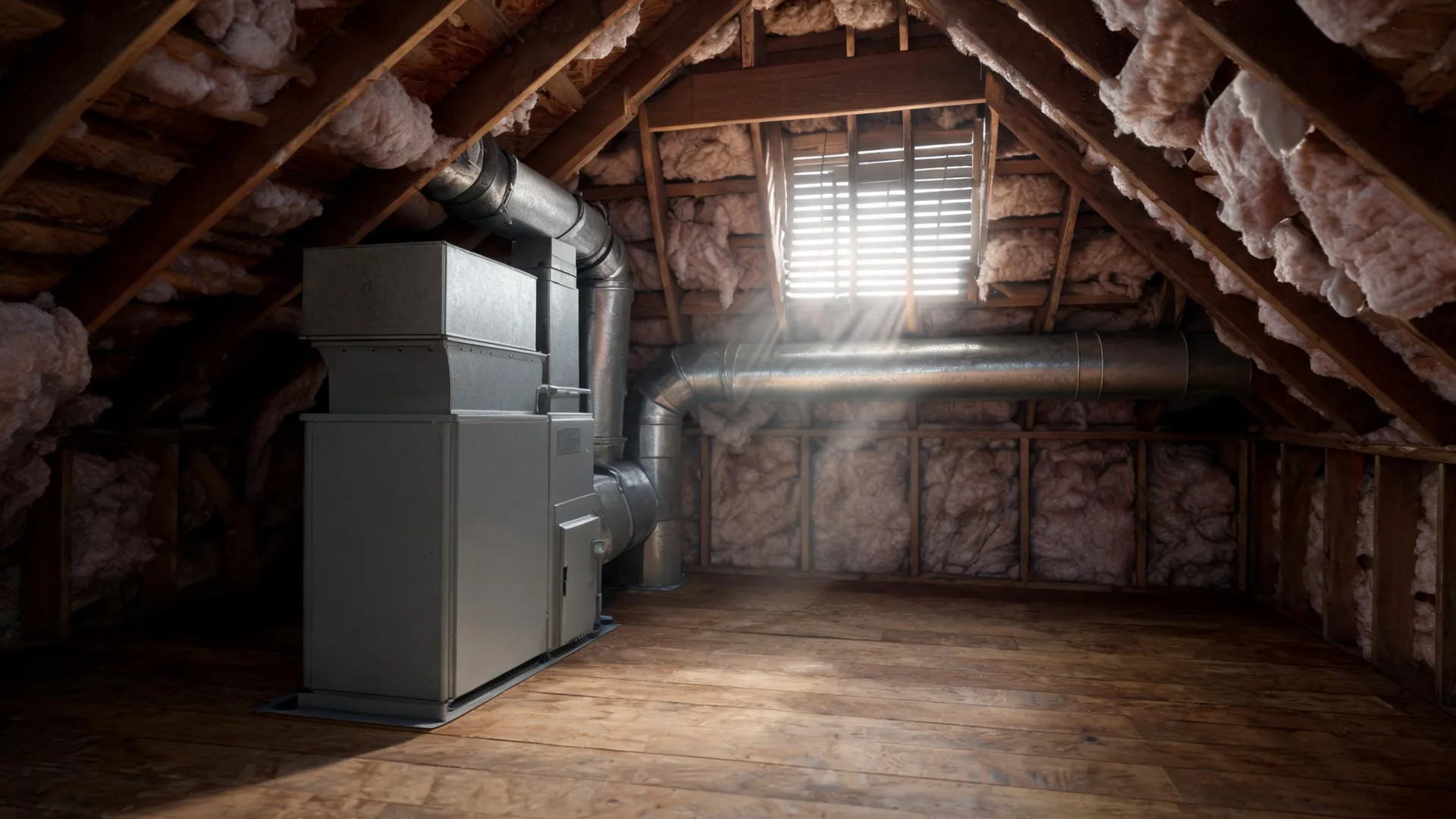
The load calculation

A contractor works out the right size by looking at the square footage, the windows, the insulation, and how the ductwork is laid out, not just the size of the system being replaced. Houses that look alike from the outside can call for different equipment depending on what's actually inside the walls and ducts.

An overhead view of a residential air conditioning condenser unit mounted on a concrete pad next to a house with vinyl siding.

Going above the federal minimum saves little here, about $10 a year.

  • A higher-efficiency unit$90 a year
  • A new unit at the federal minimum, 13.4 SEER2$100 a year

Estimates for a typical Ransom County home, from EIA household energy data, North Dakota fuel prices and NOAA climate normals. Your home will differ.

Taking out the old condenser and coil is part of the job, not an extra. A contractor disconnects the refrigerant lines, recovers whatever charge is left since it can't legally be vented into the air, then pulls the old unit and sets the new one in its place. If the line set or the indoor coil is being reused, it gets checked for leaks and matched to the new system first. Old refrigerant blends aren't always compatible with new equipment, so swapping one coil but not the other can cause problems down the line. None of it is heavy lifting for a licensed contractor, but it is a reason the job takes more than just setting a new box outside.