





A large mown lawn bordered by a chain-link fence on the left, with a row of two-story light-colored houses in the background and overhanging tree branches framing the top of the frame under an overcast sky.

AC Installation in Marmarth, ND

Tell us about the job

Takes about a minute. No obligation.

New system or replacementCentral ACSlope County, ND
Step 1 of 2

What ZIP code is the job in?

More than half the homes in Slope County run on bottled or tank LP gas, with another 16.6% on utility gas. Electricity heats just 14.2%. If your furnace runs on gas, central air pairs with it the way it already has for most of your neighbors, using the existing ductwork to move cool air in summer. That makes AC installation here mostly a matter of matching the right outdoor unit to the furnace and coil you already have, not rethinking how the house is set up.

2 months
July through August, your air conditioner is on duty
81°F
the average summer afternoon it cools against
34 hail events
in ten years, and hail bends the fins on outdoor coils
13.4 SEER2
the federal minimum any new unit must meet
Isometric line illustration of a cutaway single-story building showing interior rooms, ceiling ductwork and an air handler, connected by lines to an outdoor condenser unit beside the exterior wall.
Your air conditioner works hardest from July through August.

NOAA nClimDiv, 1991–2020 normals

Cooling in Slope County runs July through August.

June is the month to get a new AC in, before the first hot day puts it to work.

Half the homes here were built by 1961. A new system has to work with the house you have, not the one built today.

Half the homes here were built by 1961
Climate zone 6A
Power costs 11.51 cents a kWh statewide
Two months of work a yearAfternoon highs average 81°F here, July and August, then the system sits idle the rest of the year.

Marmarth falls in zone 6A, the cold end of the state's energy code, built around keeping heat in through a long winter. That same zone rule still shapes what you can put in for summer. Any split-system air conditioner under 45,000 Btu/h built new has to meet a federal minimum of 13.4 SEER2, no matter where it goes in. So you won't find a compliant unit rated below that number here or anywhere else. A system right at that minimum will still cool the house fine. Going higher than 13.4 is about what you want to pay to run it, not about whether it's allowed in.

Fit matters more than the efficiency rating

Electricity here runs 11.51 cents per kilowatthour, below what most of the country pays. A higher SEER2 rating costs more up front, and with power this cheap it takes longer to earn that back. The unit that matches your furnace and ductwork is worth more than a few extra efficiency points you may barely use in two months of summer.

Find a contractor
A gray cylindrical air conditioning condenser unit mounted on a concrete pad next to a light-colored vinyl-sided house exterior.

Sized for your house, not the last one

An oversized unit cools the room fast, shuts off, then starts again a few minutes later. It never runs long enough to pull much moisture out of the air, so the house feels cold and still damp. A unit sized right runs a longer, steadier cycle and leaves the air dryer when it shuts off. Sizing starts with a load calculation that looks at the square footage, the windows, the insulation and the orientation of the house, not just a rule of thumb based on the old unit. Bigger isn't a safe bet here. An undersized unit struggles on the hottest afternoons, but an oversized one wears out its own compressor sooner, short-cycling on and off thousands of extra times over its life. Whoever installs it should run the calculation on your house, not carry over the number from the last system.

The old unit gets disconnected, not left in place

A contractor recovers the refrigerant from the old outdoor unit before touching anything else. That refrigerant can't legally be vented into the air, so it gets pulled into a tank and handled separately. Once the lines are empty, the old unit comes off the pad, the line set gets checked over, and what's left gets hauled away.

The coil usually goes with it

The indoor coil sits in the plenum above or beside the furnace, and it's matched to the old outdoor unit's refrigerant and capacity. Putting a new condenser on an old coil often means mismatched pressures and poor cooling, so most installs swap the coil along with the outdoor unit. The furnace itself usually stays, since it's a separate system that just happens to share the ductwork.

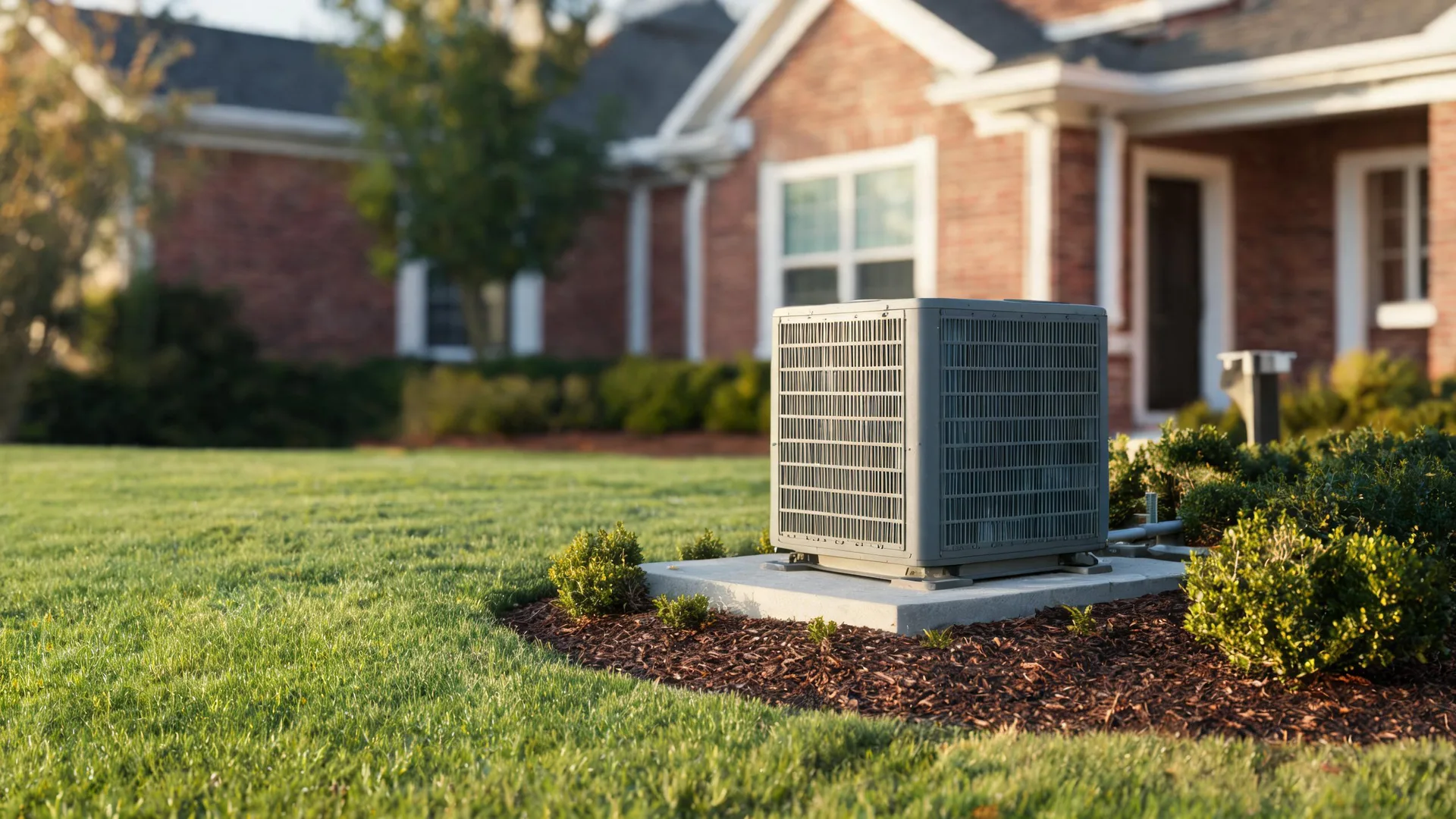
An overhead view of a residential air conditioning condenser unit mounted on a concrete pad next to a house with vinyl siding.

Going above the federal minimum saves little here, about $10 a year.

  • A higher-efficiency unit$90 a year
  • A new unit at the federal minimum, 13.4 SEER2$100 a year

Estimates for a typical Slope County home, from EIA household energy data, North Dakota fuel prices and NOAA climate normals. Your home will differ.

Installation day starts with the old system coming apart, not the new one going in. A contractor recovers the refrigerant, disconnects the line set, and pulls the old condenser off the pad before anything new goes in. Once the coil is out and the lines are clear, the new line set gets brazed in, the new condenser sets on the pad, and the coil goes in or gets checked in the plenum. The whole system then gets pulled down with a vacuum pump to clear out air and moisture before any refrigerant goes in. It has to hold that vacuum. If it won't hold, there's a leak to chase down first. Refrigerant gets weighed in to the manufacturer's spec, then subcooling and superheat get checked against the charts for that unit. Last comes the startup check, airflow across the coil, the temperature split between return and supply, and a look at how the system cycles before anyone calls it done.