





A snow-covered small-town street at dusk, lined with illuminated two-story houses and a grain elevator on the horizon.

AC Installation in McClusky, ND

Tell us about the job

Takes about a minute. No obligation.

New system or replacementCentral ACSheridan County, ND
Step 1 of 2

What ZIP code is the job in?

Most homes in Sheridan County run on bottled or tank LP gas, just over half. Electricity comes second at 36.1%. For AC installation that split matters less than it would for a furnace job, since central air pairs with either setup the same way, running off its own electrical circuit regardless of how the house is heated. If your home already has ductwork for an LP furnace, a central AC system uses those same ducts. What matters more is whether that ductwork and electrical panel can handle the new load, which a contractor can check before anything goes in.

2 months
July through August, your air conditioner is on duty
79°F
the average summer afternoon it cools against
23 hail events
in ten years, and hail bends the fins on outdoor coils
13.4 SEER2
the federal minimum any new unit must meet
Isometric line illustration of a cutaway house showing an indoor air handler with branching ducts in the attic space, connected by a line set to an outdoor condenser unit beside the building, with simple furniture in two rooms.
Your air conditioner works hardest from July through August.

NOAA nClimDiv, 1991–2020 normals

Half the homes in Sheridan County were built in 1967 or earlier.

A system going into a house that age has to work with the ductwork and panel already there, not the ones a new build would have.

June is the month to get this done, before August asks anything of it

Cooling runs July through August
Climate zone 6A
Power costs 11.51 cents a kWh statewide

North Dakota electricity ran 11.51 cents per kilowatthour in 2024, cheap next to most of the country. That changes the math on which system to install. A higher SEER2 unit costs more up front and the extra you spend on it takes longer to earn back when power is already inexpensive. That doesn't make efficiency worthless, it just means it shouldn't be the only thing driving the decision. What the unit is matched to, and whether it's sized right for the house, matters more for how it runs day to day than a couple of points of SEER2.

Cooling here runs two months a year. Buy for that, not for more.

Two months of real cooling, July and August, with afternoon highs averaging 79°F. That's not much work for a system to do. A reliable unit sized right for your house will handle it without strain, and you don't need to pay for the highest SEER2 number on the lot to get that.

Find a contractor
An outdoor air conditioning condenser unit mounted on a concrete pad surrounded by gravel, photographed against a partly cloudy blue sky.

Two months of work a year, not much to show for it

July and August are the only months this unit earns its keep. The rest of the year it sits. That's a short, easy life next to what systems in hotter parts of the country go through, and it means age and upkeep matter more here than wear from the running itself. A unit that sits idle most of the year doesn't need to be the toughest one on the lot. It needs to start reliably when July comes and hold up through two months of real use, nothing more.

Ask what size unit they're proposing, and why

A contractor should size a system by running a load calculation on the house, not by matching whatever is already out there or guessing from square footage. A unit too big cools the air fast and shuts off before it pulls moisture out, leaving the house cold and damp feeling. A unit too small runs constantly and still can't keep up on the hottest afternoons. Ask what numbers went into the sizing, not just what size they landed on.

Ask what happens to the parts that stay behind

If the ductwork, the line set, or the electrical disconnect are staying in place rather than being replaced, ask why they're a good match for the new unit. Old ducts sized for an old system can choke airflow to a new one. A line set built for a different refrigerant can cause problems down the road. Reusing parts isn't wrong, but it should be a decision someone can explain, not a shortcut nobody mentions.

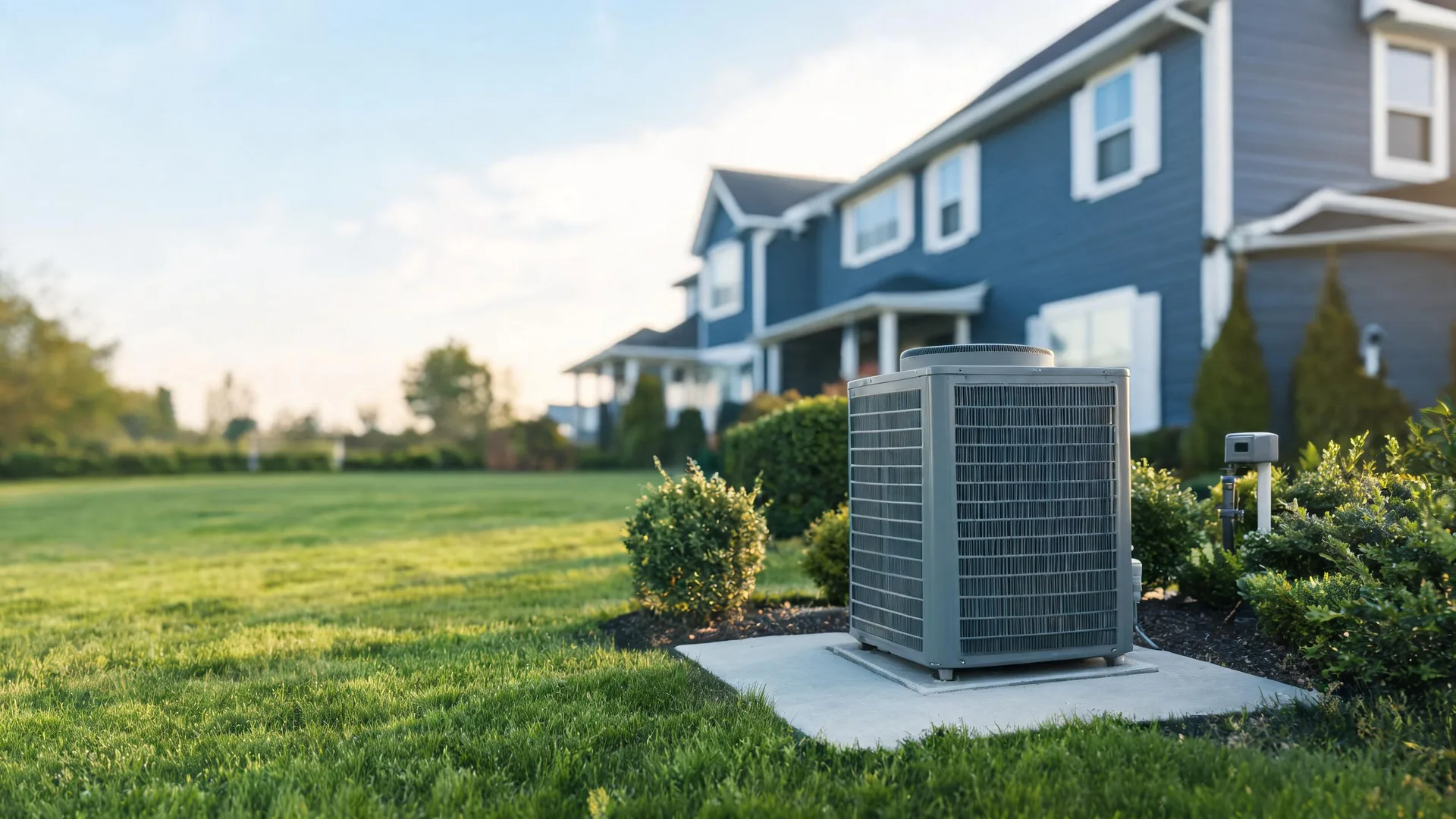
An outdoor air conditioning condenser unit positioned on a concrete pad next to a blue-sided house, surrounded by green shrubs and flowering hydrangeas at sunset.

Going above the federal minimum saves little here, about $10 a year.

  • A higher-efficiency unit$70 a year
  • A new unit at the federal minimum, 13.4 SEER2$80 a year

Estimates for a typical Sheridan County home, from EIA household energy data, North Dakota fuel prices and NOAA climate normals. Your home will differ.

Installation day starts outside, with the old condenser coming off its pad and the new one set in place. Inside, the coil above the furnace or air handler gets swapped too, since the coil and condenser are matched as a pair and sized together. A contractor runs new refrigerant lines or checks the existing ones can handle the new unit, then pulls a vacuum on the lines to clear out air and moisture before any refrigerant goes in. That step matters more than it looks. Moisture left behind can freeze or corrode parts later on. The electrical disconnect by the condenser gets tied in, and the system gets its own breaker sized for what the new unit draws. Once everything's connected, the system runs through a full cycle while the contractor checks refrigerant charge, airflow at the vents, and that the thermostat is talking to the unit the way it should.