






A snow-covered residential street at twilight with illuminated houses, bare trees, and an orange horizon glow beneath a deep blue sky.

AC Installation in Minot, ND

Tell us about the job

Takes about a minute. No obligation.

New system or replacementCentral ACWard County, ND
Step 1 of 2

What ZIP code is the job in?

Most homes in Ward County heat with utility gas, 56.7% of them. Electricity comes in second at 34.5%, and a smaller share run on bottled or LP gas. If your home has a gas furnace, central air almost always pairs with it. The furnace moves the air through the ducts in winter, and the same ductwork and blower carry cooled air in summer. That setup makes adding or replacing an AC straightforward when the gas furnace is already in place, since the main job is matching an outdoor unit and coil to the system you have.

2 months
July through August, your air conditioner is on duty
79°F
the average summer afternoon it cools against
70 hail events
in ten years, and hail bends the fins on outdoor coils
13.4 SEER2
the federal minimum any new unit must meet
Isometric line illustration of a cutaway house showing interior rooms with ductwork, an indoor air handler, and an outdoor condenser unit connected by lines, on a white background.
Your air conditioner works hardest from July through August.

NOAA nClimDiv, 1991–2020 normals

Cooling in Ward County only runs July and August.

Get the new system in by June and it's ready before the first hot day, not during one.

Two months of real heat a year is not much to ask of a system

Cooling runs July through August
Summer afternoons average 79°F
51 damaging wind events from 2015 to 2024

Ward County sits in zone 7, the coldest tier the energy code sets. Any split-system air conditioner under 45,000 Btu/h installed today has to meet a federal minimum of 13.4 SEER2. That floor applies everywhere, not just here, so it is less a local upgrade than what is left on the shelf. A contractor sizing a system for your home is already working within that limit before efficiency comes up as a selling point.

Cheap power means fit matters more than efficiency

Electricity in North Dakota ran 11.51 cents per kilowatthour in 2024, well below what most of the country pays. With power that cheap, a high-efficiency model takes longer to earn back the difference in the bill. Picking the unit that matches your home and ductwork matters more than chasing a SEER2 number past the minimum.

Find a contractor
A man in a cap, dark jacket and tan trousers climbs porch steps toward a red door, carrying a worn olive duffel bag, with a potted shrub beside gray clapboard siding.
An outdoor air conditioning condenser unit mounted on a concrete pad surrounded by gravel, photographed against a partly cloudy blue sky.

The old unit goes, but what was in its lines matters more

The old outdoor unit does not get reused once a system comes out. Refrigerant gets recovered from the lines before anything is disconnected, since it can't be vented to the air. From there the cabinet, coil and compressor are hauled off for scrap, mostly for the copper and aluminum in them. If the line set is being reused, a contractor flushes it out first. Old refrigerant and old oil left behind can contaminate the new charge, and a compressor running on contaminated refrigerant fails early. Most of the time it's simpler to run new line set than to trust a flush on old lines, especially if they sat outside for years taking weather. None of that work shows once the new unit is in, but skipping it is how a brand new system ends up with the same problems as the one it replaced.

The ductwork decides more than the unit does

A furnace and coil can be sized right and still underperform if the ducts can't move enough air across them. Narrow or leaky runs force the blower to work harder and shorten the life of the parts pushing against that resistance. A contractor checking duct size and condition before quoting equipment is looking at the part of the system most likely to limit it.

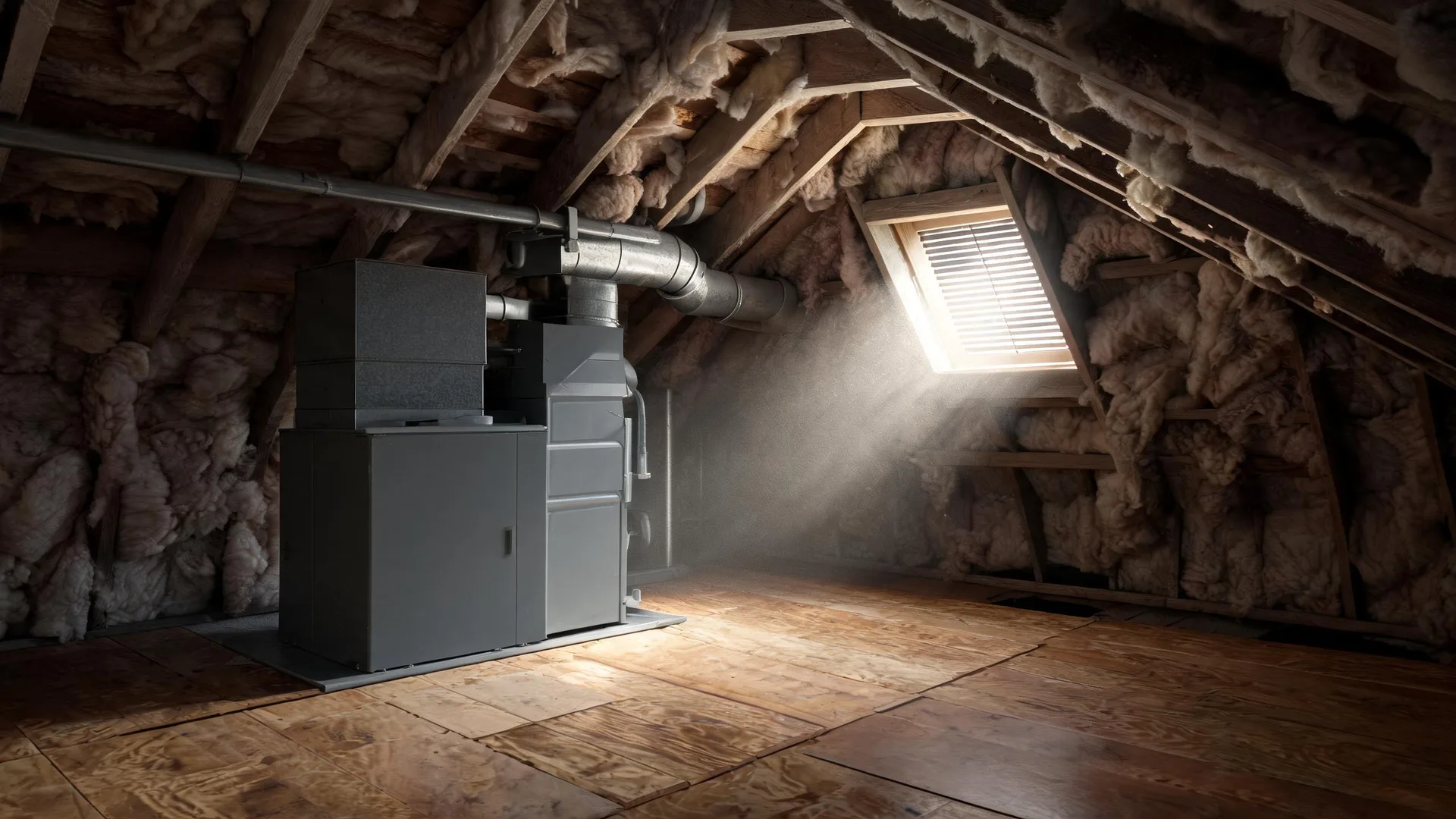
Where the lines run and where the unit sits add work

A straight line set between a close outdoor pad and the indoor coil is a different job than one that has to snake through framing or run a longer distance. Clearing space for the new unit, routing wiring to it, and tying in the condensate drain all take time on top of the equipment itself. The site the system goes into shapes the labor as much as the system does.

Overhead view of a gray residential air conditioning condenser unit mounted on a concrete pad beside a house with asphalt shingle roofing.

Going above the federal minimum saves little here, about $10 a year.

  • A higher-efficiency unit$70 a year
  • A new unit at the federal minimum, 13.4 SEER2$80 a year

Estimates for a typical Ward County home, from EIA household energy data, North Dakota fuel prices and NOAA climate normals. Your home will differ.

Install day starts outside. The contractor sets the new outdoor unit on its pad and runs the line set to the indoor coil. Before any refrigerant goes in, the lines get pulled down to a vacuum. That step matters more than it looks. Any moisture or air left in the lines works against the system for as long as it runs. Inside, the coil gets matched to the furnace or air handler already sitting in the ductwork, and the electrical and condensate drain get tied in. Once it's charged and running, a contractor checks the temperature split at the vents and the pressures on the lines to confirm it's actually cooling, not just turning on. That sequence doesn't change with the size of the house or the brand on the unit. It's the same whether the old system failed last week or finally gave out after years of limping along.