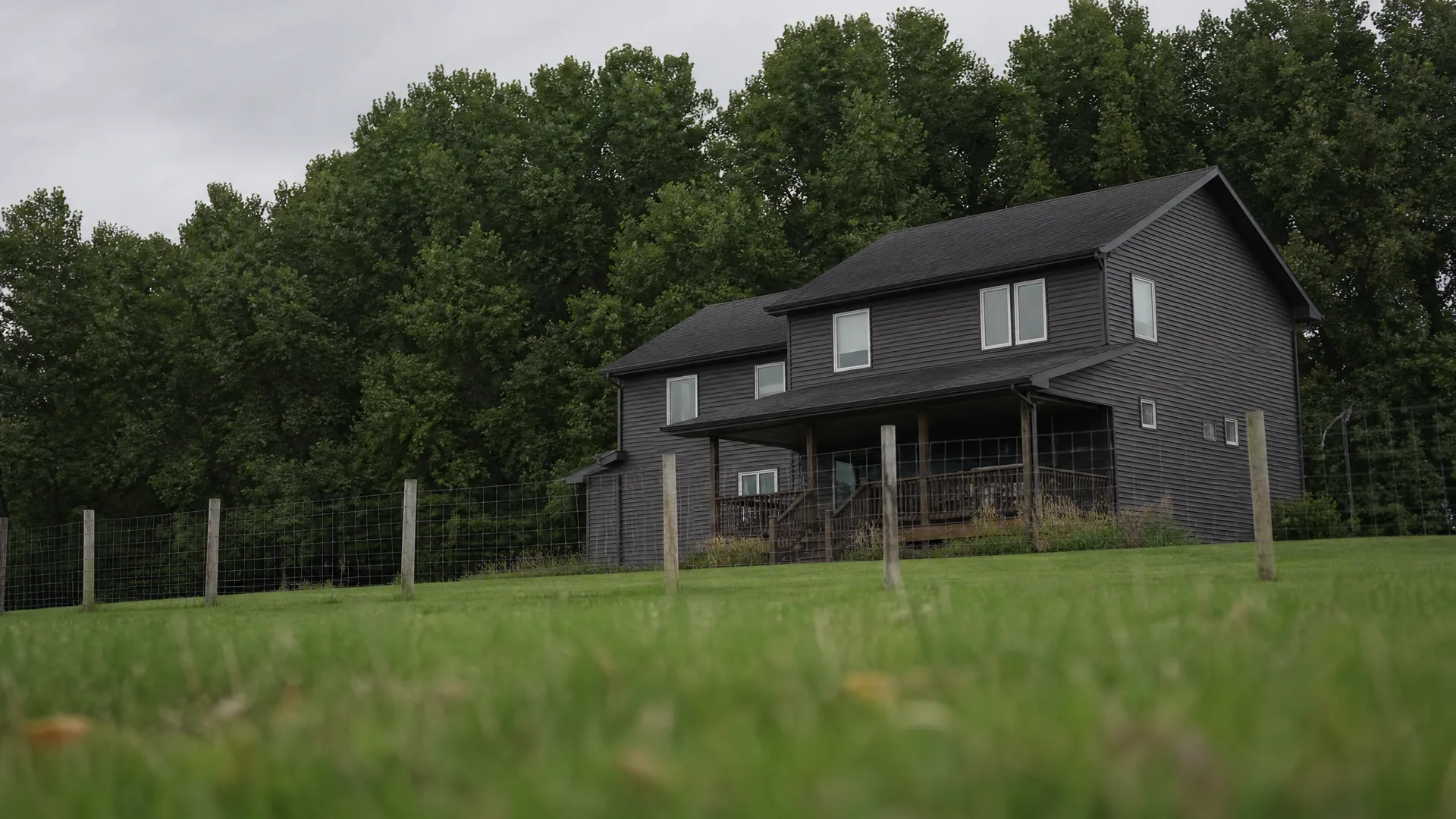





A two-story dark gray house with a covered porch stands behind a wire fence, with a mowed grass lawn in the foreground and dense deciduous trees behind under an overcast sky.

AC Installation in Mohall, ND

Tell us about the job

Takes about a minute. No obligation.

New system or replacementCentral ACRenville County, ND
Step 1 of 2

What ZIP code is the job in?

Any central air conditioner going into a home in Mohall has to meet 13.4 SEER2. That is the federal minimum for split systems under 45,000 Btu/h built new. A contractor cannot legally install anything below that number. Renville County is rated zone 7, one of the coldest climate zones there is, so furnaces and boilers do most of the work here. The AC still has to meet that same efficiency floor for the months it runs.

2 months
July through August, your air conditioner is on duty
79°F
the average summer afternoon it cools against
33 hail events
in ten years, and hail bends the fins on outdoor coils
13.4 SEER2
the federal minimum any new unit must meet
Isometric line illustration of a cutaway single-story house showing interior rooms, ducted air handler, ceiling ductwork, and an outdoor condenser unit connected by refrigerant lines.
Your air conditioner works hardest from July through August.

NOAA nClimDiv, 1991–2020 normals

Half the homes in Renville County were built in 1973 or earlier.

A house that age means the new system has to match the ductwork and wiring already there, not the other way around.

Cooling runs two months here. Get it installed before July, not during it.

Cooling runs July through August
Climate zone 7
Power costs 11.51 cents a kWh statewide

Cooling runs about two months a year here, July and August, with afternoon highs averaging 79 degrees. That is not much work for a compressor to carry across a full year. A system sized right for this house will not spend many hours straining against a heat wave, because there are not many heat waves here to begin with. A mid-range unit installed well will hold up fine. You do not need to pay for the highest SEER2 number on the shelf to get a system that lasts. The bigger risk to a new system here is not summer heat. It is what sits outside through the wind and hail this county sees most years, which is a harder test than a mild summer ever is.

Lower power rates mean fit matters more than efficiency rating

Electricity in North Dakota ran 11.51 cents per kilowatthour in 2024, cheaper than most of the country. A high-SEER2 unit takes longer to earn back its extra cost here than it would somewhere with pricier power. With cooling running about two months a year, a well-installed mid-range system is the more sensible match for this house.

Find a contractor
An outdoor air conditioning condenser unit mounted on a concrete pad beside a house, with electrical conduit running to a wall-mounted disconnect box.

Light duty, most of the year

Two months of cooling a year is a light workload. Pick a system rated for it, get it installed correctly, and there is not much here to wear it down before its time.

The old unit has to come out first

A new condenser cannot just sit next to the old one. The old refrigerant lines get disconnected and the lines are checked before any new line set goes in. If the old system used a different refrigerant, the lines usually can't be reused at all, and running new line set becomes part of the job.


Where the old refrigerant goes matters

Refrigerant in the old system cannot be vented into the air. A contractor recovers it into a tank before the old unit is disconnected for good. This is standard practice on every AC replacement, not an extra step tied to any one brand or system.

Overhead view of an air conditioning condenser unit on a concrete pad next to a house with asphalt shingle roofing and vinyl siding.

Going above the federal minimum saves little here, about $10 a year.

  • A higher-efficiency unit$70 a year
  • A new unit at the federal minimum, 13.4 SEER2$80 a year

Estimates for a typical Renville County home, from EIA household energy data, North Dakota fuel prices and NOAA climate normals. Your home will differ.

Installation day starts outside, not in. The old condenser gets disconnected and the refrigerant recovered before anyone touches the new unit. Once that pad is clear, the new condenser goes down on it, or on a fresh pad if the old one is cracked or sinking, and leveled so the compressor inside doesn't run tilted. Indoors, the coil above the furnace or air handler gets swapped to match the new system, since an old coil paired with a new condenser is a mismatch that shows up later as weak cooling or a frozen line. Line set gets run, connections get brazed, and the whole system is pressure tested before any refrigerant goes back in. Only after that test holds does the system get charged, started up, and checked against the manufacturer's numbers for pressure and airflow.