A snow-covered suburban street at dusk with lit houses and bare trees under a twilight sky.

AC Installation in New England, ND

Tell us about the job

Takes about a minute. No obligation.

New system or replacementCentral ACHettinger County, ND
Step 1 of 2

What ZIP code is the job in?

Most furnaces here run on gas

Utility gas heats 47.5% of homes in Hettinger County, more than any other fuel. Electricity and LP gas split most of what's left. If your furnace runs on gas, a new AC system is built to pair with it, sharing the ductwork and the air handler.


The AC install rides on what's already there

Central air needs ducts to move the cold air, and most homes with a gas furnace already have them. Installing AC here usually means adding a condenser and coil to a system that's already moving air, not building that path from scratch.

2 months
July through August, your air conditioner is on duty
81°F
the average summer afternoon it cools against
54 hail events
in ten years, and hail bends the fins on outdoor coils
13.4 SEER2
the federal minimum any new unit must meet
Isometric cutaway illustration of a house interior showing ducted air handling equipment, ceiling ducts, furniture in two rooms, and an outdoor condenser unit connected by lines outside the wall.
Your air conditioner works hardest from July through August.

NOAA nClimDiv, 1991–2020 normals

The old condenser and coil come out before the new ones go in.

A straight swap can often reuse the existing pad and line set instead of starting over.

Two months of cooling means June is the month to get it installed

Cooling runs July through August
Summer afternoons average 81°F
72 damaging wind events from 2015 to 2024
Electricity runs 11.51 cents a kilowatt-hour hereThat's below the national average, so a standard-efficiency system is a reasonable way to cool a home that only needs it two months a year.

Comparing quotes on a new system means comparing more than the brand on the box. Ask what size condenser they're recommending and how they landed on it. Sizing should come from a load calculation on the house, not a guess based on the old unit or the square footage alone. A system too big for the house cools the air fast but shuts off before it pulls enough moisture out, so the house feels clammy even at the right temperature. Ask whether the quote includes checking the ductwork, not just swapping the condenser and coil. Ask what happens to the line set, whether it gets reused or replaced, since the wrong line set size can choke performance no matter how good the equipment is. And ask how they verify the charge once it's running, because a system that's undercharged or overcharged will never deliver what the label promises.

Any new system here starts at 13.4 SEER2

New AC systems here have to meet 13.4 SEER2 at minimum, the federal rule for this size of unit. Hettinger County falls under zone 6A, a cold climate built around a long winter, but the cooling equipment going in still has to clear that bar. There's also a federal tax credit available for qualifying high-efficiency equipment.

Find a contractor
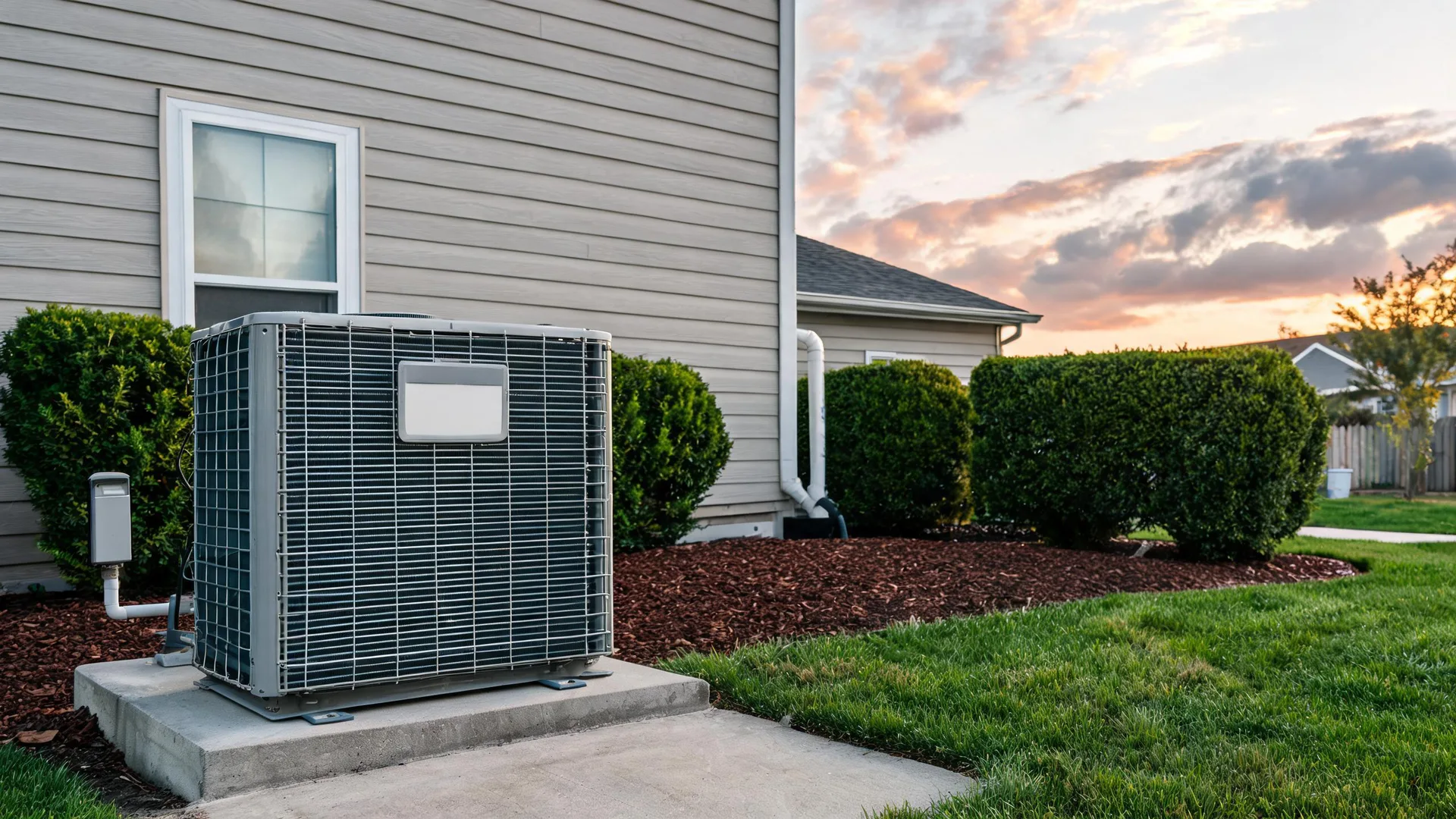
A gray residential air conditioning condenser unit mounted on a concrete pad outdoors, surrounded by green grass under a partly cloudy blue sky.

Match the ducts to the system before it's running

Have the contractor check the ductwork as part of the install, not as an afterthought. If the supply runs are undersized for the new condenser, that gets fixed before the system is sealed up and charged, not after the first summer shows the weak spots.

The number is a ceiling, not a guarantee

SEER2 is measured in a lab, with the coil getting full airflow and the refrigerant charge set exactly right. A condenser only earns that number in a real house when the ductwork moves enough air and the charge is set right at install. The rating on the label describes the equipment on its own, not the system once it's hooked up to a particular set of ducts.

A higher number means less run time, not colder air

A more efficient condenser uses less electricity to move the same amount of heat out of the house. Over a long summer that adds up to fewer hours the compressor spends running. It doesn't change how cold the air feels coming out of the vents, and it doesn't make the house cool down any faster.

An outdoor central air conditioning unit mounted on a concrete pad beside a blue-sided house at sunset.

Going above the federal minimum saves little here, about $10 a year.

  • A higher-efficiency unit$80 a year
  • A new unit at the federal minimum, 13.4 SEER2$90 a year

Estimates for a typical Hettinger County home, from EIA household energy data, North Dakota fuel prices and NOAA climate normals. Your home will differ.

Installation day starts with the old equipment coming out. The condenser gets disconnected and hauled off, the coil comes out of the plenum, and the line set gets checked to see what can stay and what has to go. Once the old parts are clear, the new coil goes in above the furnace and the new condenser gets set outside on its pad. The lines get connected, the system gets pressure tested to make sure there are no leaks, then it gets pulled into a vacuum to clear out any air and moisture before the refrigerant goes in. Charging it right matters as much as anything else that happens that day. Too much or too little refrigerant and the system won't hit the capacity it's rated for, no matter how good the equipment is. Once it's charged, the contractor runs it and checks airflow at the vents and the temperature split between the air going in and the air coming out, which is how they confirm it's actually working the way it should before they leave.