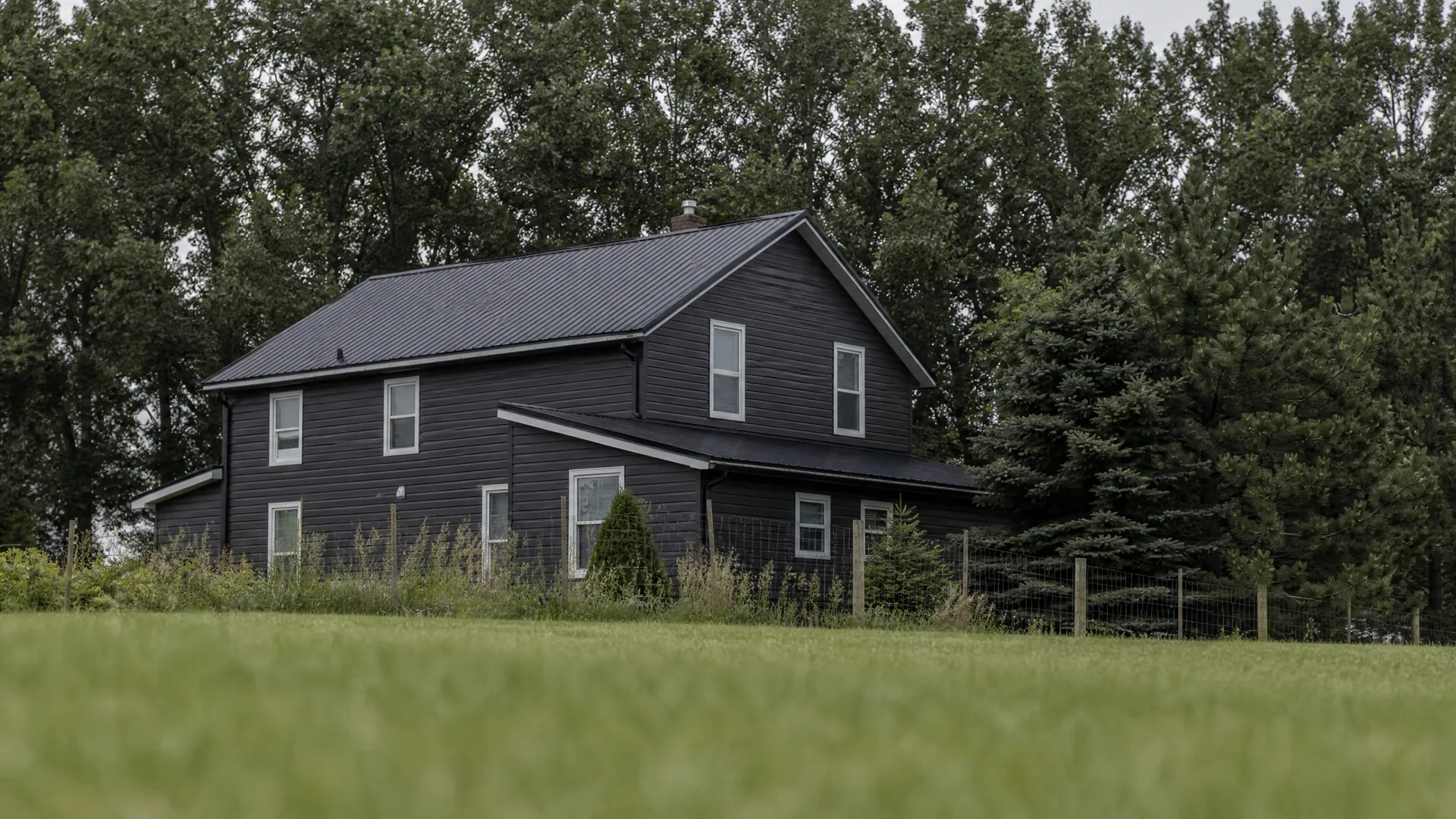






A two-story house with dark wood siding and a dark metal roof, with white-framed windows, set behind a wire fence and a mown grass field, surrounded by deciduous trees and a large spruce under an overcast sky.

AC Installation in New Rockford, ND

Tell us about the job

Takes about a minute. No obligation.

New system or replacementCentral ACEddy County, ND
Step 1 of 2

What ZIP code is the job in?

Just over half the homes in Eddy County heat with utility gas. Another 21.4% run on bottled or LP gas, so most furnaces here burn some form of gas rather than running on electric resistance heat. That matters for an AC installation because the cooling side usually pairs with whatever furnace or air handler is already moving the air through your ducts. If your furnace runs on gas, a new air conditioner just adds a coil and condenser to work with it, not a full heating swap. Worth checking which fuel your own system uses before anyone quotes the job.

2 months
July through August, your air conditioner is on duty
78°F
the average summer afternoon it cools against
40 hail events
in ten years, and hail bends the fins on outdoor coils
13.4 SEER2
the federal minimum any new unit must meet
Isometric line illustration of a cutaway single-story house showing interior rooms, ductwork, an indoor air handler or furnace, and a refrigerant line running to an outdoor condenser unit on a pad.
Your air conditioner works hardest from July through August.

NOAA nClimDiv, 1991–2020 normals

Half the homes in Eddy County were built in 1966 or earlier.

A new condenser and coil have to match the ductwork already in the house, not the other way around.

Two months of cooling, July and August, is still worth getting ahead of in June

Cooling runs July through August
Summer afternoons average 78°F
40 damaging wind events from 2015 to 2024
Two months a year, that's the jobAfternoon highs here average 78°F in June, July and August.

Electricity in North Dakota ran 11.51 cents per kilowatthour in 2024, cheaper than most of the country. That changes how to think about a new condenser. A high-efficiency unit still cools the house, but with cooling running two months a year and power this cheap, the extra cost of the top-tier model takes a long time to earn back. Putting that money toward a condenser and coil that match your ductwork, installed correctly, does more for you than chasing the highest efficiency number on the sticker.

Any new system here starts at 13.4 SEER2

New Rockford sits in zone 6A, and any split-system AC under 45,000 Btu/h going in now has to meet 13.4 SEER2 at minimum. That floor is set, so the choice is which condenser and coil above it fit your ductwork and your budget. Installing to code now also means a system that's already square with whatever rules apply down the road.

Find a contractor
An outdoor air conditioning condenser unit mounted on a concrete pad surrounded by gravel, photographed against a partly cloudy blue sky.

The old unit doesn't stay as a backup

The old condenser and coil don't get kept as a backup. Once the new coil's in and the lines are brazed, the old equipment gets disconnected and hauled off, usually the same day as the install. Refrigerant in the old system gets recovered first, it can't just be vented into the air, so that's part of the teardown before anything leaves the property. The compressor is usually what ends a condenser's life, and it tends to go without much warning. Replacing a unit on your own schedule, before that happens, means the new system goes in on a day that works for you instead of one picked by a breakdown.

Ask what size they calculated, not just what size they're quoting

A condenser is sized by a load calculation that looks at the square footage, windows and layout of the house, not by matching the old unit's tonnage. Ask what numbers went into it. A unit too big cools the room fast but shuts off before it pulls the moisture out, so the house feels damp even at the right temperature.

Ask what happens to the existing ductwork and line set

A new coil and condenser have to work with the ducts and refrigerant lines already running through the house. Ask whether the installer is reusing the line set or running new, and whether they're checking duct sizing instead of just hooking into what's there. A mismatch here shows up later as weak airflow or a coil that freezes.

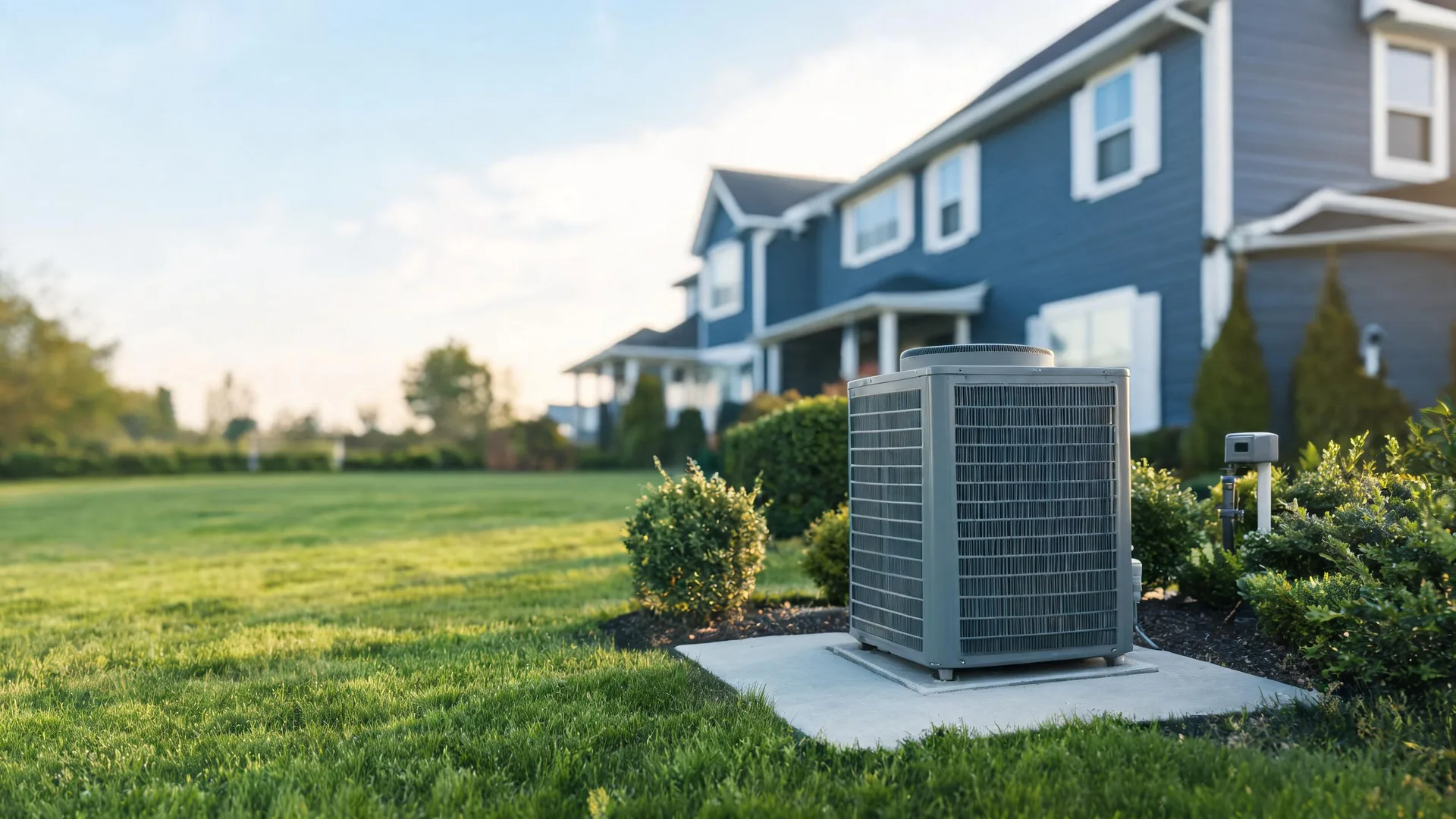
An outdoor air conditioning condenser unit positioned on a concrete pad next to a blue-sided house, surrounded by green shrubs and flowering hydrangeas at sunset.

Going above the federal minimum saves little here, about $10 a year.

  • A higher-efficiency unit$70 a year
  • A new unit at the federal minimum, 13.4 SEER2$80 a year

Estimates for a typical Eddy County home, from EIA household energy data, North Dakota fuel prices and NOAA climate normals. Your home will differ.

Installation day starts with the old equipment coming out, condenser, coil, and usually the line set if it's not being reused. Running new line set means brazing new connections and pulling a vacuum on the whole system before any refrigerant goes in, which takes time but is what keeps moisture out of the lines later. The coil sits in the plenum above or beside the furnace, so that gets opened up and resealed around the new coil once it's in place. Once everything's connected, the system gets charged to the manufacturer's spec and run through its paces, checking suction and head pressure, airflow at the registers, and the temperature split between the air going in and the air coming out. A straightforward swap with the same ductwork and a reused line set is a different day's work than one where ducts need resizing or new line set has to be run through walls. Either way, the system shouldn't be left running until those numbers check out.