




Aerial view of a residential air conditioning condenser unit mounted on a concrete pad next to a house with vinyl siding and a sliding glass door.

AC Installation in New Town, ND

Tell us about the job

Takes about a minute. No obligation.

New system or replacementCentral ACMountrail County, ND
Step 1 of 2

What ZIP code is the job in?

Electricity is the most common home heating fuel in Mountrail County, used in 43.9% of homes. LP gas comes next at 31.4%, with utility gas behind that at 21.0%. An AC installation here usually works alongside an electric furnace or heat pump setup, so the electrical side of the house already carries real load. Whoever installs your air conditioner should check that your panel and wiring can handle the new unit alongside what's already running. If your home heats with LP gas instead, that's a separate system from your cooling, but the same electrical check still applies.

2 months
July through August, your air conditioner is on duty
79°F
the average summer afternoon it cools against
59 hail events
in ten years, and hail bends the fins on outdoor coils
13.4 SEER2
the federal minimum any new unit must meet
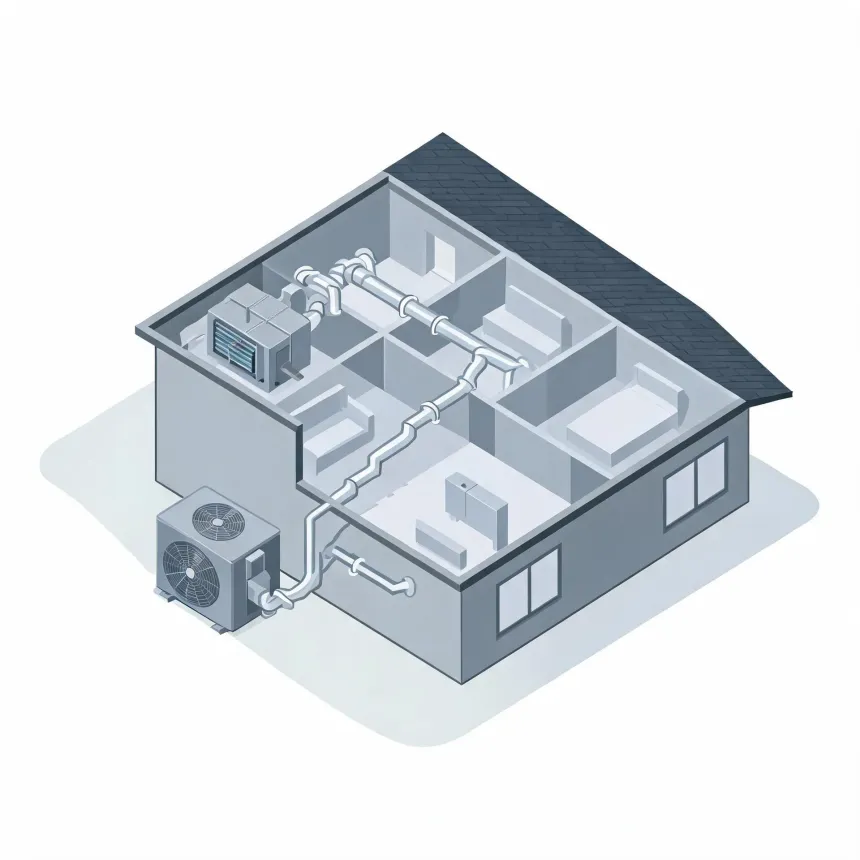
Isometric grey illustration of a cutaway single-story house showing interior rooms, ceiling ductwork connected to an indoor air handler, and an outdoor condenser unit linked by lines outside the wall.
Your air conditioner works hardest from July through August.

NOAA nClimDiv, 1991–2020 normals

AC here runs July through August.

June is the month to get the new unit installed, before that first hot stretch hits.

Power here runs 11.51 cents a kWh, cheaper than most places, so the top-efficiency model isn't the one that pays for itself fastest

Power costs 11.51 cents a kWh statewide
Cooling runs July through August
Summer afternoons average 79°F

Any new air conditioner installed in Mountrail County has to meet 13.4 SEER2 at minimum, the federal floor for split systems under 45,000 Btu/h built from 2023 on. That's not a local add-on. It's what the manufacturer has to meet before the unit ever ships here. Mountrail County sits in zone 6A, a cold climate that shapes the furnace or heat pump side of the house more than the AC side, since winter here runs long. The cooling side still has to clear the same federal minimum as anywhere else. A contractor quoting a unit below 13.4 SEER2 isn't offering you a deal. They're offering you something that can't legally go in.

Two months of summer isn't much to ask of an AC

Two months of real cooling, July and August, with afternoon highs averaging 79°F. That's a light job for any air conditioner. A well-built mid-range system will do fine here for years, since it's not fighting the kind of heat that wears a unit down early.

Find a contractor
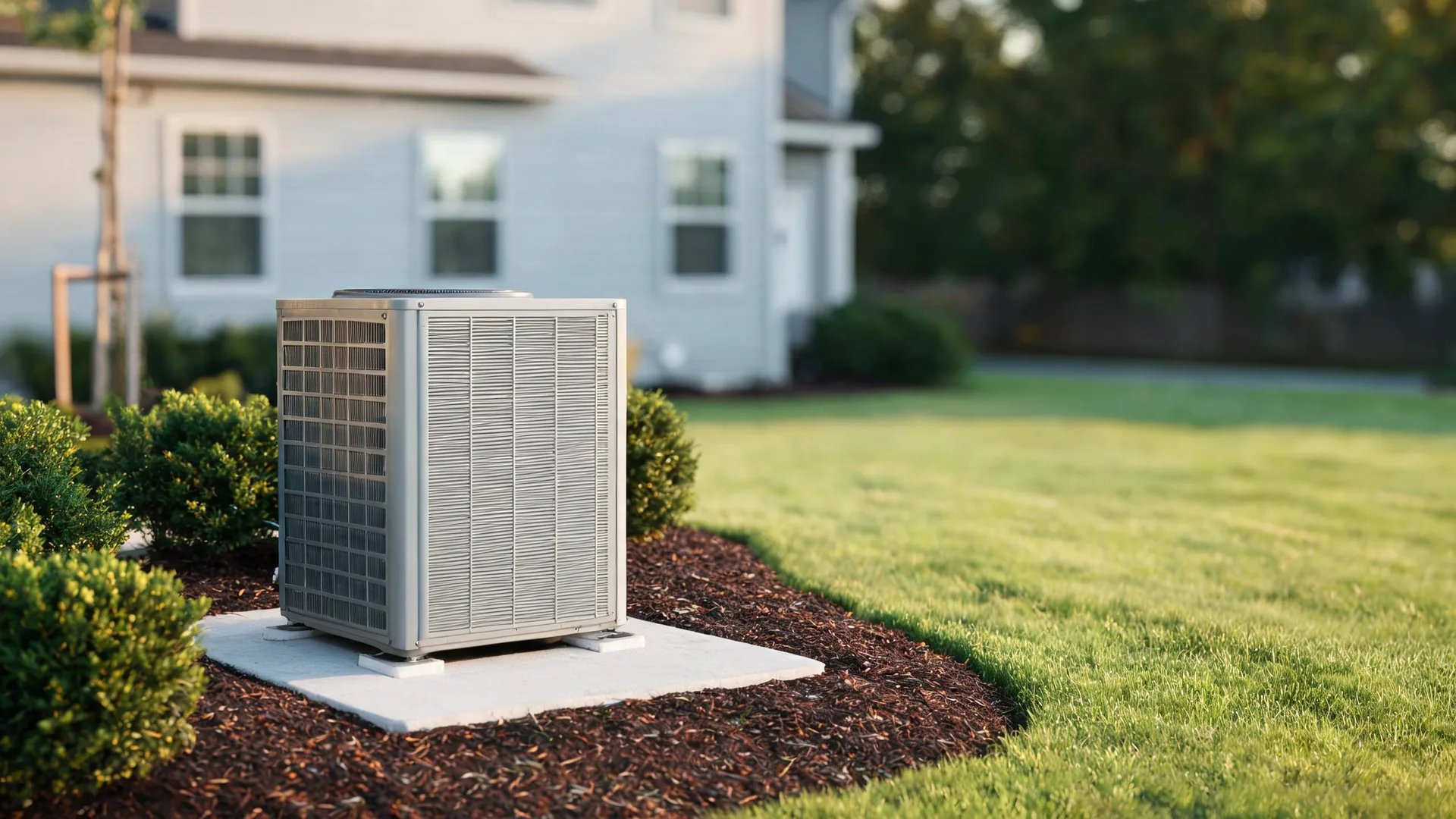
A gray residential air conditioning condenser unit mounted on a concrete pad outdoors, surrounded by green grass under a partly cloudy blue sky.

The old unit has to come out clean, not just come out

The old condenser doesn't just get hauled off. Refrigerant inside it has to be recovered with a machine built for that, pulled into a tank rather than released into the air, which is why that part of the job falls to someone licensed for it rather than a general hauling crew. Once that's done, the copper line set gets checked before anything new connects to it. Old copper can hold years of oil residue and debris, and sometimes acid from a past failure, so a tech flushes it or replaces it rather than assuming it's clean. The old coil and any mounting pad or brackets come out too, since a new unit sized differently rarely bolts onto the old mounts. None of this is reused in the new system. It's inspected, drained, and removed so the new equipment starts on a clean slate rather than inheriting whatever was in the old lines.

Ask for the load calculation, not a guess

A contractor should size your air conditioner by doing a room-by-room load calculation, not by eyeballing the square footage or matching whatever was there before. An oversized unit cools the air fast and shuts off before it pulls the moisture out, so the house feels clammy even at the right temperature. An undersized one runs constantly and still can't keep up on the hottest afternoons. Ask to see the numbers behind the recommendation, not just the tonnage.

Ask what happens to the existing ductwork

The new condenser and coil only perform as well as the ducts moving that air through the house. If the ductwork was sized for an older, smaller system, or if it's leaking at the joints, the new unit can be the right size and still underperform. A contractor who inspects the ducts before quoting is giving you a real answer. One who skips straight to the equipment is guessing.

Overhead view of an air conditioning condenser unit on a concrete pad next to a house with asphalt shingle roofing and vinyl siding.

Going above the federal minimum saves little here, about $0 a year.

  • A new unit at the federal minimum, 13.4 SEER2$70 a year
  • A higher-efficiency unit$70 a year

Estimates for a typical Mountrail County home, from EIA household energy data, North Dakota fuel prices and NOAA climate normals. Your home will differ.

Install day starts with the old unit coming out, not the new one going in. The condenser outside gets disconnected, the refrigerant recovered rather than vented, and the old coil pulled from the air handler or furnace. Whoever's doing the work should check the line set while it's open, since reusing old copper with a new system can carry contamination into the fresh unit. New equipment goes in, the line set gets connected, and the whole system gets evacuated with a vacuum pump to pull out air and moisture before any refrigerant goes back in. Skipping that step is how a new system ends up with a slow leak or a compressor that fails early. Once it's charged, a tech checks the charge against the manufacturer's numbers for the conditions that day, not just by feel. The thermostat gets wired last and the system runs through a full cycle before anyone calls it done.