A row of two-story townhouses with gray and tan siding and dark shingled roofs behind a mowed lawn and a chain-link fence, with deciduous trees in the background.

AC Installation in Oakes, ND

Tell us about the job

Takes about a minute. No obligation.

New system or replacementCentral ACDickey County, ND
Step 1 of 2

What ZIP code is the job in?

Most homes here run on electric heat

Electricity heats 46.1% of homes in Dickey County, more than gas or oil. Bottled or LP gas comes next at 37.9%. A house already wired for electric heat usually has the panel capacity an AC install needs without extra electrical work.


What this means for your install

If your home already heats with electric, adding central air is often a matter of matching the right condenser to your ductwork, not rebuilding your home's electrical setup. Homes on LP gas or oil still get central air the same way. The fuel that heats your home doesn't decide how it gets cooled.

3 months
June through August, your air conditioner is on duty
79°F
the average summer afternoon it cools against
39 hail events
in ten years, and hail bends the fins on outdoor coils
13.4 SEER2
the federal minimum any new unit must meet
Isometric cutaway illustration of a house interior showing ducted HVAC piping, an indoor air handler unit, and an outdoor condenser with fan connected by a line, rendered in grey tones on a white background.
Your air conditioner works hardest from June through August.

NOAA nClimDiv, 1991–2020 normals

Oakes summers run about three months, with afternoon highs averaging 79°F.

A condenser facing three mild months a year doesn't need to be the top efficiency model to hold up.

At 11.51 cents a kilowatt-hour, a high-efficiency condenser costs more to buy than it saves you

Power costs 11.51 cents a kWh statewide
Cooling runs June through August
Summer afternoons average 79°F
Built for an older houseHalf the homes in Dickey County went up in 1964 or earlier.

June is when cooling starts here, so May is the month to get a new system in. Waiting until the first hot week means getting in line behind every other call in the county. A contractor doing the install in May has time to size the condenser to your ductwork properly, not just swap in whatever fits by the weekend. Three months of cooling a year doesn't leave much room to figure out a problem after the fact. Get it done before the heat does, and the only thing you'll notice in June is the house staying cool.

New systems here have to clear 13.4 SEER2

Any split-system condenser under 45,000 Btu/h installed here now has to meet 13.4 SEER2 at minimum. Dickey County falls under zone 6A, so that's the floor a contractor has to work from before anything gets sized to your house.

Find a contractor
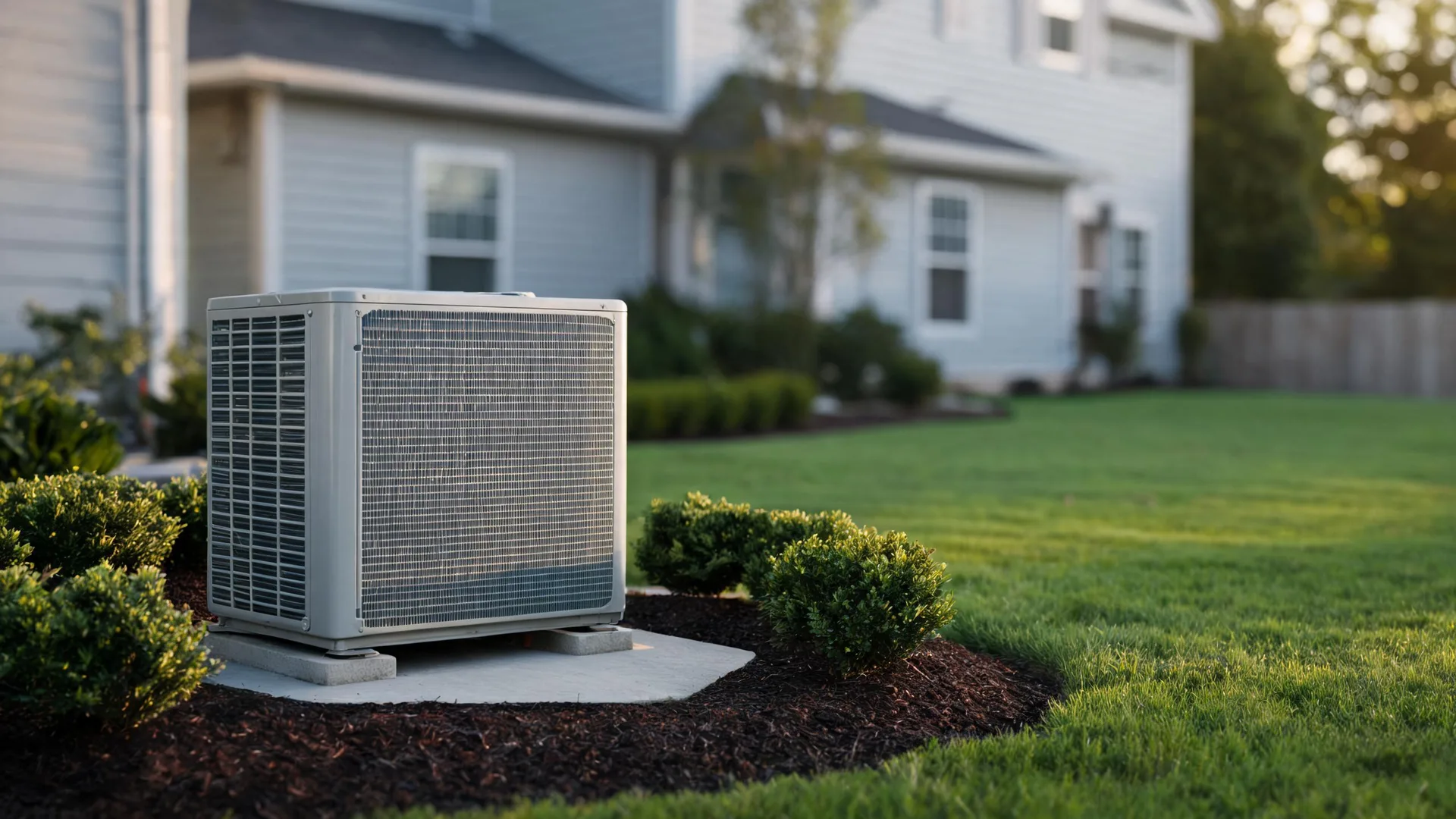
A gray residential air conditioning condenser unit mounted on a concrete pad outdoors, surrounded by green grass under a partly cloudy blue sky.

The old unit comes out while the new one goes in, not after

The old condenser doesn't need to be hauled out before the new one goes in. Most installs run the new line set and let the old unit keep cooling the house until the changeover, so there's no gap where the house sits without air. Once the new condenser is in place, the old refrigerant gets recovered into a tank, never vented, that's the law and any licensed contractor has the equipment for it. The copper line set usually gets replaced rather than reused, since old lines can carry contamination or the wrong oil residue into a new system. The pad underneath often stays if it's level and in good shape, there's no reason to pour new concrete for a straight swap. What happens to the old unit after that is scrap, mostly. The compressor and coils get drained and the metal goes to a recycler. None of this adds much time to the job itself, it runs alongside the new install rather than after it.

The number is a ceiling, not a guarantee

SEER2 is measured in a lab, with the right charge, the right airflow, and new equipment. A condenser only gets close to its rated number if the coil is sized to match it, the ductwork can move enough air, and the charge is set right at install. The rating on the sticker describes the equipment. What you actually get depends on how it's put in.

A higher number costs more to buy, not to run badly

Spending more for a higher SEER2 unit only pays back through lower bills, and only if the system runs enough hours a year to use that extra efficiency. Where the compressor hardly runs, a mid-efficiency unit installed correctly will often outperform a high-efficiency unit installed poorly. The install matters more than the label.

Overhead view of an outdoor AC condenser unit on a concrete pad next to a house with a dark shingle roof.

Going above the federal minimum saves little here, about $20 a year.

  • A higher-efficiency unit$80 a year
  • A new unit at the federal minimum, 13.4 SEER2$100 a year

Estimates for a typical Dickey County home, from EIA household energy data, North Dakota fuel prices and NOAA climate normals. Your home will differ.

A straight swap usually runs start to finish in a single visit. The contractor sets the new condenser on the pad, runs or connects the line set, then pulls a vacuum on the lines to clear out moisture and air before any refrigerant goes in. That vacuum step takes a while on its own. Rushing it leaves moisture in the system that causes problems later. Once the lines hold vacuum, the system gets charged to the manufacturer's spec, not just topped off by feel. Then comes the test run. The contractor checks the temperature split at the vents, listens for anything that sounds wrong, and confirms the thermostat is talking to the new equipment correctly. A job that stretches longer usually means the ductwork needed work too, not that the condenser swap itself was the holdup.