




An outdoor central air conditioning unit mounted on a concrete pad beside a blue-sided house at sunset.

AC Installation in Rolla, ND

Tell us about the job

Takes about a minute. No obligation.

New system or replacementCentral ACRolette County, ND
Step 1 of 2

What ZIP code is the job in?

Most homes in Rolette County run on electric heat, 65.6% of them. If that's your setup, a central air system pairs with it easily, since the electrical panel is already built around that kind of load. Another 27.7% of homes here heat with bottled or LP gas, and those systems add central air through a separate cased coil working off the furnace's blower. Either way, the install builds on wiring or ductwork that's already doing similar work, which keeps the job straightforward.

1 months
July through July, your air conditioner is on duty
76°F
the average summer afternoon it cools against
23 hail events
in ten years, and hail bends the fins on outdoor coils
13.4 SEER2
the federal minimum any new unit must meet
Isometric cutaway illustration of a single-story house showing interior rooms with furniture, overhead ductwork, an indoor air handler unit, and an outdoor condenser unit connected by lines at the side of the building.
Your air conditioner works hardest from July through July.

NOAA nClimDiv, 1991–2020 normals

Electricity in North Dakota runs 11.51 cents per kilowatt-hour, well under what most of the country pays.

A high-SEER2 system still costs more up front, and here it takes longer for the lower power bill to make that back.

A standard system is the right call here

Half the homes here were built by 1980
Cooling runs July through July
Summer afternoons average 76°F

Rolette County sits in climate zone 7, the coldest band there is, because winter here runs long. That doesn't change what the law requires of your air conditioner. Any split-system unit under 45,000 Btu/h has to meet a federal minimum of 13.4 SEER2, cold climate or not. So a contractor sizing your system isn't choosing between cold-weather equipment and standard equipment. Everything on the market already clears that bar.

A system that fits this climate is the one worth installing

July is the only month cooling runs here, and afternoons in summer average 76 degrees. That's not much work for a system to do. Pick a unit that's sized and installed right, and it'll handle what this climate asks of it without needing top-tier efficiency to do the job.

Find a contractor
A gray residential air conditioner condenser unit mounted on a concrete pad in an open grass field.

June is the month to get this done

Cooling only runs one month here, July, and June is the lead-up to it. That gives you a clear window to get a system installed before it's actually needed, rather than scheduling around a machine that's already running. A contractor has more room to work with in June, more time to size the job right and get parts on hand without anyone waiting on a hot house. None of this is about the system struggling to keep up. It just means June is the easier month to get it done.

The size has to match the house, not the budget

A central air system is sized to the square footage, the ceiling height and how much sun the walls and windows take on. A unit too big cools the air fast and shuts off before it pulls the moisture out, so the house feels clammy. A unit too small runs constantly and still can't keep up on the hottest afternoon. Getting the size right is the biggest factor in what the install involves, more than any single piece of equipment.

The ductwork decides how much work the job is

If ducts are already in place and sized right for a central system, the installer connects the new coil and condenser and the job stays contained. If the ductwork is undersized, leaky, or was built for a smaller furnace blower, it has to be modified or replaced before the new system can move enough air. That work, not the condenser sitting outside, is usually what separates a simple install from a long one.

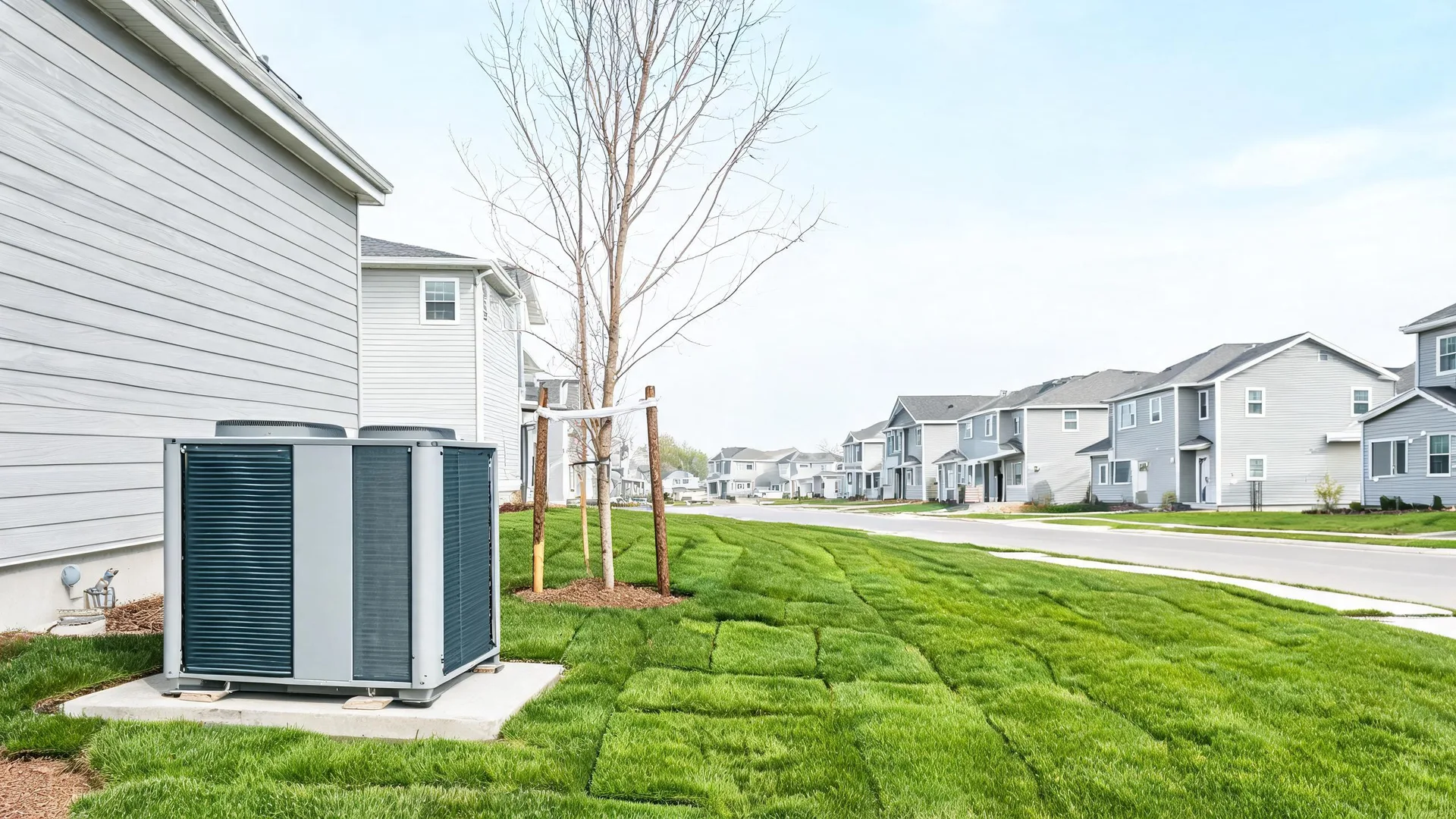
An outdoor air conditioning condenser unit positioned beside a blue-sided house at sunset.

Going above the federal minimum saves little here, about $0 a year.

  • A new unit at the federal minimum, 13.4 SEER2$50 a year
  • A higher-efficiency unit$50 a year

Estimates for a typical Rolette County home, from EIA household energy data, North Dakota fuel prices and NOAA climate normals. Your home will differ.

The crew starts outside, setting the condenser on a pad and running the refrigerant lines in to the coil. Inside, that coil sits in the plenum above or beside the furnace, and connecting it means cutting into sheet metal if one isn't already there to accept it. The lines get connected, the system gets evacuated to pull out air and moisture, then it's charged with refrigerant to the amount the manufacturer specifies. Electrical work runs alongside this, tying the condenser to its own disconnect and breaker. Once everything's connected, the installer checks refrigerant pressures, airflow at the registers, and the temperature split between the air going into the system and the air coming out. That last check is what tells them the system is actually doing its job, not just running.