Electric heat is the norm here
Nearly half of Barnes County homes, 46.9%, heat with electricity. Gas reaches another 27.3%. If your house already runs on electric heat, an AC install has less new wiring to sort out.
Takes about a minute. No obligation.
Nearly half of Barnes County homes, 46.9%, heat with electricity. Gas reaches another 27.3%. If your house already runs on electric heat, an AC install has less new wiring to sort out.
A contractor sizing your AC will want to know what's already in the house, the electrical panel, the ductwork if there is any, before quoting anything. Some homes on electric heat use ductless or zoned systems instead of central air, so check what your current setup supports before assuming a standard central AC is the right fit.

NOAA nClimDiv, 1991–2020 normals
AC here runs July through August.
June is the month to get the new system installed, before the heat asks anything of it.



Electricity here runs 11.51 cents a kilowatt-hour, cheaper than most of the country. That changes the math on which system to buy. A higher-SEER2 unit costs more up front and takes longer to earn that back when power is already cheap. It's still worth asking about, since a more efficient system tends to run quieter and hold up well, but don't pick one on projected savings alone. Ask what fits the house and the ductwork first. The efficiency rating matters less here than whether the unit is sized right and installed right.
Any new split system going into a home here has to meet 13.4 SEER2 at minimum, the federal floor for units built from 2023 on. That's not optional and it's not a sales pitch, it's what the law requires for this size of system. A contractor quoting your install should already be working from that number.
Find a contractor
Two months of real work a year, July and August, with afternoon highs averaging 79°F. That's a mild load for a central AC to carry. The bigger weather concern for an outdoor unit here is what sits next to it, not what it runs against. Barnes County sees frequent hail and damaging wind, so ask the contractor about a hail guard for the condenser. The compressor itself won't be straining through a long season, so a well-installed mid-range system should hold up fine without needing the top efficiency tier.
A contractor should measure the house room by room, windows, insulation, duct layout, before naming a system size. If someone quotes a tonnage before walking the house, ask how they got there. A unit sized off square footage alone can end up too big, which cools the air fast but never runs long enough to pull the moisture out, leaving the house feeling damp and clammy.
The new system has to move air through the ducts already in the house. If those ducts are undersized or leaky, a new condenser won't fix that on its own. Ask whether the contractor is testing duct airflow and sealing as part of the install, or just swapping the outdoor unit and calling it done.
Estimates for a typical Barnes County home, from EIA household energy data, North Dakota fuel prices and NOAA climate normals. Your home will differ.
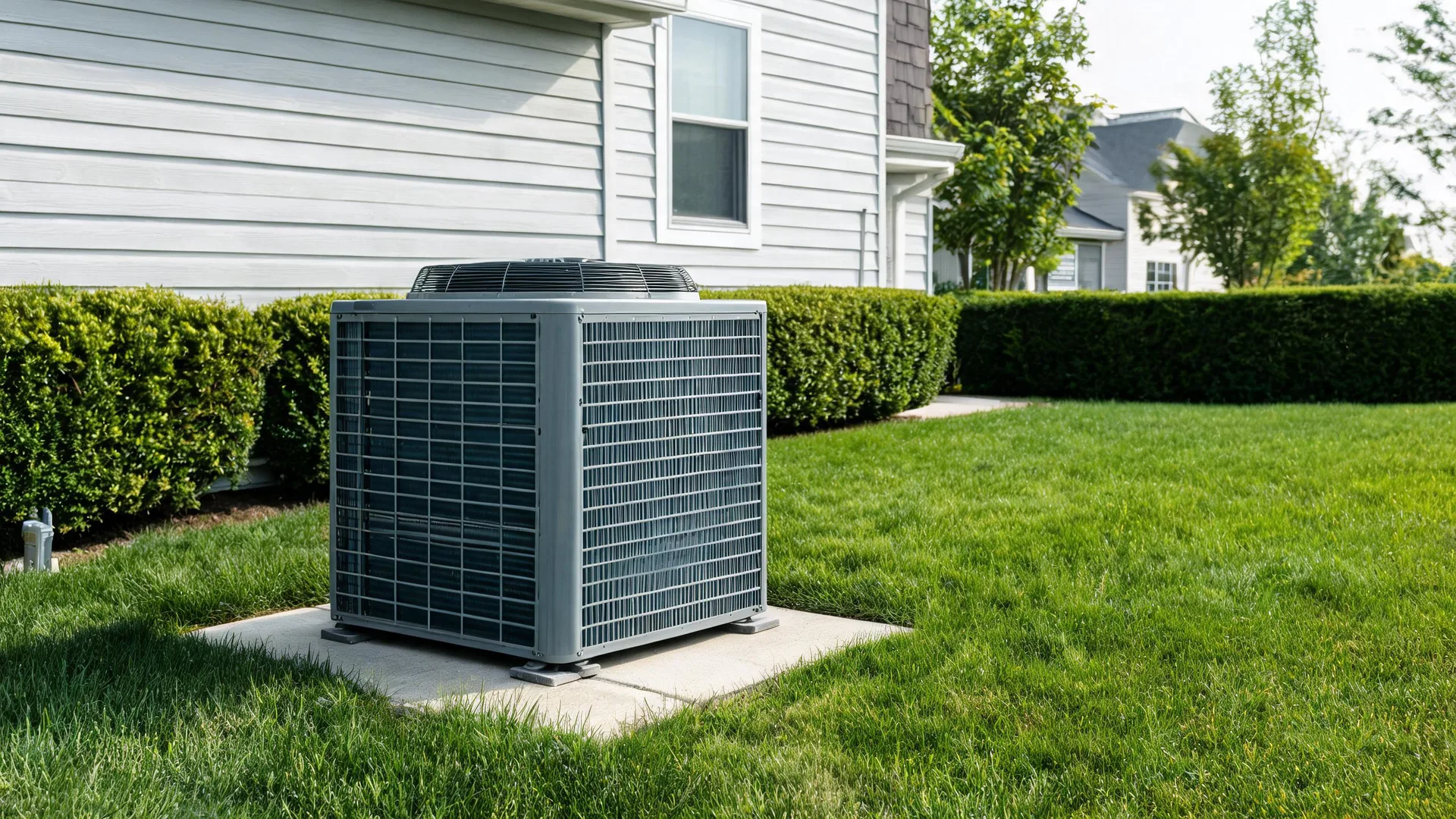
Installation day starts outside, not in the living room. The old condenser comes out first, the refrigerant recovered from the lines rather than vented. Inside, the air handler or furnace coil gets swapped if the new system needs a matching one, since an old coil paired with a new condenser rarely performs right. New line sets get run if the old ones are the wrong size for the new unit's charge. Once the new condenser is set on its pad and leveled, the lines get connected, pressure tested, then pulled into a vacuum to clear out any moisture or air before refrigerant goes in. Only after that does the system get charged and run through its paces, checking airflow at the vents and the temperature split between return and supply air. A contractor who skips the vacuum step or eyeballs the charge instead of weighing it in is cutting a corner that shows up later as a compressor problem.