A snow-covered small-town street at dusk, lined with illuminated two-story houses and a grain elevator on the horizon.

AC Installation in Wahpeton, ND

Tell us about the job

Takes about a minute. No obligation.

New system or replacementCentral ACRichland County, ND
Step 1 of 2

What ZIP code is the job in?

Electric heat is the most common setup here

Electricity heats close to half the homes in Richland County, more than gas, propane and oil combined. A lot of these homes already have the electrical capacity a central AC system needs, since electric furnaces and heat pumps draw on the same panel.


What this means for your install

If your home heats with electricity, adding or replacing central air is usually a more straightforward job, since the wiring an AC system needs is often already in place. Homes on gas or propane heat may need an electrician to check panel capacity before installation.

3 months
June through August, your air conditioner is on duty
80°F
the average summer afternoon it cools against
45 hail events
in ten years, and hail bends the fins on outdoor coils
13.4 SEER2
the federal minimum any new unit must meet
Isometric grey illustration of a cutaway single-story house showing interior rooms, ceiling ductwork connected to an indoor air handler, and an outdoor condenser unit linked by lines outside the wall.
Your air conditioner works hardest from June through August.

NOAA nClimDiv, 1991–2020 normals

Summers in Wahpeton run three months, with afternoons averaging around 80°F.

A standard-size, standard-efficiency system covers a Richland County summer without trouble.

Power here runs 11.51 cents a kilowatthour, below the national average, so a high-efficiency system takes longer to earn back its extra cost

Power costs 11.51 cents a kWh statewide
Cooling runs June through August
Summer afternoons average 80°F

Richland County sits in climate zone 6A, which is built around the long cold winter here, not the summer. The efficiency rule that actually limits what goes in your yard is federal. Any split-system central AC under 45,000 Btu/h made from 2023 onward has to hit at least 13.4 SEER2, no matter what state it's installed in. So the baseline system a contractor quotes you is already set by that number, not by anything specific to Wahpeton. Zone 6A matters more when you're heating this house than when you're cooling it.

Half the homes here were built in 1972 or earlier. Size the system for that house.

Half the homes in Richland County were built in 1972 or earlier. A system sized for a newer house may not fit one that age. Get the ductwork and electrical checked against the house you actually have, and the installer can size the system to match it.

Find a contractor
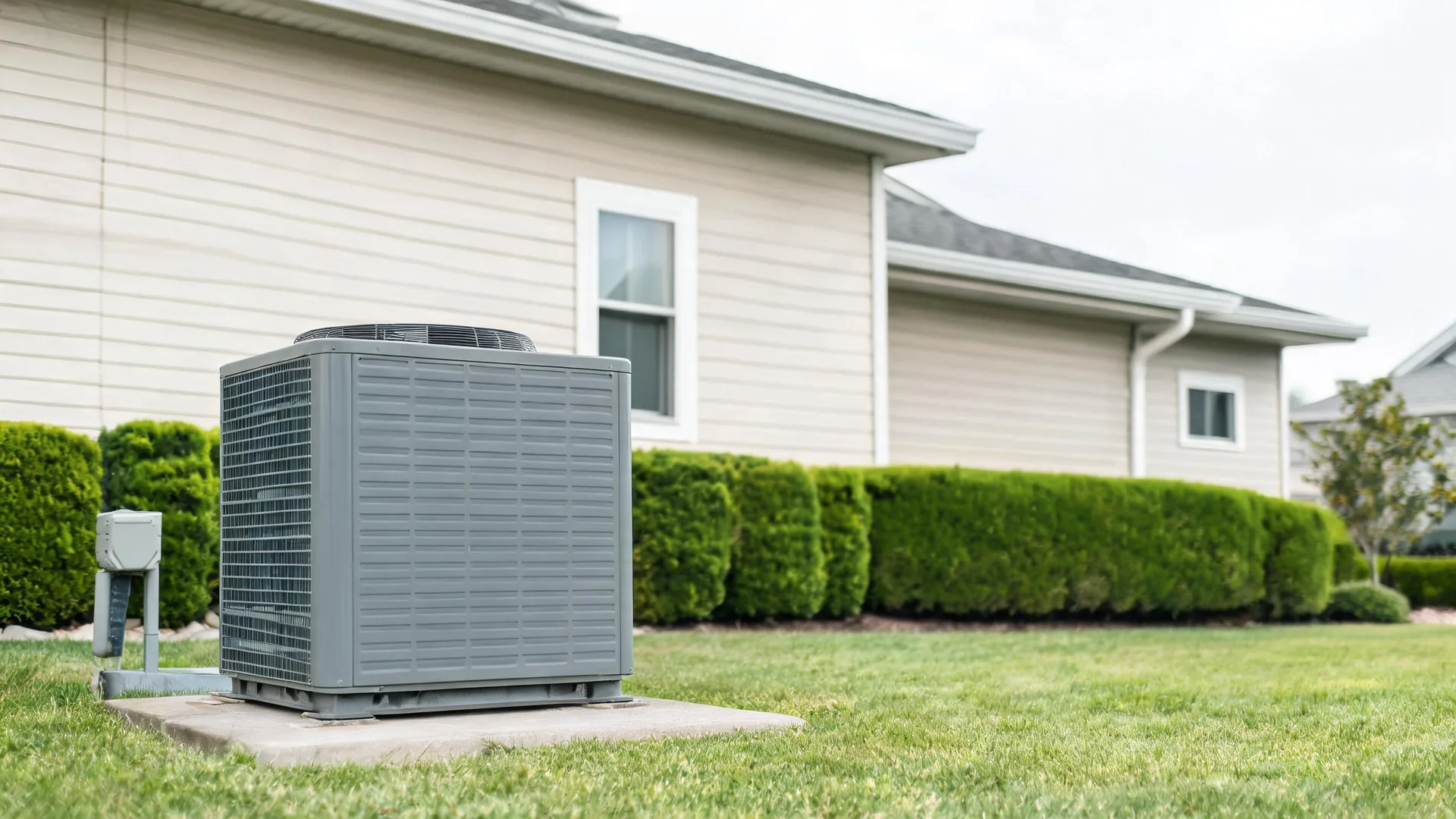
A gray residential air conditioning condenser unit mounted on a concrete pad outdoors, surrounded by green grass under a partly cloudy blue sky.

Built for one house, running in another

This machine will run summer after summer in a house that may still have the ductwork and panel it was built with. If that duct run was sized for a smaller system, or the panel for a different kind of heat, a new AC unit works against that the whole time it runs, whatever its rating says. A nameplate can't tell you that. A look at the actual ducts and panel can.

Sizing comes from a room by room count, not the old unit's tag

A contractor works out the load by looking at square footage, ceiling height, window area and facing, and how much shade the house gets, room by room. Matching the new system to whatever size the last one was just carries any old mistake forward. The nameplate on the unit being replaced doesn't factor into the math at all.

Oversized cools the air without pulling the moisture out of it

A system that's too big satisfies the thermostat fast and shuts off before it's run long enough to pull humidity out of the air, so the house feels cool but damp. It also cycles on and off more, which puts more wear on the compressor over the life of the system. Too small, and it runs constantly without ever quite catching up on the hottest afternoons. The right size runs long steady cycles and handles both jobs at once.

Aerial view of a gray central air conditioning condenser unit on a concrete pad next to a house with vinyl siding.

Going above the federal minimum saves little here, about $10 a year.

  • A higher-efficiency unit$100 a year
  • A new unit at the federal minimum, 13.4 SEER2$110 a year

Estimates for a typical Richland County home, from EIA household energy data, North Dakota fuel prices and NOAA climate normals. Your home will differ.

Installation day starts with the old equipment coming out, the indoor coil, the outdoor condenser, and any line set that isn't being reused. If the new system uses a different refrigerant than the old one, the line set usually has to be replaced rather than reconnected, since the oils and pressures don't match. The outdoor unit gets set on a pad, leveled, and connected to the electrical disconnect nearby. Inside, the coil goes in above or beside the furnace, and the refrigerant lines get run and sealed before anything is charged. Once it's connected, the system gets charged to the manufacturer's specification and tested through a full cooling cycle, checking the temperature split between the air going in and the air coming out. A contractor should walk through the thermostat settings and basic filter care before leaving, so the system is actually running correctly, not just turned on.