




A chain-link fence runs diagonally across a mowed green lawn, with two-story houses with white and gray siding and large leafy trees in the background under an overcast sky.

AC Installation in Watford City, ND

Tell us about the job

Takes about a minute. No obligation.

New system or replacementCentral ACMcKenzie County, ND
Step 1 of 2

What ZIP code is the job in?

Once the new system is in, the old one has to come out, and that's not just unplugging a unit. The outdoor condenser gets disconnected from the refrigerant lines, and that refrigerant has to be recovered properly, not vented into the air. Indoors, the old evaporator coil comes out of the plenum, and if the furnace or air handler is being replaced too, that gets disconnected from the ductwork and the gas or electrical connections feeding it. A good installer checks the line set while they're at it. Old copper lines are sometimes reused, but if they're the wrong size for the new system or have been sitting open to air and moisture, they get replaced instead. The pad outside gets cleared off and reused or swapped if it's cracked. None of this should leave you with mystery wiring or capped-off lines sitting behind a wall.

2 months
July through August, your air conditioner is on duty
81°F
the average summer afternoon it cools against
65 hail events
in ten years, and hail bends the fins on outdoor coils
13.4 SEER2
the federal minimum any new unit must meet
Isometric line illustration of a cutaway house showing interior rooms with ductwork, an indoor air handler, and an outdoor condenser unit connected by lines, on a white background.
Your air conditioner works hardest from July through August.

NOAA nClimDiv, 1991–2020 normals

Your AC only has to carry July and August here, with afternoon highs around 81.

A system that light a load doesn't need to be the top-tier model to hold up.

June is the month to do this. Wait until July and you're installing during the only heat you get all year.

Cooling runs July through August
Summer afternoons average 81°F
79 damaging wind events from 2015 to 2024

Electricity in North Dakota ran 11.51 cents per kilowatthour in 2024, well under what most of the country pays. That changes the math on which system to buy. A higher SEER2 unit costs more up front, and with a light cooling load here, it takes longer for the lower power bills to make up the difference. That doesn't mean efficiency doesn't matter at all, but it means the size of the condenser, the quality of the installation, and how well the system matches your ductwork should carry more weight than the number on the sticker. A correctly sized system that's installed well will outlast one picked for its rating alone.

Meet the standard here

A new system here has to meet this region's minimum efficiency, which limits what can go in.

Find a contractor
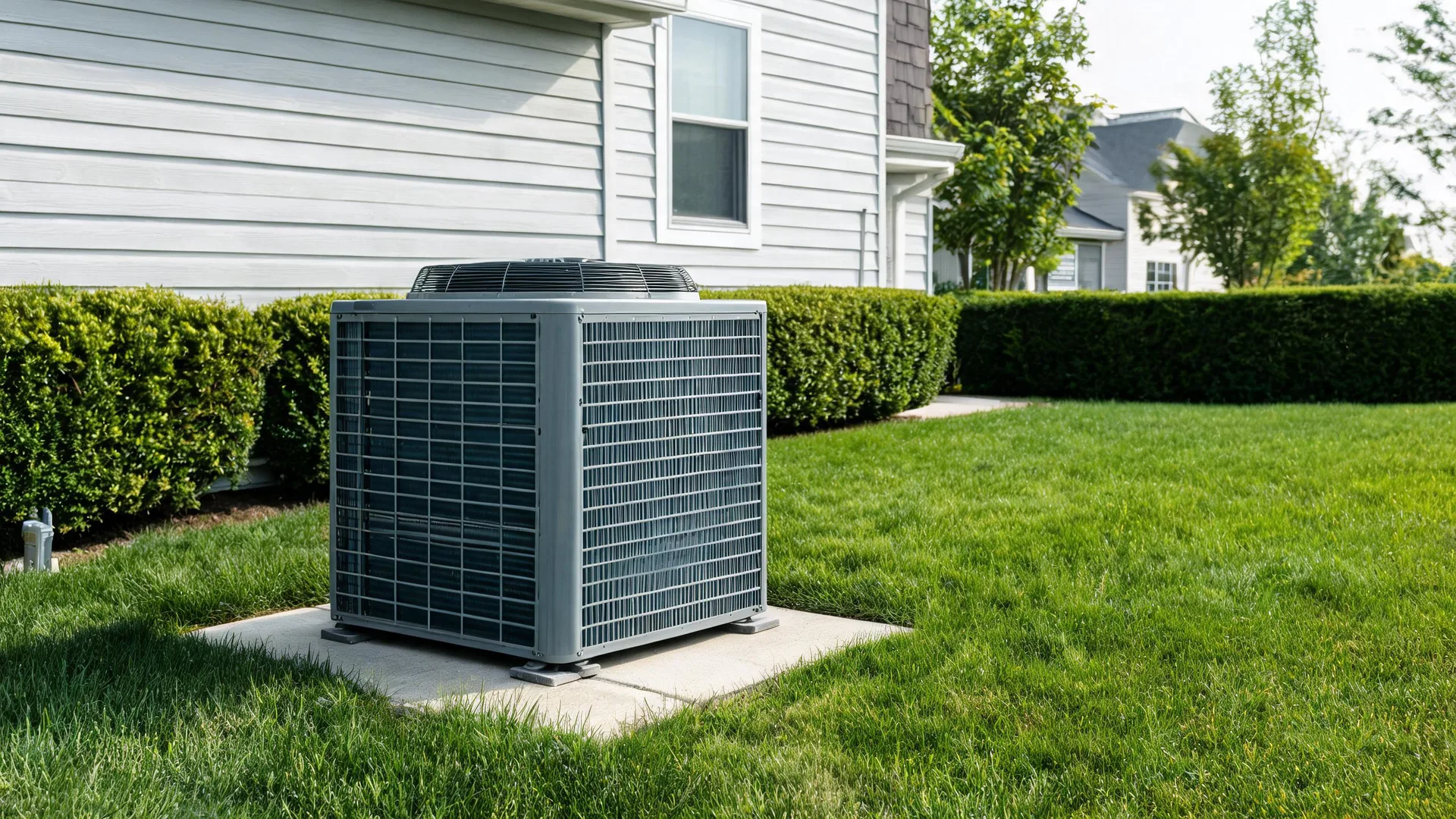
A gray metal air conditioning condenser unit mounted on a concrete pad in a flat grassy field under a partly cloudy sky.

Sized for the load, not the square footage

Sizing an air conditioner comes down to a load calculation, not the size of the house in square feet. A contractor works out how much heat actually gets into the home on the hottest afternoons, counting the windows, the insulation, the ductwork, and how much shade the place gets. Homes the same size can still need different size systems depending on all that. Too big and the unit cools the air fast, shuts off, and never runs long enough to pull moisture out, so the house feels cold and damp at the same time. It also cycles on and off more, and every start puts wear on the compressor. Too small and it runs constantly on the hottest days and still can't keep up. The right size runs in long, steady stretches and holds the temperature without straining. That's also what lets it last as long as it's built to.

What the ductwork can take

The condenser and coil only move the heat. Your ductwork has to carry it. If the existing ducts are undersized or leaky, a new system still has to push air through them, and that limits what it can do no matter how good the equipment is. Sealing or modifying duct runs adds labor beyond setting the main equipment in place.

What's already there versus what's new

A straight swap, same type of system in the same place, is the simplest version of this job. Moving the condenser to a new spot, changing from a furnace-coil setup to a different configuration, or running new line sets and electrical because nothing matches the new equipment all add work. The less an installer has to rebuild around the equipment, the less labor the job takes.

Overhead view of a gray residential air conditioning condenser unit mounted on a concrete pad beside a house with asphalt shingle roofing.

Going above the federal minimum saves little here, about $10 a year.

  • A higher-efficiency unit$80 a year
  • A new unit at the federal minimum, 13.4 SEER2$90 a year

Estimates for a typical McKenzie County home, from EIA household energy data, North Dakota fuel prices and NOAA climate normals. Your home will differ.

Installation day starts with the site still set up for the old system, so the crew spends the first stretch disconnecting before anything new goes in. Once the old equipment is out, the new condenser gets set on the pad and the coil goes into the plenum, then the refrigerant lines get connected and the whole system is pressure tested before any refrigerant goes in. That test matters more than it sounds like it should, because a leak found now is a quick fix, and a leak found later means pulling the system apart again. Electrical gets tied in, the thermostat gets wired or paired, and the system runs through a full cycle before the crew leaves. A straight swap can wrap in a day. Anything that involves new ductwork, a relocated condenser, or electrical work to match the new equipment stretches it out from there.