Running clean
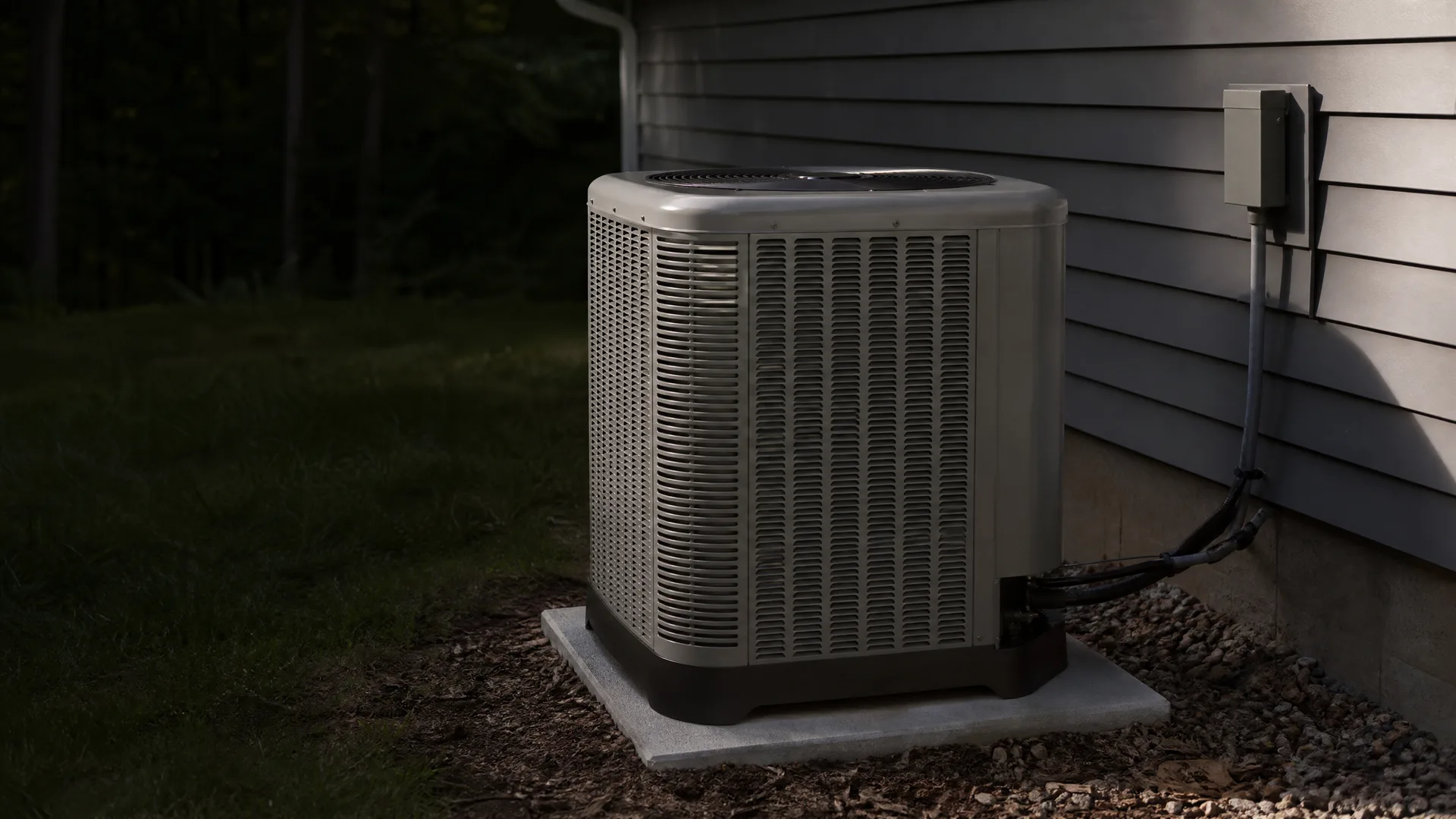
This is what a unit that isn't stressing its breaker looks like. Nothing is caked on the grille, the conduit and refrigerant lines are intact, and the disconnect box sits ready if it's ever needed. Current draw stays where it should.

Skip the calls to every shop
A breaker that trips every time your AC kicks on usually means the unit is pulling more current than it should, or the breaker itself has worn out. This page walks through why that happens and what it means for your system. Instead of calling around Mandan and Morton County to find someone who'll actually look at it, you can get matched with a local contractor who works on this equipment all summer.
Skip the callsA breaker that trips when your AC starts is usually the compressor drawing too much current, or the breaker itself giving out from age. The compressor is the part with the biggest electrical draw in the whole system, so it's the first place a problem shows up. A failing capacitor is the most common cause. The capacitor gives the compressor and fan motor the jolt they need to start, and when it weakens, the motor pulls extra current trying to start without that help, which overloads the circuit. A dirty condenser coil or a low refrigerant charge makes the compressor work harder too, drawing more amps than the breaker allows. Sometimes the problem isn't the AC at all. Breakers wear out from repeated heat cycling and can start tripping under a normal load. Either way, this isn't something to work around by resetting the breaker and hoping. Running a compressor that's pulling too much current can burn out the motor, and a breaker that trips without a real overload may not protect the circuit when it actually needs to.


Every breaker has a metal strip inside that bends when too much current passes through it, and once it bends far enough, it cuts the circuit. That's the breaker doing its job, not failing at it. Your compressor pulls the most current of anything in the system, and it pulls hardest for the first second or two when it starts, before settling into a lower running draw. A weak start capacitor stretches out that surge, so the compressor is pulling high current for longer than the breaker is built to allow. A dirty condenser coil has a similar effect from a different angle. It makes the compressor work harder the entire time it runs, which raises the draw even after startup. Timing tells you something too. A trip the moment the outdoor unit kicks on points to the start circuit. A trip minutes in points elsewhere. And a breaker that's tripped many times over the years can wear out and start tripping at currents it used to handle without trouble.


A breaker tripping once might be nothing. A breaker that trips every time the AC kicks on is telling you something is wrong, and it will keep telling you until someone fixes it. The timing is what makes it costly in Morton County. Afternoons here get hot enough that a dead AC is more than an inconvenience, and a breaker that won't hold means the system shuts off right when you need it most. Flipping it back on and walking away doesn't solve anything. Each restart sends that same hard current surge through a compressor that's already struggling, and compressors that get pushed past their limit often enough don't get repaired, they get replaced. There's also a chance the breaker itself is the problem, not the AC. A breaker that's aged out can trip under a load it used to handle fine, and in that case the unit outside may be working as intended while the panel inside is failing. Either way, every shutoff mid-cycle means the house warms back up and the humidity creeps in before the system gets another chance to catch up, so you're paying for cooling you're not getting the benefit of. The wiring and connections feeding that circuit take a hit too, not just the compressor, since a hard start without any relief strains everything on that line. None of this gets better by waiting. A breaker that trips through a full summer of heat usually ends with a day the AC doesn't come back on at all.


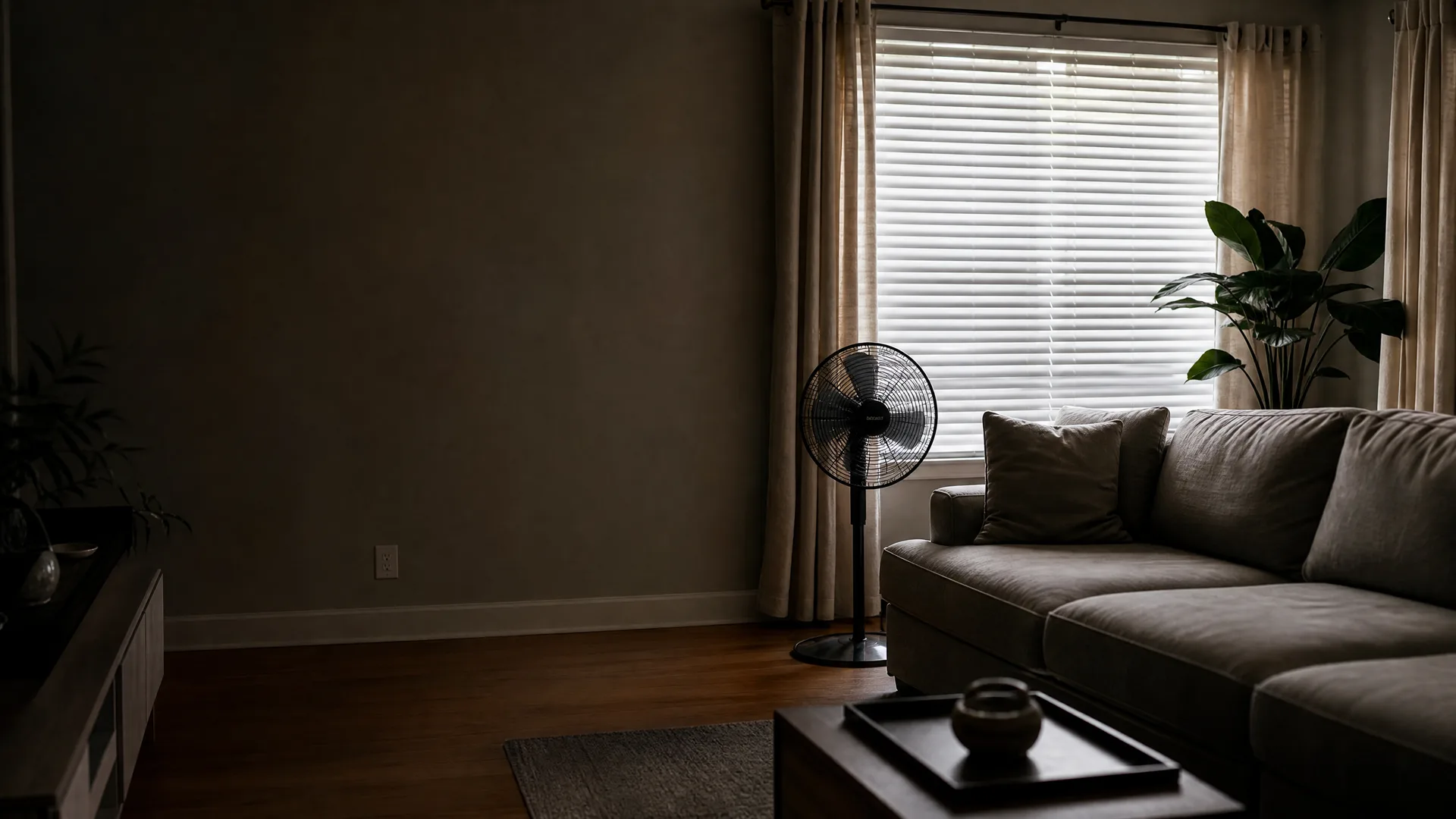
The blinds have been down since noon. It's past three now and the sun is still hard against them, that flat July light that gets into Mandan living rooms and stays most of the afternoon. The floor fan is running next to the couch, turned up high, pushing the same warm air around instead of cooling anything. You got up twenty minutes ago to flip the breaker back on, and for a while the air coming through the vents felt almost cold. Now it's stopped again. You can hear the fan blades and not much else. The house is quiet in the way it gets when the AC isn't running, and you're sitting there deciding whether it's worth walking down to the panel one more time.
You flip the breaker back and the AC runs fine for a while, then quits again a few hours later once the house has warmed back up. You might hear a hum or a click from the outdoor unit right before it cuts out, or notice the air coming through the vents feels warmer than it should just before the breaker trips. Sometimes the unit smells faintly hot or like scorched dust near the panel. Each reset buys you a little cooling, but if the breaker is tripping because the compressor is struggling, running it this way keeps stressing a part that's already working too hard, and that can turn a smaller problem into a bigger repair.




A breaker that trips once might be a fluke. One that trips every time your AC kicks on, especially as the afternoon heats up, is telling you something in that system is already past its limit. Letting it ride through the rest of summer means more resets, more strain on the compressor, and a bigger repair bill waiting at the end of it. Finding someone to look at it on your own means searching around Mandan, calling a few shops, explaining the same symptoms each time, then waiting to see who calls back and comparing what they quote. That takes afternoons you don't have when the house is already warm. Submit the request here and it goes to one licensed contractor working in Morton County, someone who deals with this exact failure on hot stretches like this one every summer and knows what a tripping breaker on an aging AC usually means before they even get to your door. You get an answer instead of a waiting room full of callbacks.

This is what a unit that isn't stressing its breaker looks like. Nothing is caked on the grille, the conduit and refrigerant lines are intact, and the disconnect box sits ready if it's ever needed. Current draw stays where it should.

Dirt packed into the wire grille and top cover blocks airflow across the coil. The compressor works harder to move the same heat out, pulling more current to do it, and that's the kind of load a worn breaker won't keep tolerating.
Your AC only has to get through July and August here. A breaker that trips during those few weeks is doing it under the heaviest load the compressor sees all year, so the short season doesn't give the problem anywhere to hide.
NOAA nClimDiv 1991-2020
You turn the thermostat down and the compressor calls for power.
The compressor draws a hard surge of current to start spinning.
That surge crosses the breaker's rated limit for a second or two.
The metal strip inside the breaker heats and starts to bend.

Morton County summers run a dew point of 52°F, which is low enough that the air drying out your skin on the porch isn't adding extra load to your AC the way it would somewhere muggier. That matters for a breaker that's already tripping. The compressor here is working against heat, not against thick, wet air, so when it still pulls enough current to trip the breaker on a dry afternoon, the strain is coming from inside the unit itself. A failing capacitor, worn contactor, or a start that's drawing too hard. Dry air was never going to be what's stressing this system.
NASA POWER T2MDEW

A breaker that trips every time your AC starts is telling you the compressor is pulling more current than it should, or the breaker has worn past its rated limit. Either way, the fix is someone opening up that disconnect box and checking the actual draw against what the compressor is supposed to pull. Resetting it and hoping the next afternoon goes better isn't that.
Finding the right person for this in Mandan usually means calling a few numbers, explaining the breaker trips every time the AC kicks on, then doing it again for the next company, then sitting with a stack of quotes trying to figure out which one actually understood the problem. A contractor who works on this equipment around Morton County every summer has likely seen this exact pattern on plenty of other units before yours. Getting matched with one means you explain it once, to someone who already knows what usually causes it.

Describe it once