






A snow-covered residential street at twilight with illuminated houses, bare trees, and an orange horizon glow beneath a deep blue sky.

AC Repair in Beulah, ND

Tell us about the job

Takes about a minute. No obligation.

RepairCentral ACMercer County, ND
Step 1 of 2

What ZIP code is the job in?

Your air conditioner only earns its keep from July through August here. The rest of the year it sits idle. Afternoon highs in that stretch average 80°F, which is warm but not the kind of heat that pushes a system hard day after day. Compared to what AC units deal with further south, this one has had an easy run. That matters when you're deciding whether a repair is worth it. A compressor or capacitor that's only worked two months a year for however many years you've had it probably has more life left than the age on paper suggests.

2 months
July through August, your air conditioner is on duty
80°F
the average summer afternoon it cools against
41 hail events
in ten years, and hail bends the fins on outdoor coils
65 wind events
in ten years, and wind drives debris into outdoor units
Isometric cutaway illustration of a small house showing interior rooms, ductwork, an indoor air handler, and an outdoor condenser unit connected by lines, on a plain white background.
Your air conditioner works hardest from July through August.

NOAA nClimDiv, 1991–2020 normals

Half the homes in Mercer County were built in 1981 or later.

A system in a Mercer County house that age probably still has years left in it.

June is when a weak AC shows itself in Beulah

Cooling runs July through August
Summer afternoons average 80°F
65 damaging wind events from 2015 to 2024

It's usually worth repairing

It has an easier job here than in most places, so your air conditioner is often in decent shape. Repair is usually worth it.

Find a contractor
A man in a cap, dark shirt and tan work pants, seen from behind, climbs porch steps toward a red front door while carrying a canvas tool bag filled with screwdrivers.
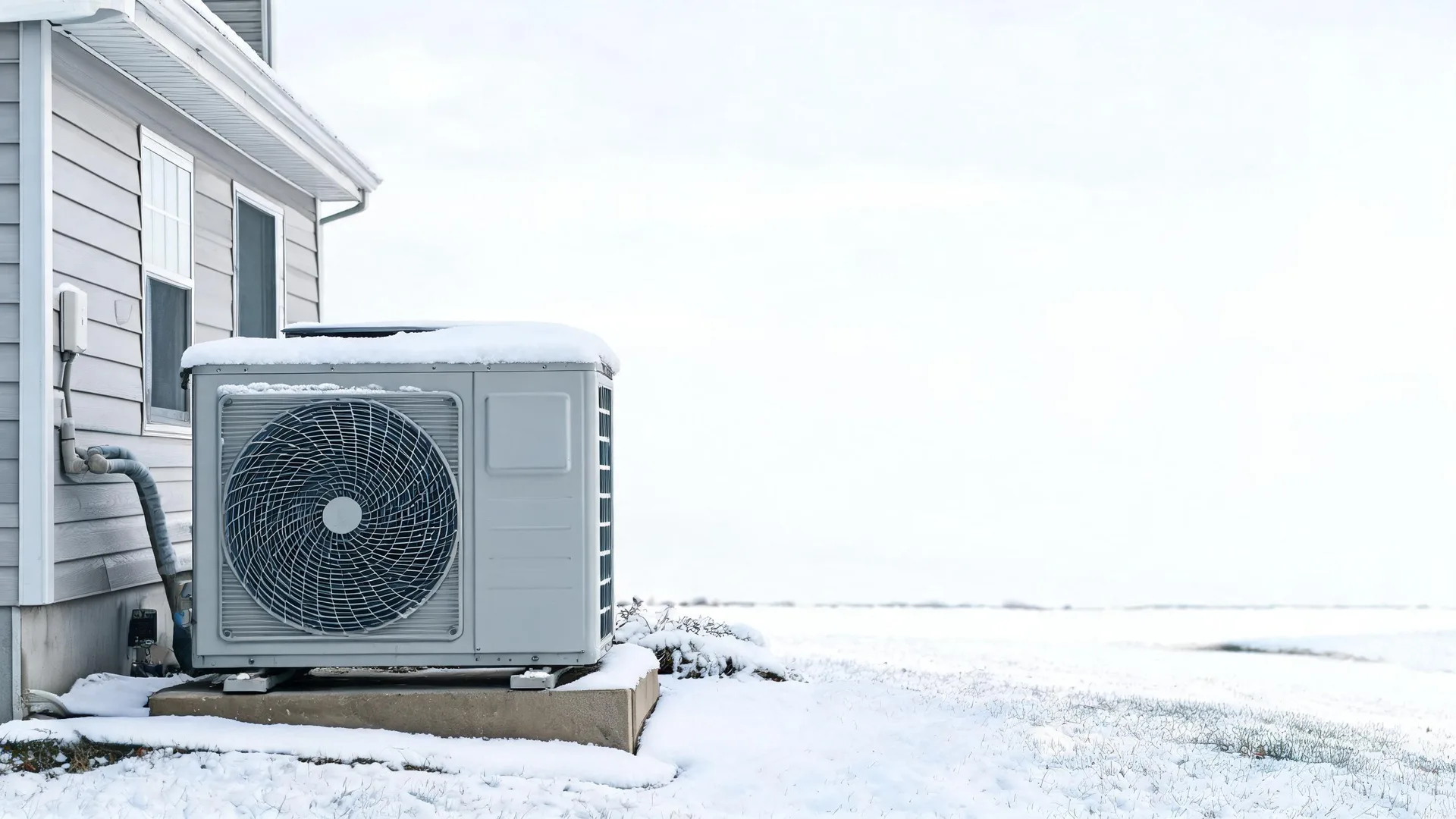
An outdoor air conditioning condenser unit mounted on a concrete pad beside a house, with electrical conduit running to a wall-mounted disconnect box.

What to check before you call

Before anyone comes out, check a few things yourself. Go to the thermostat first. Make sure it's set to cool and set below room temperature, and check the batteries if it uses them. Next, look at the outdoor unit. Make sure nothing is blocking it, no leaves or grass clippings packed against the fins, and listen for whether the fan is spinning. Inside, pull the air filter and hold it up to a light. If you can't see light through it, that's enough to choke the airflow and ice up the coil. Check the vents in each room to make sure none are closed or blocked by furniture. If you have a condensate line with a shutoff switch nearby, check whether it's tripped, since a clogged drain line will shut the system down on its own to avoid an overflow. None of this takes long, and it rules out the simple stuff before you pay anyone to find it for you.

Warm air from the vents

If the air coming out doesn't feel cold anymore, that usually points to the refrigerant charge or the compressor itself. A system low on refrigerant will run without ever catching up, and a failing compressor can't move enough heat out of the house no matter how long it runs.

A noise that wasn't there before

A hum, a rattle, or a click that repeats as the unit tries to start is often a failing capacitor. The capacitor gives the compressor and fan motor the jolt they need to get going, and once it weakens, those motors strain or stall instead of starting clean.

An outdoor air conditioning condenser unit installed beside the exterior wall of a blue vinyl-sided house at sunset.

A new air conditioner would save little on running costs in Mercer County, so the repair decision comes down to the unit's condition.

  • A new one at the federal minimum, 13.4 SEER2$90 a year
  • An older air conditioner$100 a year

Estimates for a typical Mercer County home, compared with an older unit built to the previous federal minimum, from EIA household energy data, North Dakota fuel prices and NOAA climate normals. Your home will differ.

Repair makes sense when a part like a capacitor or contactor has failed.

Replacement makes sense when the compressor has failed or the system uses R-22 refrigerant, which is no longer made.

Age on the sticker only tells you so much. What matters more is what's failed and what that part takes with it. A capacitor or a contactor is a small, cheap fix, and the rest of the system is usually fine once it's swapped. A compressor is a different story. When that goes, a tech has to weigh the cost of the part and the labor to install it against putting that money toward a new system instead, since the compressor is the heart of the unit and the most expensive thing in it. Leaks are their own case. One pinhole gets patched and the system runs another long stretch. A coil that's corroding in more than one spot tends to keep leaking somewhere new, and chasing it with patches gets old fast. A good tech will tell you plainly which kind of problem you've got before you decide anything.