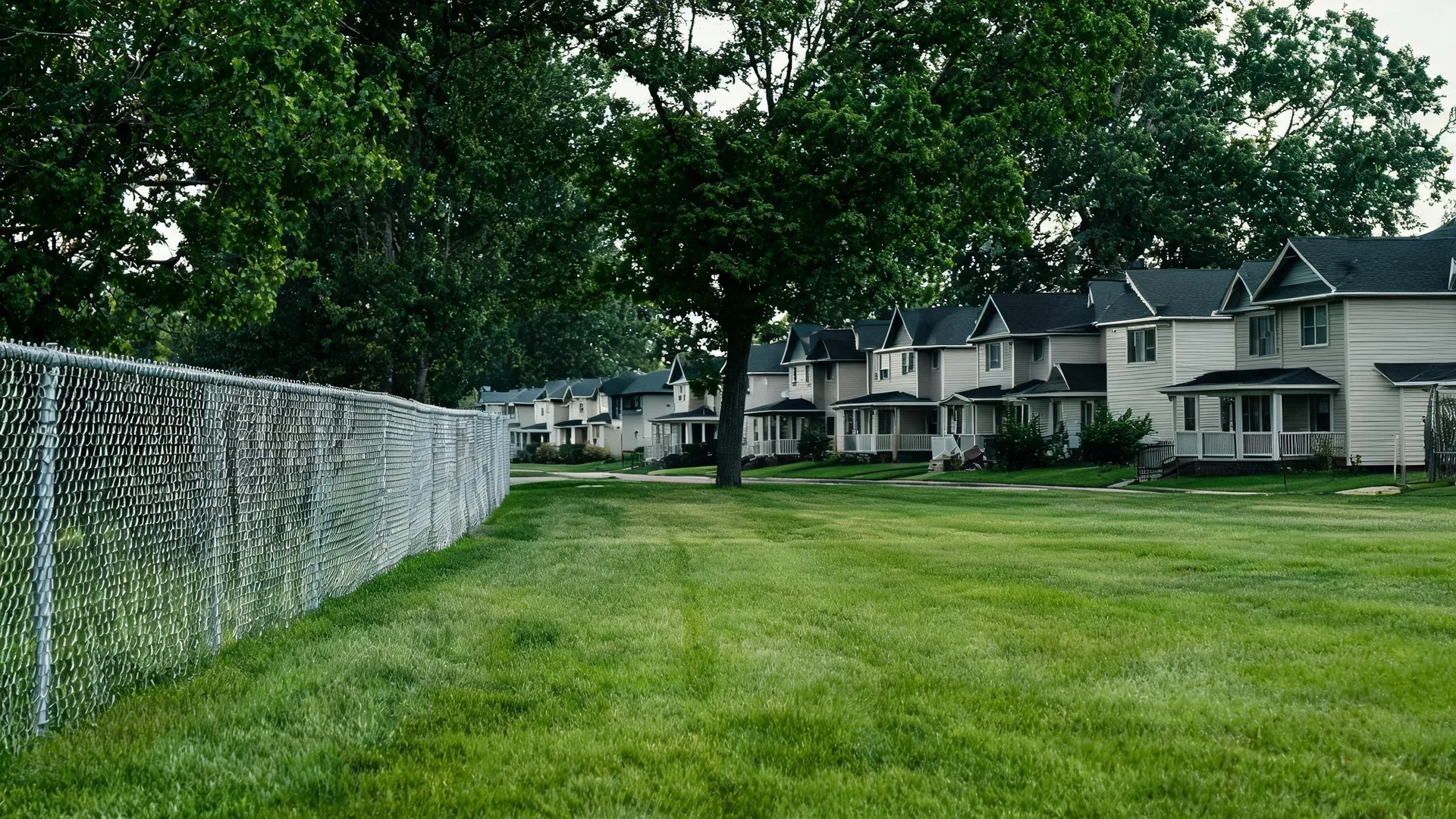





A mowed grass lawn bordered on the left by a chain-link fence, with a row of two-story light-colored houses with gabled roofs and porches beyond large leafy trees.

AC Repair in Bottineau, ND

Tell us about the job

Takes about a minute. No obligation.

RepairCentral ACBottineau County, ND
Step 1 of 2

What ZIP code is the job in?

Your AC only has to work about two months a year here, July and August, with afternoon highs averaging around 78. That's a light load compared to what these systems handle further south. So when something goes wrong, it's rarely because the unit has been run into the ground. More often it's a part that's aged out or something that got knocked loose, especially with the wind and hail this county sees. That kind of problem is usually worth fixing rather than replacing the whole system.

2 months
July through August, your air conditioner is on duty
78°F
the average summer afternoon it cools against
65 hail events
in ten years, and hail bends the fins on outdoor coils
34 wind events
in ten years, and wind drives debris into outdoor units
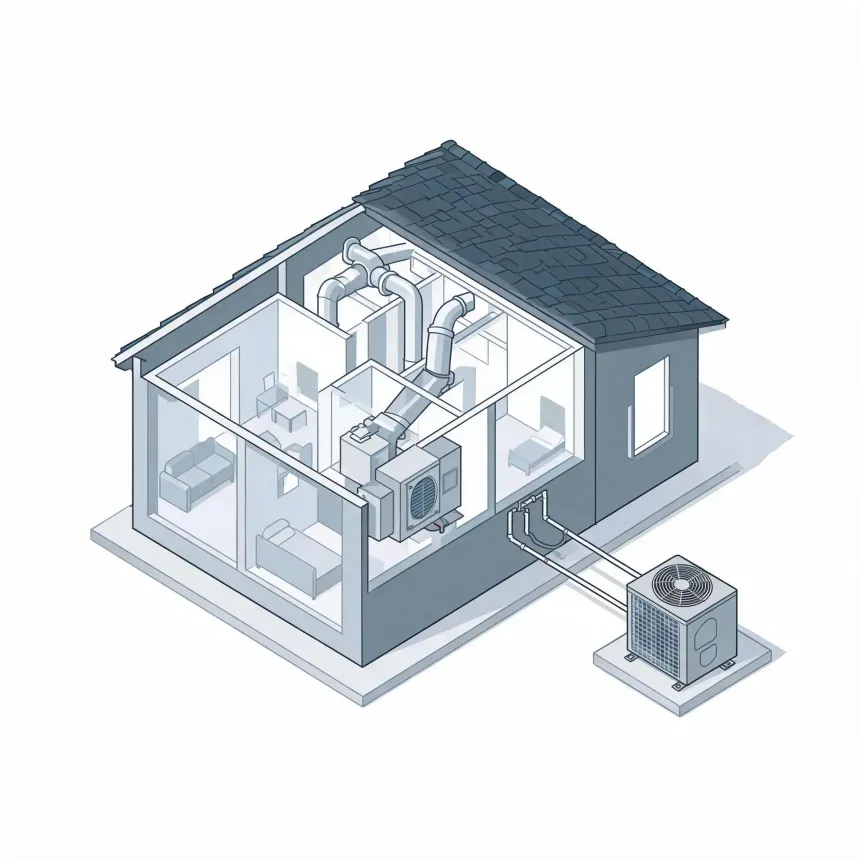
Isometric cutaway illustration of a small house showing interior rooms with furniture, an indoor air handler with ducts in the attic space, and refrigerant lines running to an outdoor condenser unit on a pad.
Your air conditioner works hardest from July through August.

NOAA nClimDiv, 1991–2020 normals

Check the breaker before you check anything else.

A tripped breaker looks exactly like a dead system, and it takes a minute to rule out.

Two months of cooling means July is when a weak part finally gets tested

Cooling runs July through August
Climate zone 7
Power costs 11.51 cents a kWh statewide
A home's age here doesn't decide what's wrong with the ACHalf the homes in Bottineau County were built in 1976 or earlier, half in 1976 or later, and that split doesn't decide what breaks.

A technician checking a system here looks at the same things as anywhere else. Refrigerant charge. The capacitor. The contactor. Airflow across the coil. None of that changes because the unit has had an easy couple of summers. What changes is what they expect to find. A capacitor that failed after two light cooling seasons is more likely just old, or it was near a storm that knocked something loose. It's not one that got run past what it could handle. If the rest of the unit checks out sound, fixing the part that gave out is usually the right call.

It's usually worth repairing

It has an easier job here than in most places, so your air conditioner is often in decent shape. Repair is usually worth it.

Find a contractor
A gray residential air conditioning condenser unit mounted on a concrete pad outdoors, surrounded by green grass under a partly cloudy blue sky.

The signs show up before the system quits

Your AC tells you something's wrong before it quits outright. Warm air coming out of the vents while the thermostat says it's running is the first one most people notice. That usually means low refrigerant charge or a failing compressor, not just dust in the system. Short cycling is another one, where the unit kicks on, runs a few minutes, then shuts off before the house actually cools. That points to a bad capacitor or a thermostat sensor reading wrong. If you hear a hard click followed by a hum that doesn't turn into a running compressor, the capacitor is a likely suspect. Grinding or squealing from the outdoor unit usually means a motor bearing is going. Ice on the refrigerant lines means airflow is restricted somewhere, often a dirty filter or a blower that's not moving enough air across the coil. Any of these is worth a call before the unit stops cooling altogether, since a part that's struggling now tends to fail completely on the next hot stretch.

The visit starts with questions, not tools

A technician wants to know what the system was doing before it quit. Warm air, short cycling, a noise, ice on the lines all point to a different part. That gets settled before any panel comes off. Gauges go on the refrigerant lines. A meter checks the capacitor and the contactor. Airflow gets checked at the coil and the return. Most of the time the cause shows up in that first round of checks.

The fix often happens the same day

A capacitor, a contactor or a blower motor is a part a technician usually carries on the truck, so that repair can happen on the spot. A refrigerant leak takes longer, since the leak has to be found and sealed before the system gets recharged. The diagnosis is what tells you which kind of job you're looking at.

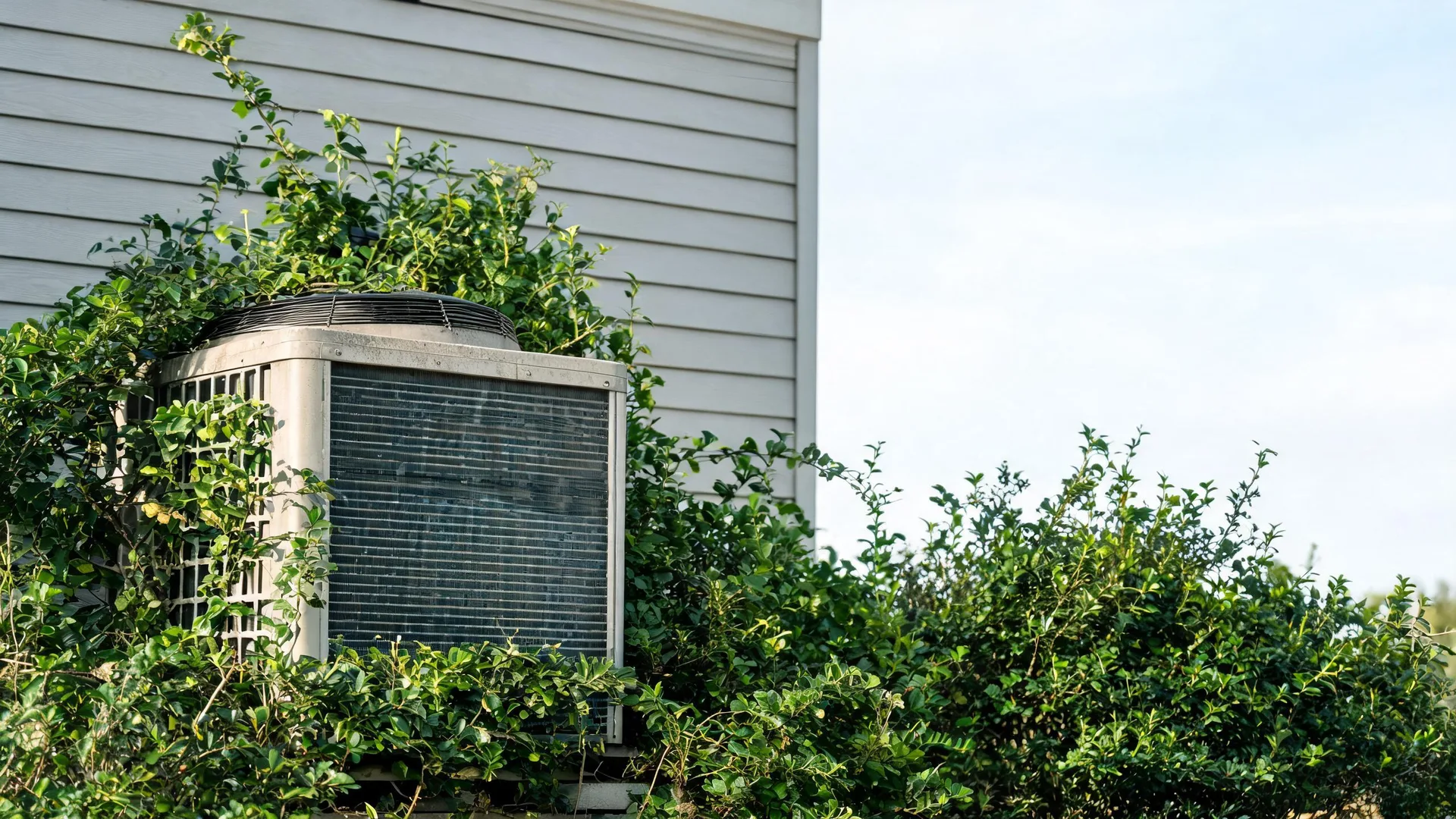
Aerial view of a gray outdoor air conditioning condenser unit mounted on a concrete pad next to a house with vinyl siding.

A new air conditioner would save little on running costs in Bottineau County, so the repair decision comes down to the unit's condition.

  • A new one at the federal minimum, 13.4 SEER2$70 a year
  • An older air conditioner$80 a year

Estimates for a typical Bottineau County home, compared with an older unit built to the previous federal minimum, from EIA household energy data, North Dakota fuel prices and NOAA climate normals. Your home will differ.

Repair makes sense when a part like a capacitor or contactor has failed.

Replacement makes sense when the compressor has failed or the system uses R-22 refrigerant, which is no longer made.

Most AC failures trace back to a handful of parts, and all of them wear the same way everywhere. The capacitor gives the compressor and fan motor their starting kick, and it weakens with age until one day it can't do the job. The contactor is the switch that sends power to the outdoor unit, and its contacts pit and burn from years of opening and closing. Fan motors and blower motors run on bearings that dry out and start grinding before they seize. Refrigerant doesn't get used up, so a low charge almost always means a leak somewhere in the lines or coil, not normal consumption. A dirty filter or a coil caked with dust makes the whole system work harder, and that strain is what pushes a weak part over the edge. None of this is about one bad unit. It's just what happens to compressors, motors and electrical parts after enough on and off cycles.