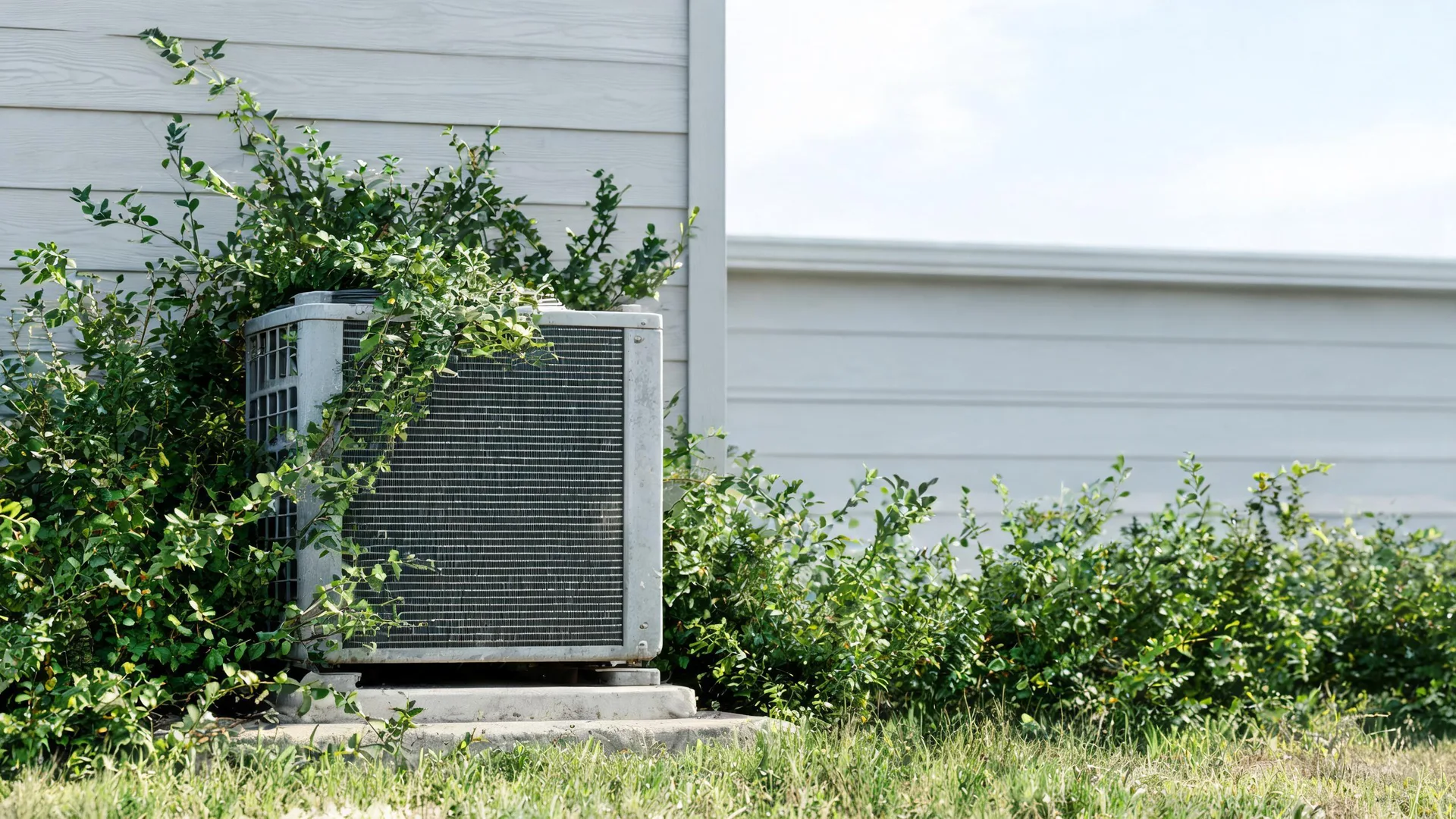
An outdoor air conditioning condenser unit on a concrete pad next to the gray vinyl siding of a residential home.

AC Repair in Cando, ND

Tell us about the job

Takes about a minute. No obligation.

RepairCentral ACTowner County, ND
Step 1 of 2

What ZIP code is the job in?

Check the thermostat and the breaker first

Make sure the thermostat is set to cool and the set point is actually below the room temperature. Then check the breaker panel for the outdoor unit and the air handler. A tripped breaker or a thermostat bumped to the wrong setting gets mistaken for a real failure all the time.


Look at the filter and the outdoor unit

Pull the filter and hold it up to a light. If you can't see light through it, that's choking off airflow and can shut the system down on its own. Walk outside and check that the condenser isn't buried in leaves, grass clippings or anything blocking the sides. Both are worth a look before you decide the system itself is at fault.

1 months
July through July, your air conditioner is on duty
77°F
the average summer afternoon it cools against
35 hail events
in ten years, and hail bends the fins on outdoor coils
31 wind events
in ten years, and wind drives debris into outdoor units
Isometric cutaway illustration of a single-story house with a dark shingled roof, showing interior rooms with ductwork and an indoor air handler connected to an outdoor condenser unit beside the building.
Your air conditioner works hardest from July through July.

NOAA nClimDiv, 1991–2020 normals

Cando only runs its AC through July, with afternoon highs near 77 degrees all summer.

A condenser that only works one month a year hasn't been run hard, so a repair is usually worth making.

Half the homes in Towner County were built in 1969 or earlier, and a system that old is worth asking about

Half the homes here were built by 1969
Cooling runs July through July
Summer afternoons average 77°F

Wind and hail are the bigger risk to a condenser here, not heat. Towner County saw 31 damaging wind events and 35 hail events in the last decade, enough that a bent fin or a dented cabinet is worth checking alongside whatever brought you to this page. Neither usually stops a unit from running, but a coil that's been hit hard enough can lose airflow the same way a dirty filter does. If the system is short cycling or icing and the outdoor unit shows dents or bent fins, mention that to whoever comes out. It changes what they're looking for.

Ask how much life the system has left before you pay for this repair

If the system in your home dates back to when the house was built, ask the contractor how much life it's got left before you put money into this repair. Worth knowing before the work starts, not after.

Find a contractor
A man in a cap, dark shirt and tan work pants, seen from behind, climbs porch steps toward a red front door while carrying a canvas tool bag filled with screwdrivers.
An outdoor residential air conditioning condenser unit mounted on a concrete pad, surrounded by gravel with a blue sky in the background.

What the system tells you before it quits

A system that's actually failing tells on itself. Warm air coming out of the vents when the thermostat is set well below room temperature points to the compressor or the refrigerant charge. Ice on the copper line running to the outdoor unit means airflow is restricted somewhere, often the filter or a blocked return, and running it iced up can wreck the compressor. A condenser that clicks on and off in quick bursts instead of settling into a steady run is usually a bad capacitor or a failing thermostat sensor. Grinding or squealing from the outdoor unit is a motor bearing giving out. None of these get better from waiting. A unit that's warm, icing, or short cycling and keeps running anyway is often doing damage to itself the longer it stays that way.

A frozen coil keeps freezing

Once ice forms on the refrigerant line, airflow over it gets worse, not better, so more ice builds and the compressor ends up pulling liquid refrigerant instead of gas. That's how a blocked filter turns into a compressor replacement.

A weak part fails completely

A capacitor that's losing its charge or a contactor with pitted contacts can still start the system some of the time. Every cycle it's forced through while weak brings it closer to not starting at all, usually at the point when the compressor needs it most.

An outdoor air conditioning condenser unit mounted on a concrete pad next to a blue-sided residential house at sunset.

A new air conditioner would save little on running costs in Towner County, so the repair decision comes down to the unit's condition.

  • An older air conditioner$60 a year
  • A new one at the federal minimum, 13.4 SEER2$60 a year

Estimates for a typical Towner County home, compared with an older unit built to the previous federal minimum, from EIA household energy data, North Dakota fuel prices and NOAA climate normals. Your home will differ.

Repair makes sense when a part like a capacitor or contactor has failed.

Replacement makes sense when the compressor has failed or the system uses R-22 refrigerant, which is no longer made.

Repair makes sense right up until the same part fails a second or third time. A capacitor or a contactor is cheap to replace and quick to swap out, so fixing it is the easy call. The compressor is a different animal. It's the most expensive part in the system, and if it's failing from age rather than from something else breaking it, a contractor has to weigh a compressor replacement against putting that same money toward a new unit. Age matters here more than any single symptom does. A system in its first decade is almost always worth repairing outright, no matter what broke. One running well past the point most units of its kind get retired is worth a harder look, especially if this isn't the first repair it's needed. Ask the contractor what actually failed and why, not just what it costs to fix. A part that failed because it wore out is a different situation than a part that failed because something else is stressing it.