







A snow-covered small-town street at dusk, with lit white clapboard houses, bare trees, and a grain elevator silhouetted against an orange and blue twilight sky.

AC Repair in Carrington, ND

Tell us about the job

Takes about a minute. No obligation.

RepairCentral ACFoster County, ND
Step 1 of 2

What ZIP code is the job in?

Before calling anyone, check the thermostat first. Make sure it's set to cool and set below the room temperature, not just sitting at the current reading. Next, go look at the outdoor unit. If the fan isn't spinning or you don't hear it running at all, that points to a different problem than if it's running but the air inside isn't cold. Check the air filter too. A filter clogged with dust chokes off airflow and can make the whole system work harder without cooling the house. If you have access to the breaker panel, look for a tripped breaker on the AC circuit. One flipped switch can look like a dead system when it isn't. Also check for ice on the indoor coil or the refrigerant lines outside. If you see frost or ice anywhere, turn the system off and let it thaw before anyone touches it further, since running it iced up can damage the compressor.

2 months
July through August, your air conditioner is on duty
79°F
the average summer afternoon it cools against
27 hail events
in ten years, and hail bends the fins on outdoor coils
39 wind events
in ten years, and wind drives debris into outdoor units
Isometric line illustration of a cutaway house showing an indoor air handler with branching ducts in the attic space, connected by a line set to an outdoor condenser unit beside the building, with simple furniture in two rooms.
Your air conditioner works hardest from July through August.

NOAA nClimDiv, 1991–2020 normals

Your AC here only runs about two months a year, July and August, with afternoon highs around 79.

A light workload like that means your unit is more likely struggling from age or missed maintenance than from being worn out by the heat.

Half the homes in Foster County were built by 1973, old enough that the AC has likely been replaced at least once

Half the homes here were built by 1973
Cooling runs July through August
Summer afternoons average 79°F
A light workload most yearsTwo months of real cooling a year means age and upkeep matter more than heat ever will.

If your AC came with the house, ask the contractor for its age before agreeing to any repair. A system that old has used up most of what it had to give, and a repair only makes sense if there's real life left behind it. One installed more recently is a different question, and probably worth fixing outright. Either way, get the age confirmed first, then decide from there.

It's usually worth repairing

It has an easier job here than in most places, so your air conditioner is often in decent shape. Repair is usually worth it.

Find a contractor
A man in a dark shirt and tan work pants, seen from behind, carries a worn canvas tool bag up concrete steps toward a red front door, with a potted evergreen shrub beside the entry.
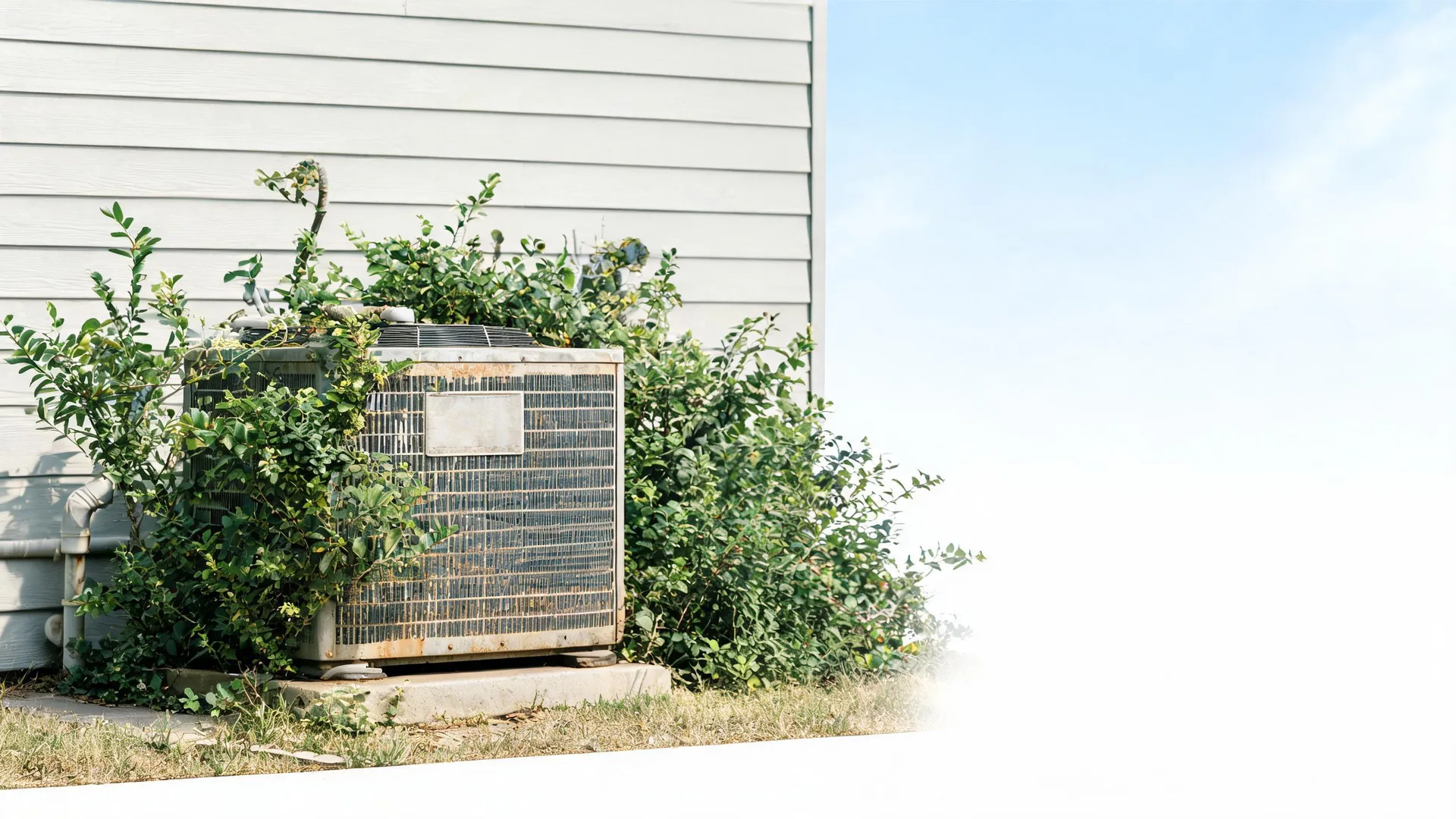
A gray residential air conditioning condenser unit mounted on a concrete pad outdoors, surrounded by green grass under a partly cloudy blue sky.

What actually wears out

Most AC failures trace back to a handful of parts, and the capacitor is the one that gives out most often. It stores the charge that kicks the compressor and fan motor into motion, and heat cycles wear it down over time whether the unit runs hard or not. A weak capacitor shows up as a fan that hums but won't spin, or a compressor that tries to start and can't. The contactor is another common one. It's the switch that sends power to the outdoor unit, and the contacts inside pit and burn a little every time it cycles, eventually failing to close. Refrigerant leaks are different. They don't happen from use, they happen from a joint or coil that was never fully sealed, slowly letting charge escape over seasons. A system low on refrigerant will run long and still not cool, and it'll often ice up the coil as a result. None of these failures are really about how many hours the compressor logs. They're about age, corrosion, and how well the system was looked after between seasons.

What you'll notice first

Warm air from the vents while the outdoor unit runs is usually the first thing anyone notices, long before they'd think to check a part. Short cycling is another one. The system kicks on, runs a couple minutes, shuts off, then starts again a little later. A system doing that is struggling to finish a cooling cycle, not just being inefficient about it. Rooms cooling unevenly, one side of the house fine and the other stuck warm, points toward airflow rather than the compressor itself.

What the sound and smell tell you

A grinding or squealing from the outdoor unit usually means a motor bearing is going, and that part doesn't get better on its own. A musty smell from the vents often means moisture sitting somewhere it shouldn't, sometimes a drain line that's backed up rather than the refrigerant side at all. A burning smell is different from all of these and means stop running the system until someone looks at it, since that points to an electrical component overheating.

Overhead view of an outdoor AC condenser unit on a concrete pad next to a house with a dark shingle roof.

A new air conditioner would save little on running costs in Foster County, so the repair decision comes down to the unit's condition.

  • A new one at the federal minimum, 13.4 SEER2$80 a year
  • An older air conditioner$90 a year

Estimates for a typical Foster County home, compared with an older unit built to the previous federal minimum, from EIA household energy data, North Dakota fuel prices and NOAA climate normals. Your home will differ.

Repair makes sense when a part like a capacitor or contactor has failed.

Replacement makes sense when the compressor has failed or the system uses R-22 refrigerant, which is no longer made.

A diagnostic starts before any panel comes off. The tech will ask what the system was doing right before it quit. A compressor that hums and trips the breaker points somewhere different than a fan that never starts at all. Readings come next. Pressures on the refrigerant lines, amp draw on the compressor and fan motor, voltage at the contactor. Those numbers either match what a healthy system should show or they don't, and where they don't is usually where the problem lives. Airflow gets checked too, since a coil that's iced over or a blower running weak can mimic a refrigerant problem without one actually being there. By the end, the goal isn't just naming the failed part. It's knowing why that part failed. Replacing a capacitor on a system that's low on charge just means another call later.