





A snow-covered suburban street at dusk with lit houses and bare trees under a twilight sky.

AC Repair in Cooperstown, ND

Tell us about the job

Takes about a minute. No obligation.

RepairCentral ACGriggs County, ND
Step 1 of 2

What ZIP code is the job in?

Your air conditioner only earns its keep about two months a year here, July and August, with afternoon highs averaging 78°F. That is a short, mild season compared to most of the country. A compressor that only has to answer a 78 degree afternoon isn't working nearly as hard as one in a place where summer runs hot for months. So when something does go wrong on a unit here, it's rarely because the machine got run into the ground. More often it's a part that aged out or something that got missed. That's worth knowing when you're deciding whether a repair makes sense.

2 months
July through August, your air conditioner is on duty
78°F
the average summer afternoon it cools against
41 hail events
in ten years, and hail bends the fins on outdoor coils
49 wind events
in ten years, and wind drives debris into outdoor units
Isometric line illustration of a cutaway single-story house showing interior rooms with furniture, ceiling ductwork, an indoor air handler, and an outdoor condenser unit connected by lines along the exterior wall.
Your air conditioner works hardest from July through August.

NOAA nClimDiv, 1991–2020 normals

Your AC has sat since August, with June the only month before it starts back up.

Get the weak part found in June, before the first hot week in July finds it for you.

Half the homes here are old enough that their AC may be too

Half the homes here were built by 1958
Cooling runs July through August
Summer afternoons average 78°F

A unit that's struggling doesn't fail quietly. A compressor working against a low charge or a dirty condenser coil is pulling more current than it was built to pull, every minute it runs. Heat builds in the windings where it can't get out. Run that for a day and it's stressed. Run it for a week and that stress starts wearing on the start capacitor and the compressor itself. Some of what brings out a service call is small on its own, a sound, a few degrees of lost cooling, and turns into a failed compressor if it keeps running that way. Shutting it off and getting someone to look is what keeps a small repair a small repair.

It's usually worth repairing

It has an easier job here than in most places, so your air conditioner is often in decent shape. Repair is usually worth it.

Find a contractor
A gray metal air conditioning condenser unit mounted on a concrete pad in a flat grassy field under a partly cloudy sky.

An hour with gauges tells you more than a week of guessing

A diagnostic starts outside at the condenser, with gauges on the lines to check refrigerant pressure and a clamp meter on the compressor to see what it's actually drawing. Low charge shows up as high head pressure and poor cooling. A failing capacitor shows up as high amp draw on startup, sometimes a compressor that hums and won't kick on at all. Inside, the tech checks the evaporator coil for ice or dirt, the blower for airflow, and the condensate line for a clog that's shutting the system down through the safety switch. Each reading rules something out until what's left is the answer. None of this takes guesswork once the gauges are on, but it does take all of it, since a weak capacitor and a low charge can look the same from the thermostat.

Warm air from the vents means the system stopped mid-job

Warm air blowing from the vents almost never means the compressor quit outright. More often it's a dirty condenser coil, a low charge, or a blower that isn't moving enough air across the evaporator coil. The compressor is likely still running, just not moving heat out of the house anymore. That distinction matters, because one of those is a quick fix and the other means the system is straining for nothing.

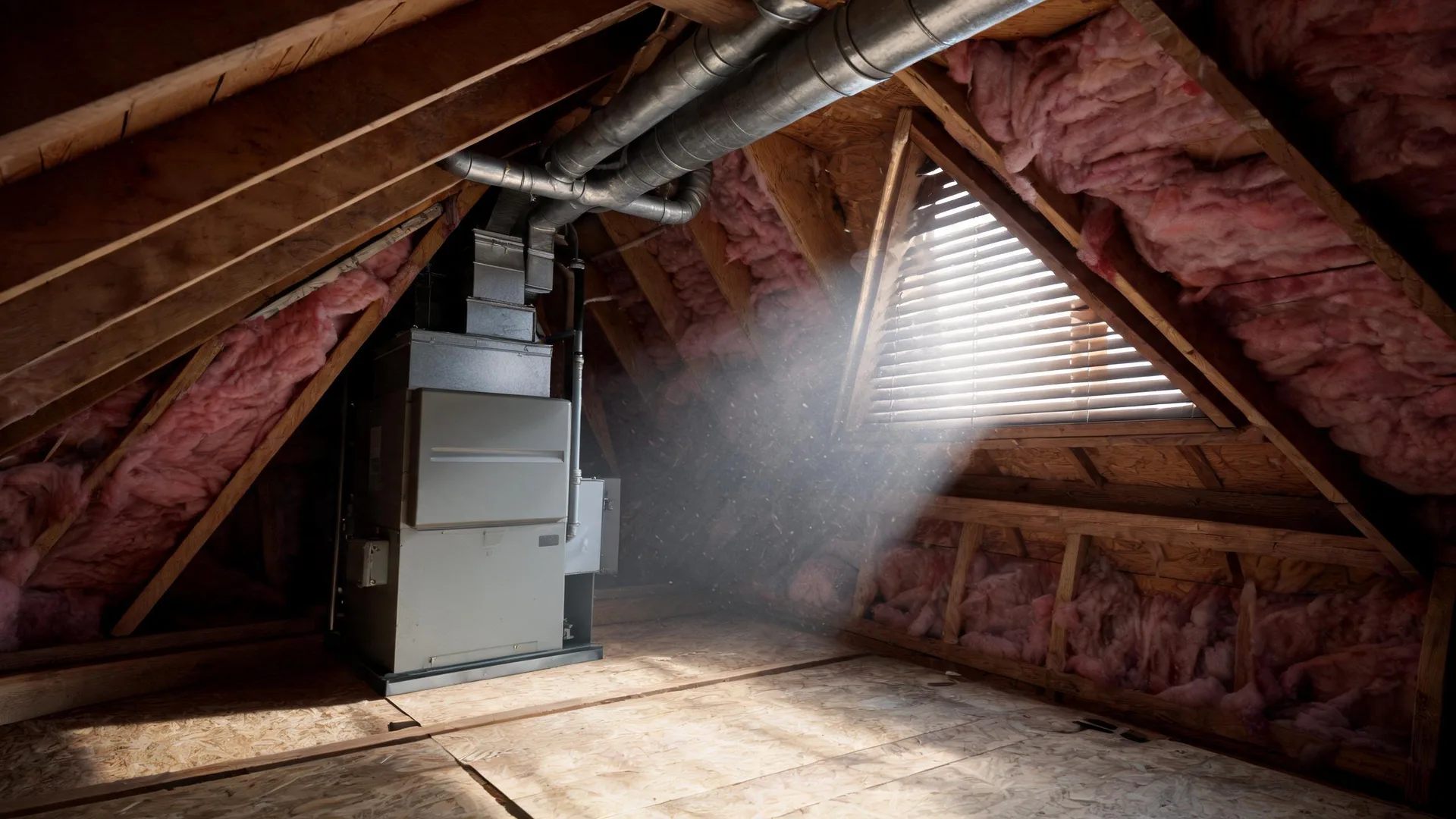
A noise that wasn't there before is the system telling you something changed

A rattle, a hum that wasn't there last season, or a click that repeats every time the unit tries to start are all worth paying attention to. A hum with no startup usually means a capacitor that can no longer give the compressor the push it needs. A rattle is often a fan blade or a panel, something loose rather than something failing. Either way, the sound showed up because something inside changed, and it's easier to find before the part it's warning about gives out.

An outdoor central air conditioning unit mounted on a concrete pad beside a blue-sided house at sunset.

A new air conditioner would save little on running costs in Griggs County, so the repair decision comes down to the unit's condition.

  • An older air conditioner$80 a year
  • A new one at the federal minimum, 13.4 SEER2$80 a year

Estimates for a typical Griggs County home, compared with an older unit built to the previous federal minimum, from EIA household energy data, North Dakota fuel prices and NOAA climate normals. Your home will differ.

Repair makes sense when a part like a capacitor or contactor has failed.

Replacement makes sense when the compressor has failed or the system uses R-22 refrigerant, which is no longer made.

A repair is worth doing when the part that failed is cheap to replace and everything around it is still sound, a capacitor, a contactor, a fan motor. Those fail on their own, without taking anything else down with them, and swapping one back out brings the system right back to where it was. Replacement starts to make more sense when the compressor itself is the problem, since that's the most expensive part in the system and the labor to get at it isn't cheap either. It also makes sense when the refrigerant in it is the kind that's being phased out, because parts and refrigerant for an old system get harder to find and more expensive every year. A tech who's already got the panels off and gauges on can tell you which situation you're in before you decide anything.