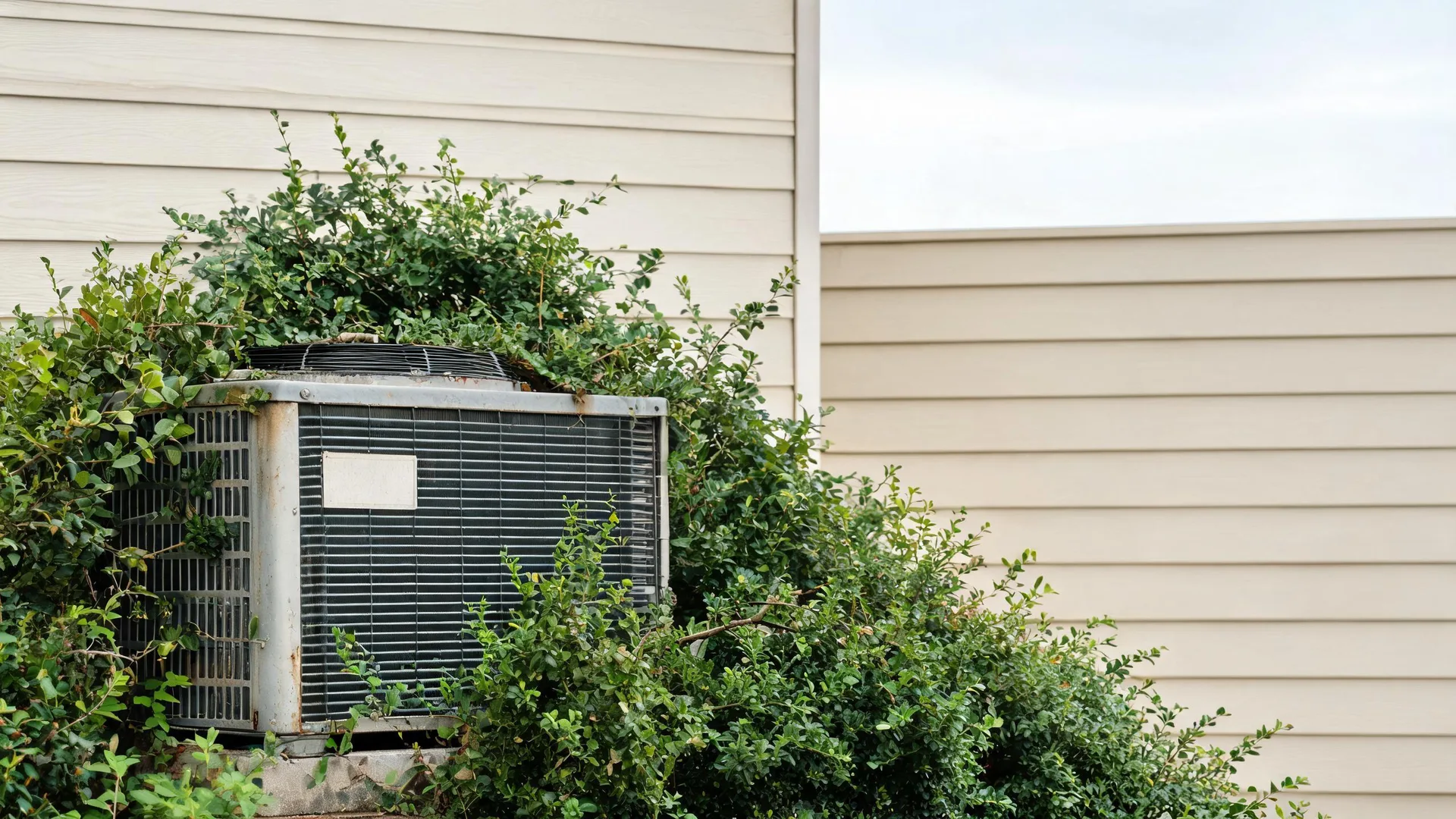
An outdoor central air conditioning unit mounted on a concrete pad beside a blue-sided house at sunset.

AC Repair in Fargo, ND

Tell us about the job

Takes about a minute. No obligation.

RepairCentral ACCass County, ND
Step 1 of 2

What ZIP code is the job in?

Three months of real work

Cass County air conditioners run from June through August, with afternoon highs averaging 80°F. That's a short season, but it's a normal one. Whatever is wrong with your AC is the same kind of failure a tech sees anywhere else, not something this climate caused.


So look for the usual cause

A unit that won't cool, short cycles, or trips its breaker is almost always a weak capacitor, a low refrigerant charge, a dirty coil, or a clogged filter. Those are the first things worth checking before anything bigger gets blamed.

3 months
June through August, your air conditioner is on duty
80°F
the average summer afternoon it cools against
109 hail events
in ten years, and hail bends the fins on outdoor coils
172 wind events
in ten years, and wind drives debris into outdoor units
Isometric illustration of a cutaway single-story house showing attic ductwork, an indoor air handler, interior rooms with furniture, and an outdoor condenser unit connected by lines, on a white background.
Your air conditioner works hardest from June through August.

NOAA nClimDiv, 1991–2020 normals

June is when cooling starts in Cass County and runs through August.

The first hot stretch is when a weak part finally gets found out.

Cass County weather is nothing special. Your AC problem is probably ordinary too.

354 severe weather events from 2015 to 2024
7% of homes statewide lost power a day or more in 2024
172 damaging wind events from 2015 to 2024

Half the homes in Cass County were built in 1993 or later. If yours is one of them, the house itself tells you something about the air conditioner. A newer house means less chance that unit has been sitting out there for decades taking a beating. When a capacitor goes weak or the charge runs low on a system that still has years ahead of it, that's a repair, not a reason to start pricing a new one.

Get the repair, not a replacement quote

A system with years ahead of it is worth getting checked before anything else. Have a tech find the actual cause and fix that part.

Find a contractor
An outdoor air conditioning condenser unit mounted on a concrete pad beside a house, with electrical conduit running to a wall-mounted disconnect box.

Short season, same hours on the parts

A unit doesn't wait for a slow season to break down. It breaks down when a part gives out, and parts give out from running, not from the calendar. A capacitor holds a charge through thousands of start-ups before it weakens, and every cycle the compressor and fan motor pull on it counts the same whether it's the first week of the season or the last. Bearings wear the same way. A motor that's been spinning for hours logs that wear regardless of how many months the unit sat idle before or after. What a short season does is bunch all those hours into a tighter stretch, so a part that might show its age gradually somewhere else tends to just quit here. That's worth knowing before you decide a noise or a weak cooling spell is nothing. The wear already happened. What you're hearing now is just when it caught up.

What to check first

Check the thermostat is set to cool and the temperature is actually below room temperature. Go to the breaker panel and see if the AC breaker has tripped. Look at the outdoor unit and check if the fan is spinning. Pull the filter and hold it up to light. If you can't see light through it, that's your airflow problem right there.

What tells you to shut it off

If the outdoor unit is making a grinding or screeching noise, turn it off at the breaker and leave it off. A compressor or fan motor running on a bad bearing can seize for good in a matter of minutes. Same if you see ice on the indoor coil or the lines running to the outdoor unit. Running it iced up pushes liquid refrigerant back into the compressor, and that kind of damage doesn't get fixed with a capacitor swap.

An outdoor air conditioning condenser unit positioned beside a blue-sided house at sunset.

A new air conditioner would save little on running costs in Cass County, so the repair decision comes down to the unit's condition.

  • A new one at the federal minimum, 13.4 SEER2$100 a year
  • An older air conditioner$110 a year

Estimates for a typical Cass County home, compared with an older unit built to the previous federal minimum, from EIA household energy data, North Dakota fuel prices and NOAA climate normals. Your home will differ.

Repair makes sense when a part like a capacitor or contactor has failed.

Replacement makes sense when the compressor has failed or the system uses R-22 refrigerant, which is no longer made.

A diagnostic visit starts before any panel comes off. A tech will ask what the system was doing right before it quit, whether it was cooling poorly for days or stopped outright, and whether anyone's heard new noises. Then the gauges and meters come out. Checking refrigerant pressure, testing the capacitor under load, and reading the amp draw on the compressor and fan motor tells a tech more than looking ever could, since a capacitor can look fine and still fail the moment it's tested. The coils and filter get checked too, because restricted airflow can mimic a refrigerant problem and send someone chasing the wrong fix. A trained eye knows which causes show up most often and checks those first, rather than working through every possibility in order.