





A snow-covered small-town street at dusk, with lit white clapboard houses, bare trees, and a grain elevator silhouetted against an orange and blue twilight sky.

AC Repair in Fort Yates, ND

Tell us about the job

Takes about a minute. No obligation.

RepairCentral ACSioux County, ND
Step 1 of 2

What ZIP code is the job in?

Half the homes in Sioux County were built in 1984 or later. That's a newer house, and it usually means fewer surprises in the walls behind the AC unit, the wiring and the ductwork it depends on. A system in a house like that is more likely to be worth fixing than replacing outright. If your place came with a newer build, repair is usually the call worth making first.

3 months
June through August, your air conditioner is on duty
82°F
the average summer afternoon it cools against
37 hail events
in ten years, and hail bends the fins on outdoor coils
49 wind events
in ten years, and wind drives debris into outdoor units
Isometric line illustration of a cutaway house showing interior rooms with furniture, ductwork leading to an indoor air handler, and an outdoor condenser unit connected by a line set.
Your air conditioner works hardest from July through August.

NOAA nClimDiv, 1991–2020 normals

Your AC only runs about three months a year here, June through August, with afternoon highs around 82.

A compressor working a short, mild season like that stays in decent shape, so a unit that's been cared for is usually worth fixing.

June is when a weak AC shows itself

Cooling runs June through August
Summer afternoons average 82°F
49 damaging wind events from 2015 to 2024

Warm air coming out of the vents is the one most people notice first. It usually means the compressor is struggling or the charge is low, and either one is worth a call before the unit short cycles trying to keep up. Short cycling itself is a sign too, the system kicking on and off in quick bursts instead of running a normal cooling cycle. Listen for it. A hard grinding or squealing when it starts up points to a failing motor bearing, not something that fixes itself. Water pooling near the indoor unit usually means the condensate drain is clogged, and that backup can reach the furnace control board if it sits too long. Any of these is worth having looked at before the next stretch of hot days, not after.

Fix it. The house behind it is likely new enough to make that worth doing.

Get the repair looked at instead of the whole system. Most houses here were built in 1984 or later, so the AC is likely tied to newer wiring and ductwork, the kind of setup that's worth putting a repair into.

Find a contractor
A gray residential air conditioner condenser unit mounted on a concrete pad in an open grass field.

Check these before you call anyone

A few things are worth checking before anyone comes out. Start at the thermostat. Make sure it's set to cool and set below room temperature, since a setting bumped by accident looks exactly like a dead system. Next, check the breaker box. A tripped breaker shuts the whole unit down and resetting it is free. Look at the air filter. One that's packed with dust chokes off airflow, and that alone can cause warm air at the vents or ice on the coil. Walk outside and look at the condenser. Clear away leaves, grass clippings or anything stacked against it, since it needs open air on all sides to work. None of this fixes a bad capacitor or a low charge, but it rules out the easy stuff first, and sometimes the easy stuff is all it is.

A dirty condenser coil is the most common cause

The outdoor unit sheds heat through that coil into the air around it. When it's coated in dirt, pollen or cut grass, the system can't let go of the heat the way it needs to, so it runs longer and harder than it should. Left that way long enough, the extra strain is what pushes a compressor toward failing.

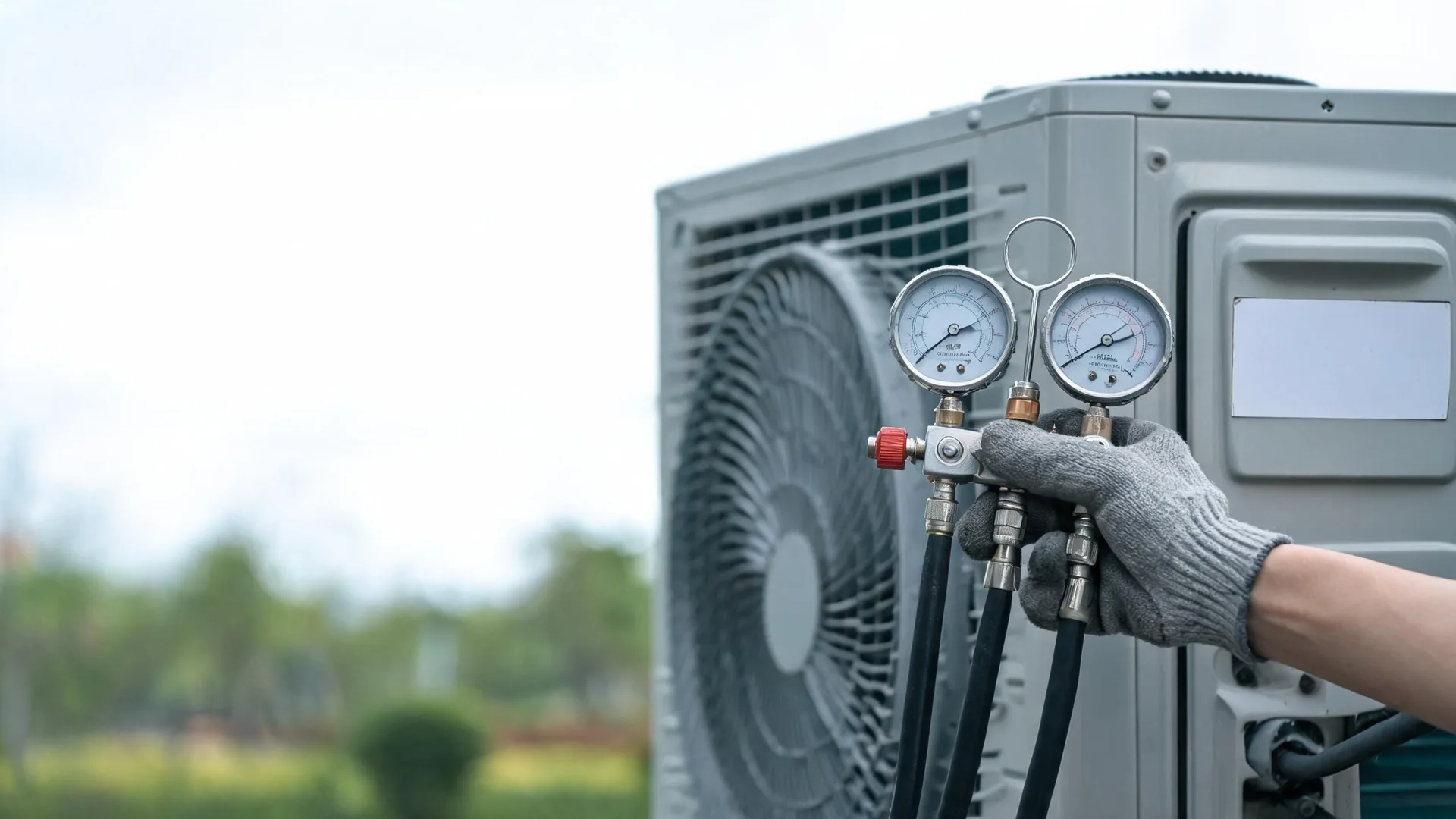
Electrical parts wear out before the compressor usually does

A capacitor gives the compressor and fan motor the jolt they need to start, and it weakens with age and heat until it can't do that anymore. A contactor can pit and stick from years of opening and closing. Either one failing is a common reason a unit won't start at all, long before the compressor itself is the problem.

Aerial view of a gray outdoor air conditioning condenser unit mounted on a concrete pad next to a house with vinyl siding.

A new air conditioner would save little on running costs in Sioux County, so the repair decision comes down to the unit's condition.

  • An older air conditioner$110 a year
  • A new one at the federal minimum, 13.4 SEER2$110 a year

Estimates for a typical Sioux County home, compared with an older unit built to the previous federal minimum, from EIA household energy data, North Dakota fuel prices and NOAA climate normals. Your home will differ.

Repair makes sense when a part like a capacitor or contactor has failed.

Replacement makes sense when the compressor has failed or the system uses R-22 refrigerant, which is no longer made.

When a compressor fails outright, replacement is usually the right call, since a new compressor costs close to what the rest of the system is worth. Most other repairs don't carry that same math. A capacitor, a contactor, a blower motor, a condensate pump, these are parts a tech replaces on their own without touching the rest of the system. Age and history matter more than any single part failing. A unit that keeps coming back for new repairs is telling you something different than one that's run clean for years and just now tripped up. The compressor and the coils are the expensive parts to replace. Almost everything else is a repair worth making on a system that's otherwise sound.