Two mild months a year
Garrison gets afternoon highs around 79°F in July and August, and that's the only real cooling stretch all year. Compared to hotter parts of the country, the compressor here isn't working nearly as hard.
Takes about a minute. No obligation.
Garrison gets afternoon highs around 79°F in July and August, and that's the only real cooling stretch all year. Compared to hotter parts of the country, the compressor here isn't working nearly as hard.
An AC that only runs hard for two months a year usually isn't worn out from the work. If something's gone wrong with yours, age or a neglected part is the more likely cause, not a system that's used up.

NOAA nClimDiv, 1991–2020 normals
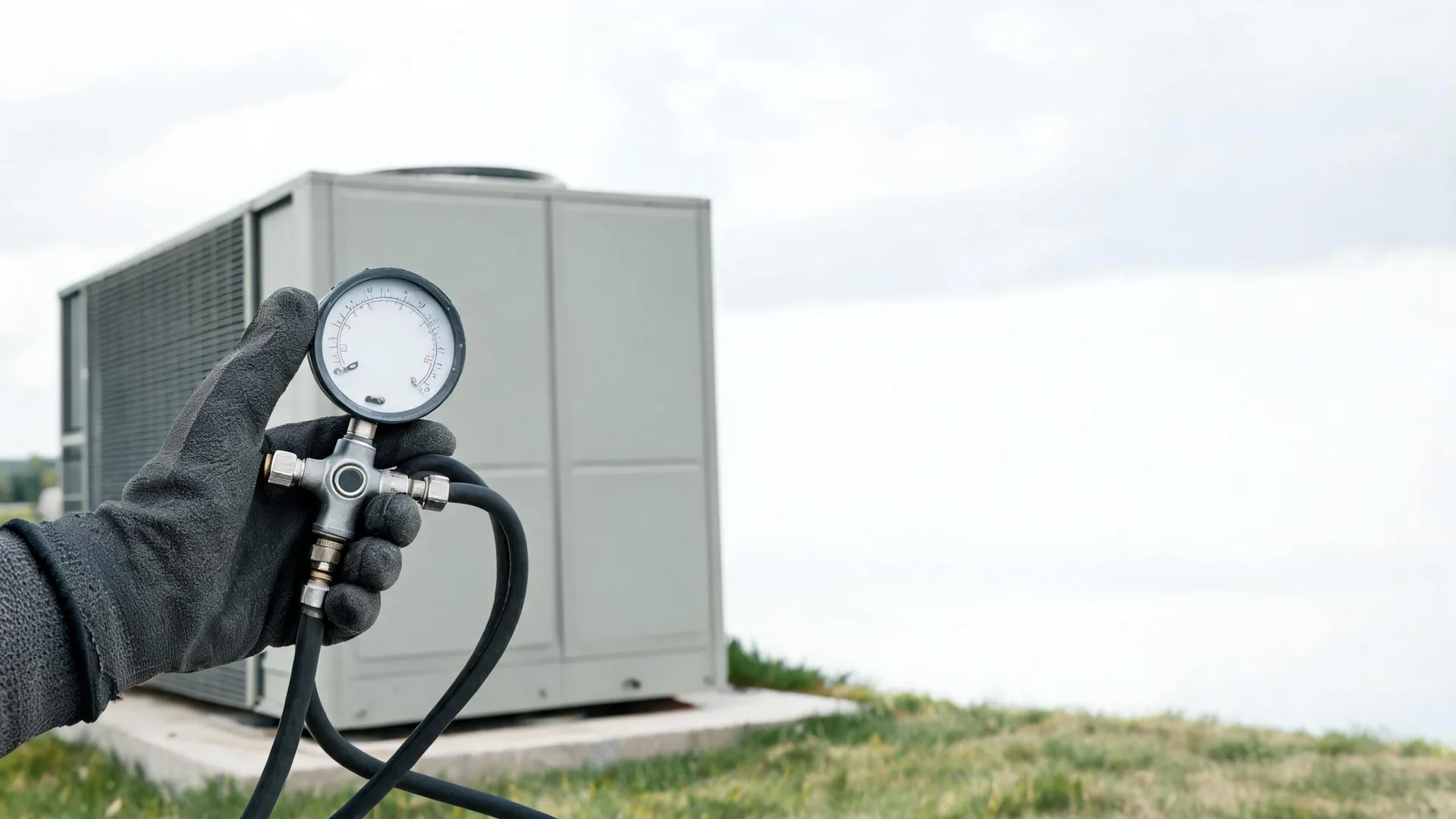
A warm house with the outdoor fan still running almost never means the air conditioner is done for.
Most of the time one part failed, and a technician can find which one.



Get a repair call looked at before you decide it's time for something new. A compressor that's only worked hard two months a year has had it easier than most, so a technician can usually get a straight answer on what's wrong and fix that one thing. Wind and hail are the other story here, with damaging wind and hail both landing in the county often enough to matter. If your AC started acting up after a storm, that's worth mentioning when you call, since a bent fin or a knocked-loose connection points a technician somewhere different than a part that just wore out.
It has an easier job here than in most places, so your air conditioner is often in decent shape. Repair is usually worth it.
Find a contractorBefore anyone comes out, check the thermostat first. Make sure it's set to cool and set below room temperature, and change the batteries if it uses them. Then go look at the outdoor unit. If the fan isn't spinning at all, or you hear it humming without turning, that's worth telling a technician before they arrive. Check the air filter next. A filter clogged with dust chokes airflow across the indoor coil, and that alone can make a system blow warm air or ice up. If you can see the indoor coil and it's covered in frost, turn the system off and let it thaw rather than running it harder. Check the breaker panel too. A tripped breaker, or a switch near the outdoor unit that's been bumped off, will stop the whole system cold, and that one's simple to rule out yourself. Last, walk around outside and clear anything stacked against the outdoor unit, leaves, grass clippings, anything blocking the sides. None of this fixes a bad capacitor or a low charge, but it rules out the simple stuff first.
The capacitor gives the compressor and fan motor their initial push, and it wears down just sitting there charged, whether the system ran hard or not. A weak capacitor shows up as a unit that hums but won't start, or a fan that needs a push to get going. It's a small part and usually a quick swap.
Refrigerant doesn't get used up. If the level is low, it's leaking out somewhere, often at a fitting or a coil. Adding refrigerant without finding the leak just means doing it again later, so a technician who finds low charge should be tracking down where it's escaping, not just topping it off.
Estimates for a typical McLean County home, compared with an older unit built to the previous federal minimum, from EIA household energy data, North Dakota fuel prices and NOAA climate normals. Your home will differ.
Repair makes sense when a part like a capacitor or contactor has failed.
Replacement makes sense when the compressor has failed or the system uses R-22 refrigerant, which is no longer made.
An AC is usually worth repairing unless the compressor itself has failed or the cabinet has rusted through, and both of those are the exception, not the rule. A system that still cools but runs weak, cycles too often, or trips a breaker is almost always a single bad part, not a dying unit. Age matters less than people think. A unit that's been maintained, with clean coils and a filter changed on schedule, tends to hold up far better than one that's been ignored, regardless of how long it's been running. Where it gets harder to justify repair is when the same part keeps failing, or the refrigerant leak turns out to be in the coil itself rather than at a fitting you can get to. Ask the technician what actually failed, not just what it costs to fix it. That answer tells you whether you're looking at a repair or the start of a pattern.