






A snow-covered small-town street at dusk, with lit white clapboard houses, bare trees, and a grain elevator silhouetted against an orange and blue twilight sky.

AC Repair in Jamestown, ND

Tell us about the job

Takes about a minute. No obligation.

RepairCentral ACStutsman County, ND
Step 1 of 2

What ZIP code is the job in?

Cooling only runs here from July through August, so an AC unit sits unused most of the year. That first hot week in July is when a weak part finally gets tested, and it usually doesn't wait long once it is. A capacitor that was marginal last August can fail as soon as the system has to work again. The same goes for a low refrigerant charge or a contactor that was already pitted. If the AC struggled last summer, the same problem is likely still sitting there waiting for the load. Having it checked in June, before the season starts, beats finding out on the first hot day.

2 months
July through August, your air conditioner is on duty
79°F
the average summer afternoon it cools against
59 hail events
in ten years, and hail bends the fins on outdoor coils
82 wind events
in ten years, and wind drives debris into outdoor units
Isometric cutaway illustration of a house with a dark shingled roof, showing interior ductwork connected to an indoor air handler and an outdoor condenser unit beside the building.
Your air conditioner works hardest from July through August.

NOAA nClimDiv, 1991–2020 normals

Two months of cooling a year is a light workload for an air conditioner.

A unit here is less likely worn out than one part failed, so repair is usually the right call.

Half the homes here date to 1973 or earlier, old enough that the AC may be original to the house

Half the homes here were built by 1973
Climate zone 6A
Power costs 11.51 cents a kWh statewide
A light job for an air conditionerTwo months of cooling a year, July and August, afternoons averaging 79°F

If the AC was already here when the current owners bought the house, it's worth asking how old it actually is before paying for a repair. A unit that came with an older home has had a lot of summers behind it, even light ones, and parts don't last forever. A contractor can check the age off the nameplate and tell you where it stands. If it's old enough, the same service call that fixes what's wrong now is the time to ask that question, not after the next part fails.

Get it looked at early

Problems tend to show up in the first weeks of the season, when the load hits a part that was already weak.

Find a contractor
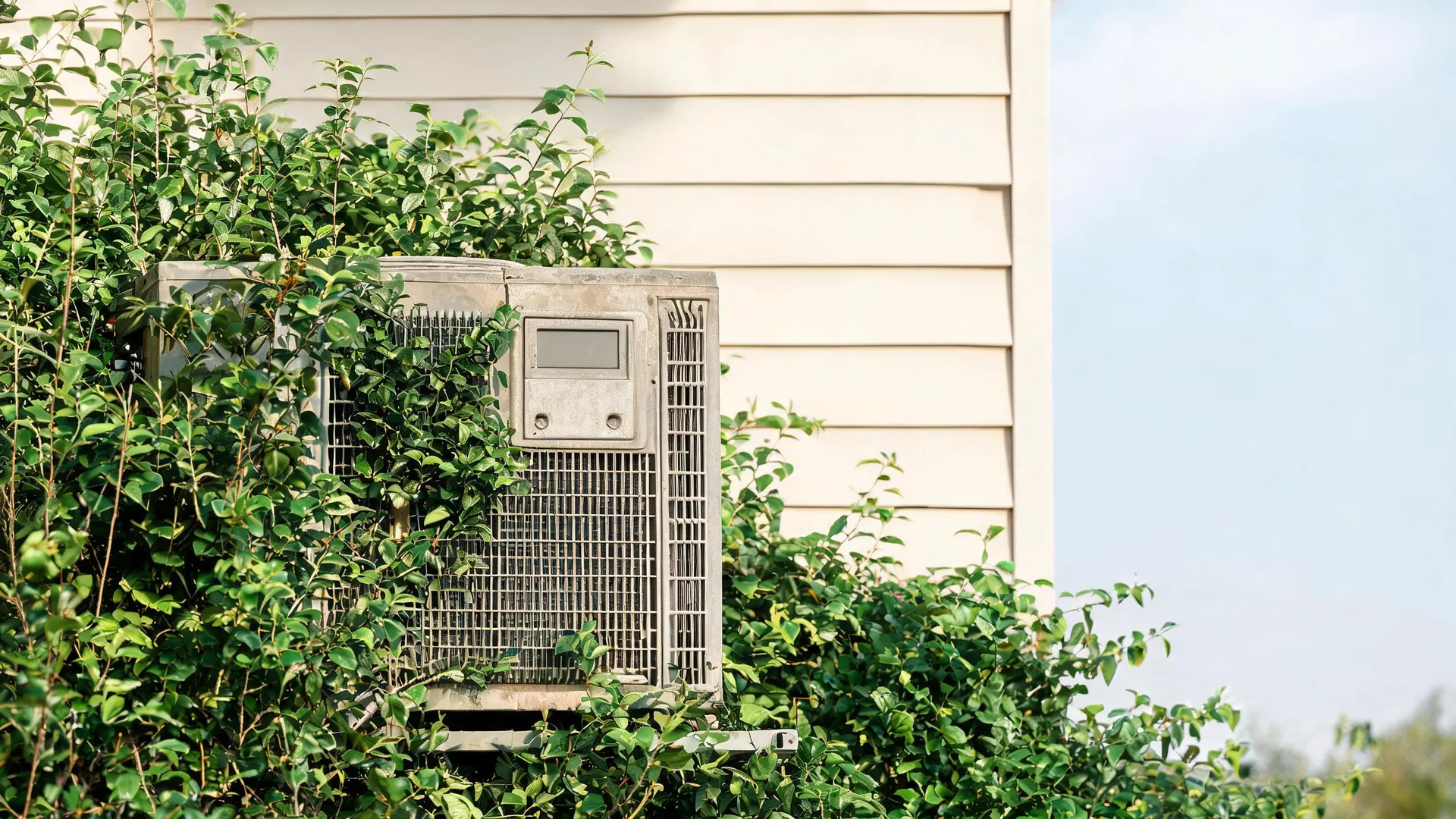
An outdoor air conditioning condenser unit mounted on a concrete pad beside a house, with electrical conduit running to a wall-mounted disconnect box.

What it sounds and feels like before it quits

A unit that's failing rarely goes quiet. It tells you first. Warm air out of the vents when the thermostat is calling for cold usually points to the compressor or a refrigerant leak. Short cycling, where it kicks on and shuts off again within a few minutes, points to a dirty coil, a bad sensor, or electrical trouble. A hard start, where the outdoor unit hesitates or hums before it catches, is often a capacitor going. Ice on the refrigerant line means airflow is restricted somewhere, whether that's the filter, the blower, or low charge. Water pooling near the indoor unit means the condensate line is clogged and backing up. A new rattle, squeal, or grinding noise is a part wearing against another part, and it won't fix itself. None of these get better left alone. They get louder, or they take another part down with them.

What's safe to check yourself

Check the thermostat is set to cool and the temperature is actually below room temperature. Look at the outdoor unit for leaves, grass clippings, or anything blocking the fins. Check the air filter and swap it if it's gray or clogged. Check the breaker if the system won't turn on at all. These take a few minutes and rule out the simplest causes before anyone comes out.

What to leave alone

Don't open the outdoor unit's electrical panel or touch the refrigerant lines. Don't pour anything down the condensate line hoping to clear it. Don't keep flipping the breaker if it trips more than once, that usually means a short somewhere, and resetting it again can damage the compressor. If the fix isn't on the checklist above, it's a job for someone with gauges and a meter, not a guess.

Aerial view of a square outdoor air conditioning condenser unit on a concrete pad beside a house wall with a sliding glass door.

A new air conditioner would save little on running costs in Stutsman County, so the repair decision comes down to the unit's condition.

  • A new one at the federal minimum, 13.4 SEER2$80 a year
  • An older air conditioner$90 a year

Estimates for a typical Stutsman County home, compared with an older unit built to the previous federal minimum, from EIA household energy data, North Dakota fuel prices and NOAA climate normals. Your home will differ.

Repair makes sense when a part like a capacitor or contactor has failed.

Replacement makes sense when the compressor has failed or the system uses R-22 refrigerant, which is no longer made.

Age and repair cost aren't the only things worth weighing. How the unit has run matters too. One failed part on a system that's otherwise kept up with its filter changes and yearly checks is usually worth fixing, even if it's getting older. A unit that's needed a different repair every season is telling you something else, that parts are failing because the system as a whole is wearing out, not because one component had bad luck. A contractor who services the unit regularly will know which story applies, because they've seen what else is wearing down, not just what quit today. If this is the first real problem it's had, fix it and move on. If repairs keep coming back, ask the contractor what they're seeing in the rest of the system before paying for another part.