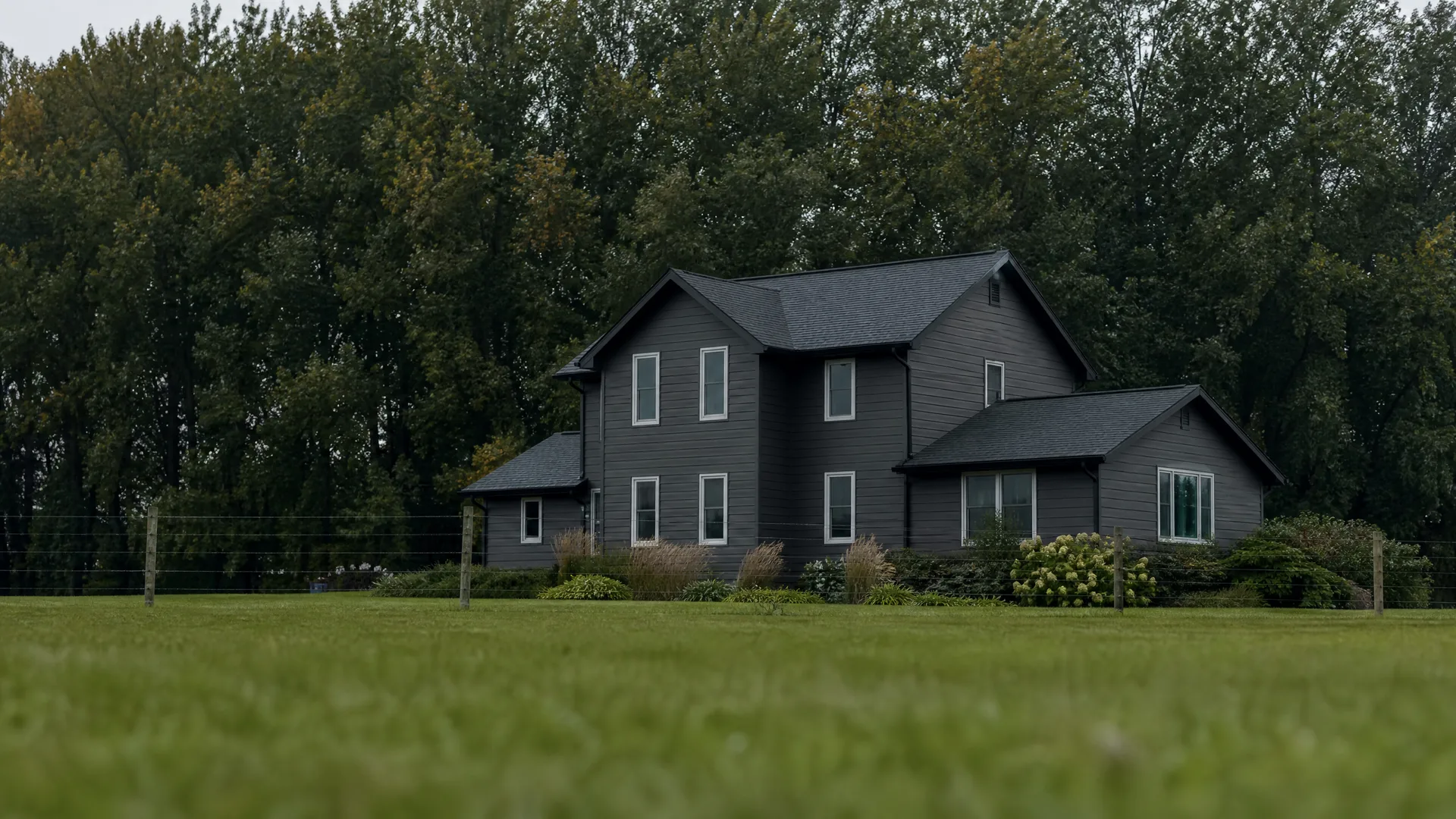







A two-story black-clad house with white-trimmed windows and a dark shingled roof stands behind a mowed lawn and low shrubs, backed by dense deciduous trees under an overcast sky.

AC Repair in LaMoure, ND

Tell us about the job

Takes about a minute. No obligation.

RepairCentral ACLaMoure County, ND
Step 1 of 2

What ZIP code is the job in?

Cooling in LaMoure County runs July through August, just two months a year. That first hot stretch in July is usually the first real test an AC has had since last summer. If a capacitor or contactor was already weak, that's when it gives out. A unit that's sat idle all those months won't show a weak part until it has to run hard, and by then it's a repair call instead of a quick check. June is the better time to find that part, before the heat forces the issue.

2 months
July through August, your air conditioner is on duty
79°F
the average summer afternoon it cools against
37 hail events
in ten years, and hail bends the fins on outdoor coils
44 wind events
in ten years, and wind drives debris into outdoor units
Isometric line illustration of a cutaway house showing interior rooms with furniture, ductwork leading to an indoor air handler, and an outdoor condenser unit connected by a line set.
Your air conditioner works hardest from July through August.

NOAA nClimDiv, 1991–2020 normals

A compressor is the expensive part, and it usually fails because something cheaper failed first.

If the capacitor or contactor gets replaced before that happens, the compressor is never part of the repair.

Half the homes in LaMoure County date to 1965 or earlier, old enough that the AC may be the second one that house has had

Half the homes here were built by 1965
Cooling runs July through August
Summer afternoons average 79°F
A light workload, most summersAfternoon highs average 79°F here, so get a repair out before July asks more of it.

Before you call, check the thermostat is set to cool, not just on, and that the batteries are fresh. Go outside and look at the condenser. If the fan isn't spinning, flip the breaker off and back on once, since a tripped breaker is common and easy to rule out. While you're out there, see if the coil is covered in grass clippings or if anything is crowding the unit and blocking airflow. Back inside, pull the filter and hold it up to a light. If you can't see through it, that alone can starve the system enough to freeze the coil or leave you with warm air at the vents. None of this fixes a bad capacitor or a low charge, but it rules out the things that look like a repair and aren't.

Get it looked at early

Problems tend to show up in the first weeks of the season, when the load hits a part that was already weak.

Find a contractor
A man in a dark cap, dark long-sleeved shirt and tan work pants walks up porch steps toward a red front door, carrying a worn canvas tool bag.
A gray residential air conditioning condenser unit mounted on a concrete pad outdoors, surrounded by green grass under a partly cloudy blue sky.

Running through a problem rarely fixes it

A system that's struggling will tell you before it quits. Warm air at the vents, ice on the coil, a hard start where the compressor hesitates before it kicks in. None of that fixes itself by running longer. A coil that's icing up is losing airflow, and the fix for low airflow is never more runtime, it's finding why the air isn't moving. Keep it running through that and the ice just builds, which blocks airflow further and makes the compressor work against a frozen coil. A weak capacitor behaves the same way. It can still start the compressor on a cool morning, then fail outright once the afternoon load is harder on it. Shutting the system off when something looks wrong buys time to get it looked at. Leaving it running can turn a bad capacitor or contactor into a bad compressor, and that's a different repair entirely.

The sound changes before the air does

A compressor that hums without starting, a clatter that wasn't there last summer, a rattle that picks up with the fan speed. These usually mean a part has already failed or is about to. Warm air at the vents shows up later, after the part behind it has been struggling for a while.

Short cycling wears out the parts that start it

If the system shuts off a few minutes after it starts, something is cutting it short, often a thermostat sensor or a safety switch reacting to ice on the coil or a refrigerant problem. Every one of those restarts puts a hard load on the capacitor and contactor, so the longer this goes on, the more likely it is to take those parts down with it.

Aerial view of a gray outdoor air conditioning condenser unit mounted on a concrete pad next to a house with vinyl siding.

A new air conditioner would save little on running costs in LaMoure County, so the repair decision comes down to the unit's condition.

  • A new one at the federal minimum, 13.4 SEER2$90 a year
  • An older air conditioner$100 a year

Estimates for a typical LaMoure County home, compared with an older unit built to the previous federal minimum, from EIA household energy data, North Dakota fuel prices and NOAA climate normals. Your home will differ.

Repair makes sense when a part like a capacitor or contactor has failed.

Replacement makes sense when the compressor has failed or the system uses R-22 refrigerant, which is no longer made.

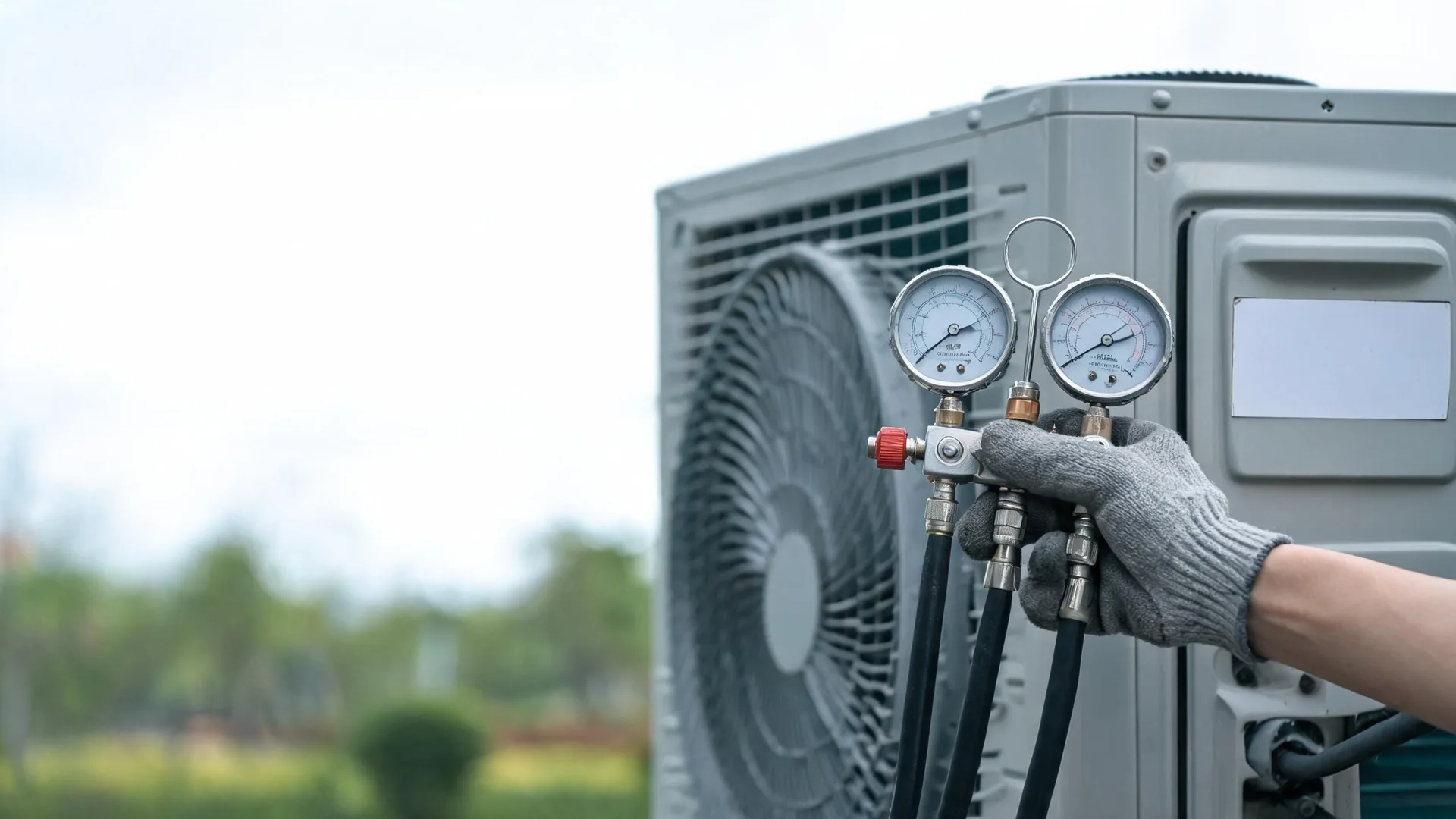
A diagnostic call starts outside at the condenser. The capacitor and contactor get checked first, since those fail more than anything else out there. The tech will put gauges on the refrigerant lines, because low pressure usually means a leak, not just a system that needs a top-off. Inside, they check the coil for ice and look at the plenum for airflow, since a coil starved for air looks a lot like one that's low on charge. Amp draw on the compressor, voltage at the contactor, resistance across the capacitor, these readings point to which part is weak before it fails outright. Most of this doesn't require opening the unit beyond the access panel, and it gives you the actual part behind the symptom instead of a guess.