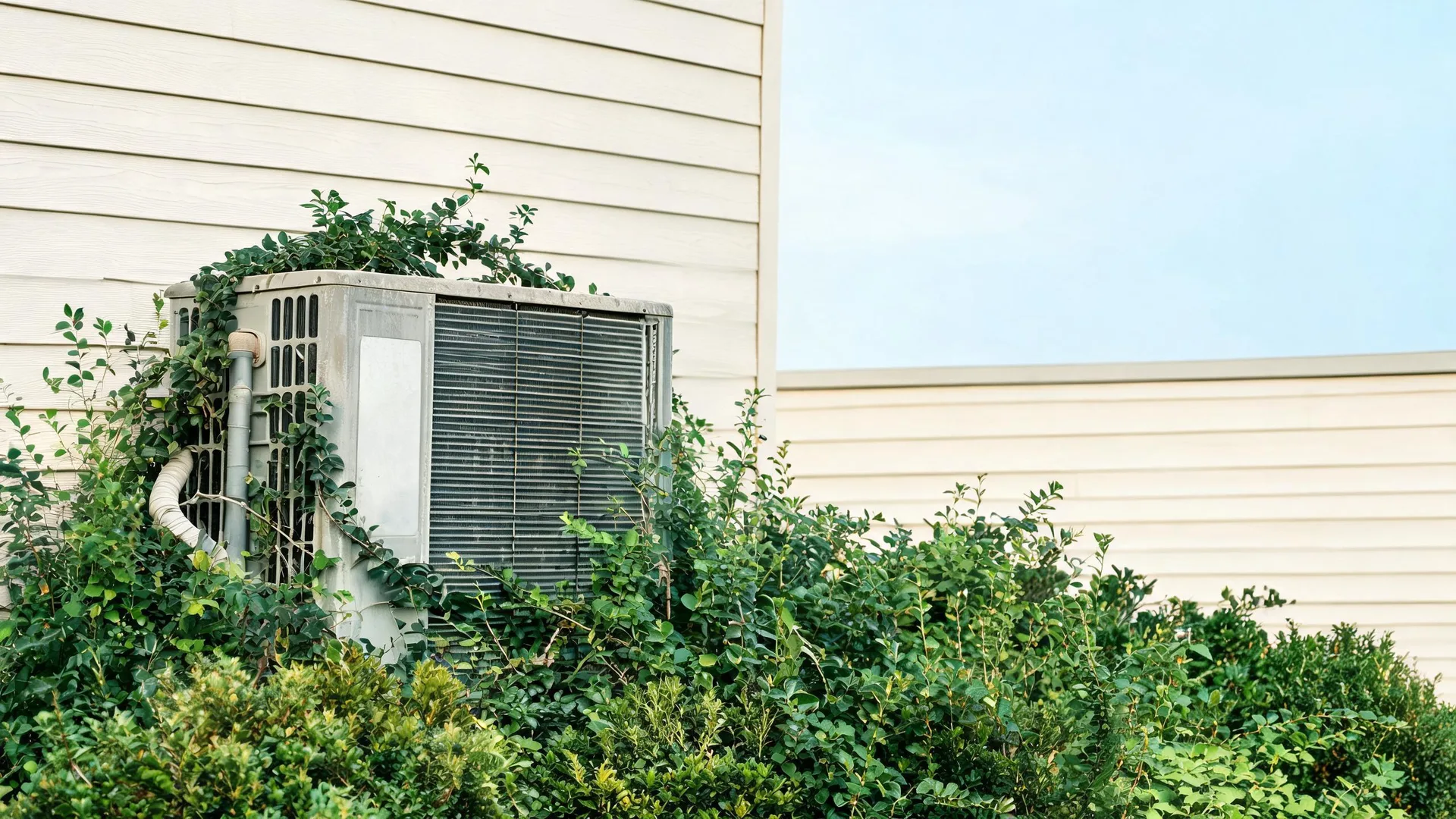
Two months of real work
Your AC only runs hard in July and August here, with afternoon highs averaging around 81°F. That's a short, mild stretch for a compressor to carry, not the kind of long, brutal summer that wears a system down early.

Takes about a minute. No obligation.
Your AC only runs hard in July and August here, with afternoon highs averaging around 81°F. That's a short, mild stretch for a compressor to carry, not the kind of long, brutal summer that wears a system down early.
When a machine isn't run hard, a breakdown is less likely to mean it's worn out. More often it's a part that failed on its own, or something that got skipped along the way. That's worth knowing before you decide whether a repair makes sense.

NOAA nClimDiv, 1991–2020 normals
A breaker, a thermostat setting and a dirty filter can all make an AC look dead.
Flip the breaker back on, set the thermostat below room temperature, and pull the filter to check for a gray or black buildup before calling anyone out.



With only July and August asking much of it, a repair is usually the right call before you think about replacing the whole system. A tripped breaker, a failed capacitor, a low charge, these are the kinds of things that take down a unit that still has years left in it. None of that means the system is finished, only that something specific needs attention. A good technician can tell you in a few minutes whether what's wrong is quick to fix or a sign the unit is done for. Given how light the work is on it here, most of the time it's the former.
If your AC came with the house, ask the technician how much life is left in it before you pay for a repair. In a county where half the homes go back to 1961 or earlier, that's a fair question to put to them, and a few minutes of looking will usually answer it.
Find a contractor
Warm air coming out of the vents is the one everybody notices first. Sometimes it means the system is low on refrigerant, sometimes it means the compressor itself is on its way out, and those are different repairs. A short cycle, where the unit kicks on and off instead of running a normal stretch, usually points to a bad thermostat sensor or a clogged filter choking airflow. Ice on the coil or the lines outside is airflow trouble too, often as simple as a filter nobody's changed, though it can also mean the charge is low. Any grinding, squealing or rattling means a motor bearing or a loose part, and that one gets worse fast if it sits. A hum with no start at all is often the capacitor, the part that gives the compressor and fan motors their initial kick. None of these mean the system is done. They mean something specific failed, and specific failures get fixed, not replaced.
Most AC failures come down to the same few parts. The capacitor gives the compressor and fan motor the jolt they need to start, and it wears out from heat cycling over the years whether the unit runs hard or not. The contactor is the switch that sends power to the compressor, and its contacts pit and burn a little more with every cycle until one day they stop closing. A fan motor can seize or burn out on its own too. None of this has much to do with how many hours the system logged.
An old system doesn't wear out part by part so much as it runs out of parts worth saving. A compressor or coil that's been in service a long time has usually earned enough wear that a repair only buys a short stretch before the next thing goes. A technician checking the coil condition and the compressor's draw can tell you which kind of old you're dealing with.
Estimates for a typical Slope County home, compared with an older unit built to the previous federal minimum, from EIA household energy data, North Dakota fuel prices and NOAA climate normals. Your home will differ.
Repair makes sense when a part like a capacitor or contactor has failed.
Replacement makes sense when the compressor has failed or the system uses R-22 refrigerant, which is no longer made.
A diagnostic starts with questions, not tools. When did it stop cooling, did it happen all at once or get worse over a few days, is it still running at all. Then the technician checks power and the thermostat call before touching anything mechanical, because a system that isn't getting a signal to run looks the same from across the room as one with a dead compressor. Outside, they'll check whether the compressor and fan are actually running, feel for the right kind of airflow at the vents, and check the line temperatures to see if the charge is where it should be. A gauge set on the lines tells them more in a minute than guessing will in an hour. Most of what's wrong shows itself early. The rest is confirming it before anything gets replaced.