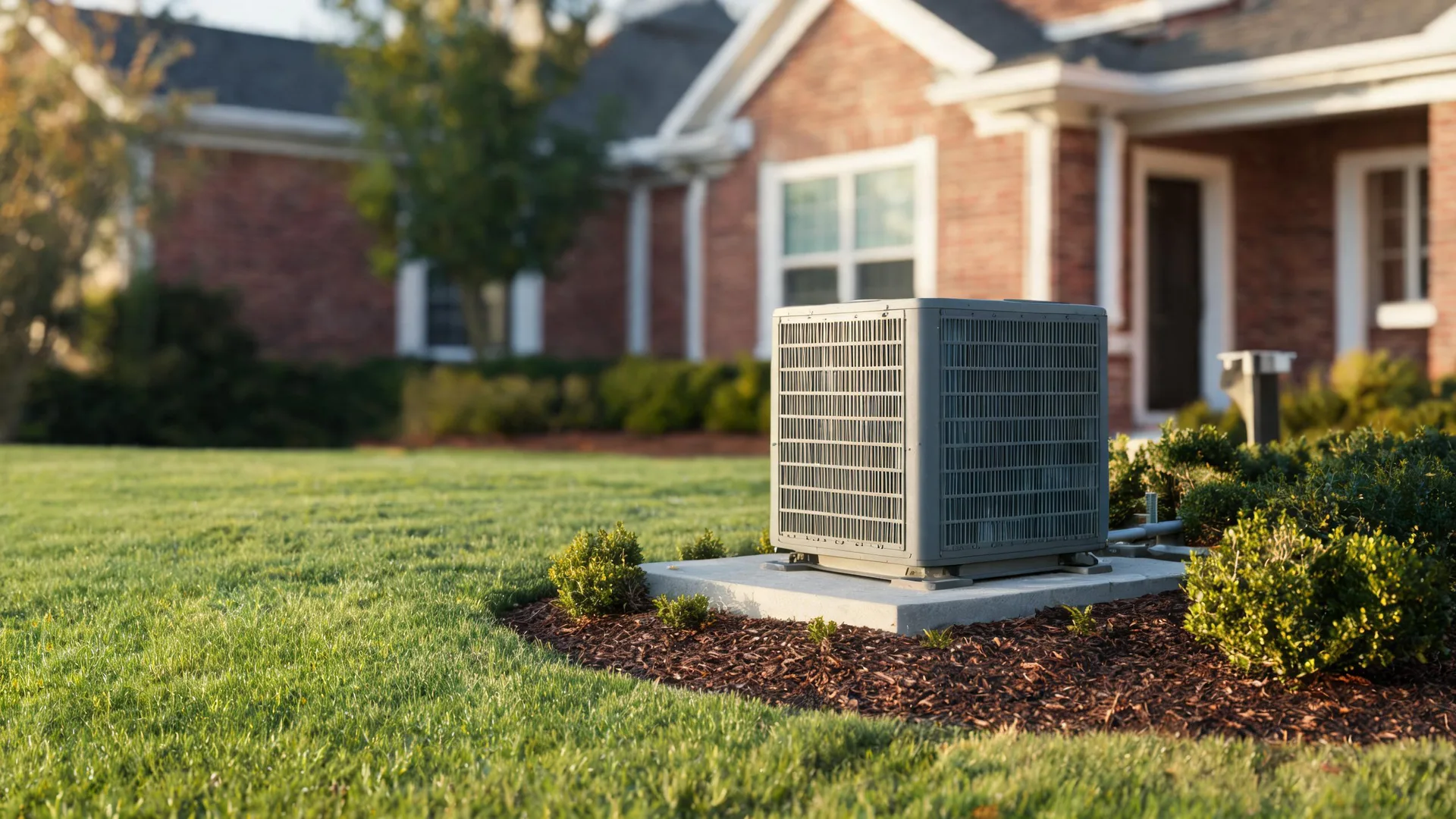
An overhead view of a residential air conditioning condenser unit mounted on a concrete pad next to a house with vinyl siding.

AC Repair in McClusky, ND

Tell us about the job

Takes about a minute. No obligation.

RepairCentral ACSheridan County, ND
Step 1 of 2

What ZIP code is the job in?

A dirty condenser coil makes the compressor work harder

The outdoor coil needs airflow to dump heat from the refrigerant. When it's caked with dirt or grass clippings, the system can't shed heat the way it should, so the compressor runs longer and hotter than it should. Left that way long enough, the compressor itself wears out, and that's a much bigger job than cleaning a coil.


A weak capacitor shows up as a fan that won't start

The capacitor gives the compressor and fan motor the jolt they need to start spinning. As it ages it loses that strength, so you'll hear the unit hum while the fan blade just sits there, or the whole system clicks and shuts off on its own. Running it on a capacitor that's going bad puts real strain on the motor it's supposed to be starting.

2 months
July through August, your air conditioner is on duty
79°F
the average summer afternoon it cools against
23 hail events
in ten years, and hail bends the fins on outdoor coils
32 wind events
in ten years, and wind drives debris into outdoor units
Isometric cutaway illustration of a house showing interior ductwork, an air handler, and an outdoor condenser unit connected by lines, with simple furniture in the rooms.
Your air conditioner works hardest from July through August.

NOAA nClimDiv, 1991–2020 normals

Your AC in Sheridan County only runs July and August, with afternoon highs around 79.

A system that mild a workload most years usually still has life in it, so a repair is worth a look before anyone talks about replacing it.

Half the homes in Sheridan County date to 1967 or earlier, which puts a lot of AC systems close to the end of their working life

Half the homes here were built by 1967
Climate zone 6A
Power costs 11.51 cents a kWh statewide

June is the last quiet month before cooling starts in July. The system sits idle that whole time, then gets asked to run on the first warm afternoon with no chance to ease into it. If a capacitor or coil was already marginal, that first week of July is usually when it shows, not in August once the system has settled into the season. So if your AC is acting up now, it's worth having looked at rather than waited on. Two months is a short season, and a system that light a load usually has more life in it, so this is more likely a fix than a sign the whole unit is done.

Know what you're repairing before you pay for it

If your AC came with the house, find out how old it actually is before paying for a repair. A system installed decades ago may be near the end of what it can give you, and that changes whether this repair is worth it.

Find a contractor
A person in a dark jacket and tan pants, seen from behind, carries a waxed canvas duffel bag up porch steps toward a red front door, with a potted shrub beside the porch.
An outdoor air conditioning condenser unit mounted on a concrete pad surrounded by gravel, photographed against a partly cloudy blue sky.

What to check before you call

Before anyone comes out, check the simple things. Look at the thermostat first. Make sure it's set to cool and set below room temperature, and if it runs on batteries, swap them. Next, go to the breaker panel and check that the AC breaker hasn't tripped. Outside, look at the condenser unit and clear away any leaves, grass clippings or debris sitting against the coil. Inside, check the air filter. A filter clogged with dust blocks airflow across the indoor coil, and that can cause the whole system to ice up. If you see ice on the refrigerant lines or the indoor coil, shut the system off entirely and let it thaw before anyone touches it, running it iced up just adds strain. Also check that nothing is blocking the supply vents or the return grille inside the house. None of this fixes a bad capacitor or a worn compressor, but it rules out the things that look like a breakdown and aren't.

Warm air from the vents means the system stopped cooling, not just cycling

If the blower is running but the air coming out feels like room temperature or warmer, the system isn't actually cooling anymore. That points to a refrigerant problem or a compressor that's no longer doing its job, not something that will clear up on its own.

Short cycling wears out the parts that start the system

An AC that kicks on, runs briefly, then shuts off and starts again soon after is short cycling. Every start puts a load on the capacitor and the compressor, so a unit doing this over and over is wearing down the same parts that are already struggling to start it.

An outdoor air conditioning condenser unit on a concrete pad next to the gray vinyl siding of a residential home.

A new air conditioner would save little on running costs in Sheridan County, so the repair decision comes down to the unit's condition.

  • A new one at the federal minimum, 13.4 SEER2$80 a year
  • An older air conditioner$90 a year

Estimates for a typical Sheridan County home, compared with an older unit built to the previous federal minimum, from EIA household energy data, North Dakota fuel prices and NOAA climate normals. Your home will differ.

Repair makes sense when a part like a capacitor or contactor has failed.

Replacement makes sense when the compressor has failed or the system uses R-22 refrigerant, which is no longer made.

Age is the real question behind repair versus replacement, more than whatever symptom brought you to this page. A capacitor or a contactor is a small, cheap part, and it's worth replacing on a system of any age because swapping it doesn't commit you to anything. A compressor is a different decision. If that's what's failing, you're not patching a part, you're weighing the cost of a new compressor against a new system, and the rest of the equipment's age matters to that math. A unit old enough to be near the end of its working life can still fail in small ways before it fails all the way, so a run of repairs close together is a pattern worth paying attention to, not bad luck. Ask whoever comes out to look at the whole system, not just the part that quit, before deciding which way to go.