




A two-story black-clad house with a gabled shingle roof stands behind a wire fence, surrounded by deciduous trees and a wide grassy field in the foreground under an overcast sky.

AC Repair in New Town, ND

Tell us about the job

Takes about a minute. No obligation.

RepairCentral ACMountrail County, ND
Step 1 of 2

What ZIP code is the job in?

Your air conditioner only has to work two months out of the year here, July and August. The rest of the time it sits idle. Afternoons in those months average 79°F, which is warm but not the kind of heat that pushes a system hard day after day. So the wear inside your unit is usually light for its age. When something goes wrong, it's rarely because the compressor has been run into the ground. More often it's a part that failed on its own or something that got missed at a tune-up. That's worth knowing before you decide whether to repair it or replace it.

2 months
July through August, your air conditioner is on duty
79°F
the average summer afternoon it cools against
59 hail events
in ten years, and hail bends the fins on outdoor coils
59 wind events
in ten years, and wind drives debris into outdoor units
Isometric line illustration of a cutaway single-story house showing interior rooms, ceiling ductwork and an air handler, connected to an outdoor condenser unit on a pad beside the building.
Your air conditioner works hardest from July through August.

NOAA nClimDiv, 1991–2020 normals

Half the homes in Mountrail County were built in 1997 or later.

If your AC came with a newer house, it's probably not old enough to need replacing.

July is when a weak part gets found, not made

Cooling runs July through August
Summer afternoons average 79°F
59 damaging wind events from 2015 to 2024

So before you call around for installs, find out how old the unit actually is. Check the sticker on the side of the condenser, it usually has a manufacture date stamped near the serial number. If it matches a newer build, a failed capacitor or a bad contactor is a repair, not a reason to replace the whole system. Mobile homes are common here too, close to one in five, and those AC units tend to be smaller systems with the same straightforward parts. Either way, get the actual age before anyone tells you it's time for something new.

Light use most years means repair is usually the right call

A system that's been running fine for years, outside of two months of real use, is usually worth fixing rather than replacing. Get the repair done and it should see you through next July without issue.

Find a contractor
An outdoor residential air conditioning condenser unit mounted on a concrete pad, surrounded by gravel with a blue sky in the background.

Most AC failures come down to a handful of parts, not age

A capacitor is the part most likely to give out first, since it's the one holding a charge and pushing the compressor and fan motor to start every time the system cycles on. After sitting unused for months, a weak capacitor is often what fails on the first hot call of the season rather than partway through. A dirty condenser coil outside causes trouble too, especially after sitting through a winter collecting debris, since it makes the whole system work harder to shed heat and can trip it offline. Refrigerant doesn't get used up, so a system that's low on charge has a leak somewhere, usually at a fitting or coil, and that leak doesn't fix itself with a recharge. A clogged filter restricts airflow across the indoor coil, and if it's bad enough that coil can ice over and stop cooling altogether. None of these point to a system wearing out. They're the same handful of things that go wrong on units that run hard every day and ones that barely get used.

What you'll notice first

The system runs but the air coming out isn't cold, or it blows cold for a while then quits. Short cycling is another one, the unit kicks on, shuts off a few minutes later, then starts again. Sometimes it's just noise, a hum from outside when nothing spins up, or a rattle that wasn't there last summer. Any of these means something's wrong, not that the system is tired.

What it means for getting it fixed

Warm air with the unit running points to the capacitor or the compressor itself. Short cycling often traces back to a dirty coil or a clogged filter making the system overheat and shut down as protection. A humming unit that won't start is usually a capacitor too. None of this takes long to diagnose once someone's looking at it, but it's worth getting to before a short cycling system lets the compressor burn out trying to start over and over.

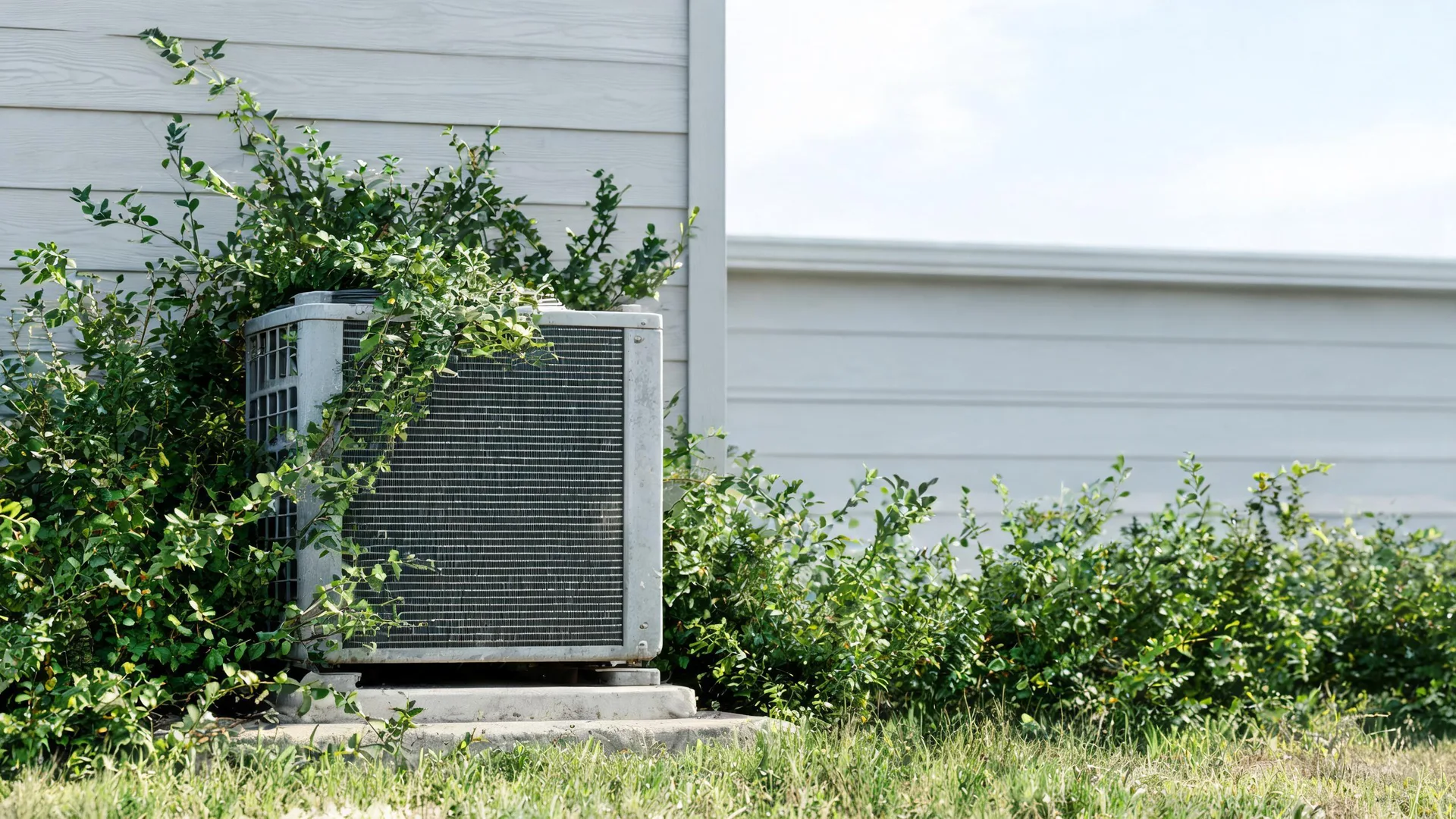
An outdoor air conditioning condenser unit on a concrete pad next to the gray vinyl siding of a residential home.

A new air conditioner would save little on running costs in Mountrail County, so the repair decision comes down to the unit's condition.

  • A new one at the federal minimum, 13.4 SEER2$70 a year
  • An older air conditioner$80 a year

Estimates for a typical Mountrail County home, compared with an older unit built to the previous federal minimum, from EIA household energy data, North Dakota fuel prices and NOAA climate normals. Your home will differ.

Repair makes sense when a part like a capacitor or contactor has failed.

Replacement makes sense when the compressor has failed or the system uses R-22 refrigerant, which is no longer made.

A repair is worth doing if the fix addresses one part and the rest of the system is sound. A capacitor, a contactor, a fan motor, these can all be swapped without touching anything else, and once replaced the unit runs like it did before. Replacement starts to make more sense when the compressor itself is failing, since that's the one part that isn't a simple swap and often costs close to a new system to address on its own. It also makes sense if a tech keeps finding new problems every time they're out, since that usually means the whole system is wearing out at once rather than one part giving out early. Age matters less than what's actually failing. A system that's old but has only ever needed small repairs is still a system worth repairing.