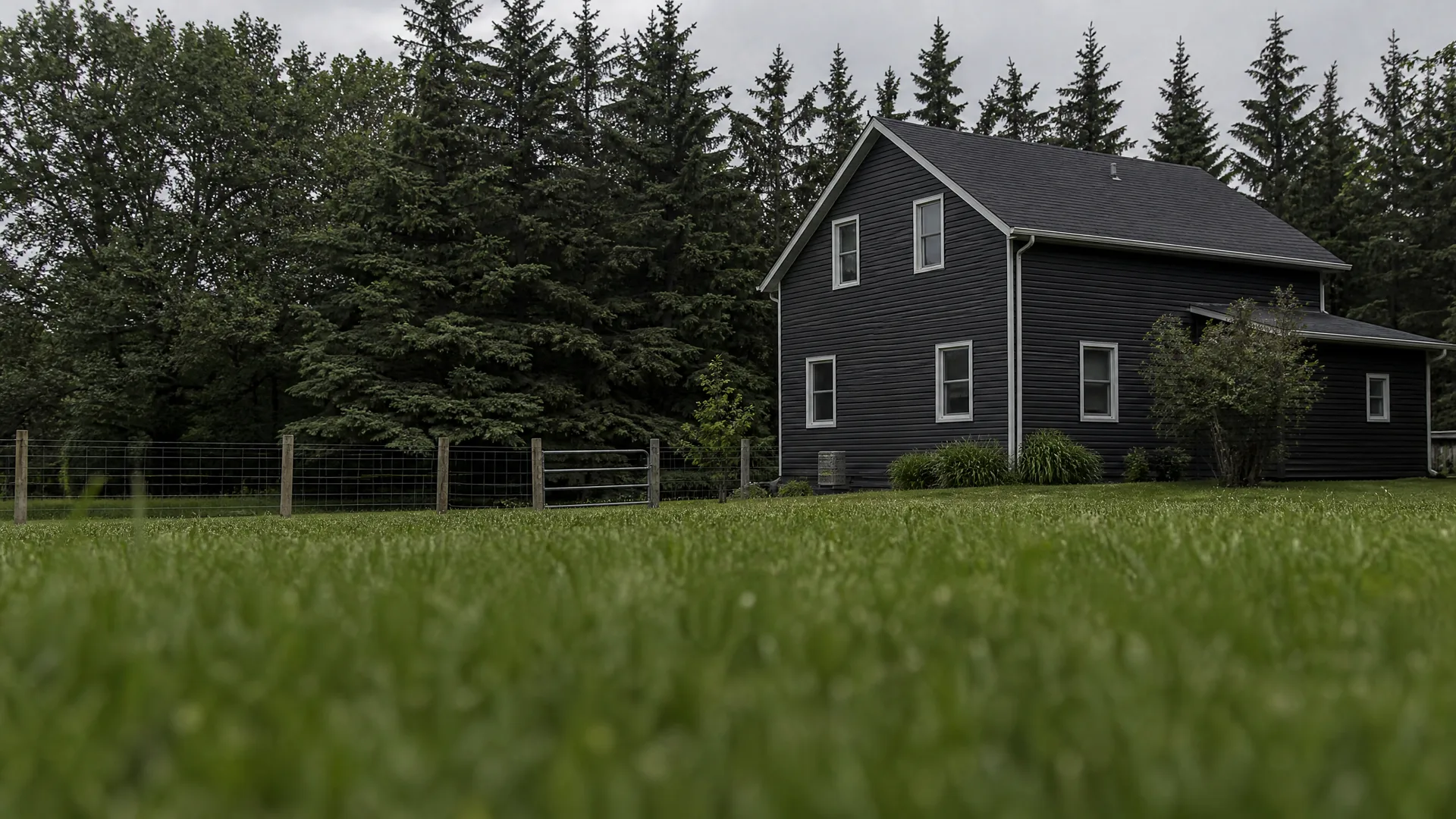






A dark-painted two-story house with white-trimmed windows stands behind a wire fence and tall evergreen trees, photographed low to the ground with blurred green grass in the foreground.

AC Repair in Powers Lake, ND

Tell us about the job

Takes about a minute. No obligation.

RepairCentral ACBurke County, ND
Step 1 of 2

What ZIP code is the job in?

Cooling here only runs from July through August. A system that sits idle since last summer gets asked for full output the moment that first hot stretch hits, and anything already weak, a low charge, a tired capacitor, tends to give out right then rather than easing in. If something is acting up in June, before the season even starts, that is worth having a tech look at now. Waiting until July usually means waiting in line behind everyone else whose system picked that same week to fail.

2 months
July through August, your air conditioner is on duty
78°F
the average summer afternoon it cools against
25 hail events
in ten years, and hail bends the fins on outdoor coils
27 wind events
in ten years, and wind drives debris into outdoor units
Isometric grayscale illustration of a cutaway house showing interior rooms, ceiling ductwork connected to an indoor air handler, and an outdoor condenser unit linked by lines along the exterior wall.
Your air conditioner works hardest from July through August.

NOAA nClimDiv, 1991–2020 normals

Afternoon highs around Powers Lake average 78°F in summer.

An AC that never has to fight real heat usually has less wrong with it when it acts up.

Half the homes in Burke County date to 1969 or earlier, old enough that the AC may be on its last stretch

Half the homes here were built by 1969
Cooling runs July through August
Summer afternoons average 78°F

A unit that only works two months a year and never fights real heat rarely breaks outright. So when one in Powers Lake starts short cycling or blowing warm, the cause is usually something a tech can find and fix, not a system worn past the point of repair. That is worth knowing before you decide whether to pay for the call. Hail and wind do pass through Burke County often enough to dent a cabinet or knock a line loose, so if the trouble started after a storm, mention that when you book the repair. It points the tech straight at the outdoor unit instead of starting from scratch.

Get the repair, and the straight answer on what's left in it

If your AC came with the house, ask the tech how much life is left in it before you pay for a big repair. Worth knowing either way, especially before a compressor or coil job.

Find a contractor
A man in a dark long-sleeved shirt and dirt-stained tan jeans walks away from the camera up porch steps toward a red front door, carrying a worn canvas and leather tool bag.
An outdoor air conditioning condenser unit mounted on a concrete pad beside a house, with electrical conduit running to a wall-mounted disconnect box.

Small problems don't stay small if the system keeps running

A capacitor that's starting to go doesn't fail all at once. It weakens, and the motor it's supposed to kick-start draws harder to get moving. Keep running the system through that and the motor heats up past where it should, which shortens its life or stops it cold. Low refrigerant does something similar from a different angle. Once a system is low, the compressor works harder to move what's left, and it starts running hotter than it was built to. A compressor that overheats enough times will seize, and that's not a repair anymore, that's a replacement. A clogged condensate line is the clearest case. Ignore it and the water backs up into the pan, then past it, into the ceiling or the wall below. None of this is an argument for shutting the system off the second something sounds off. It's a reason not to let a small problem run for weeks once you've noticed it.

What you can check yourself

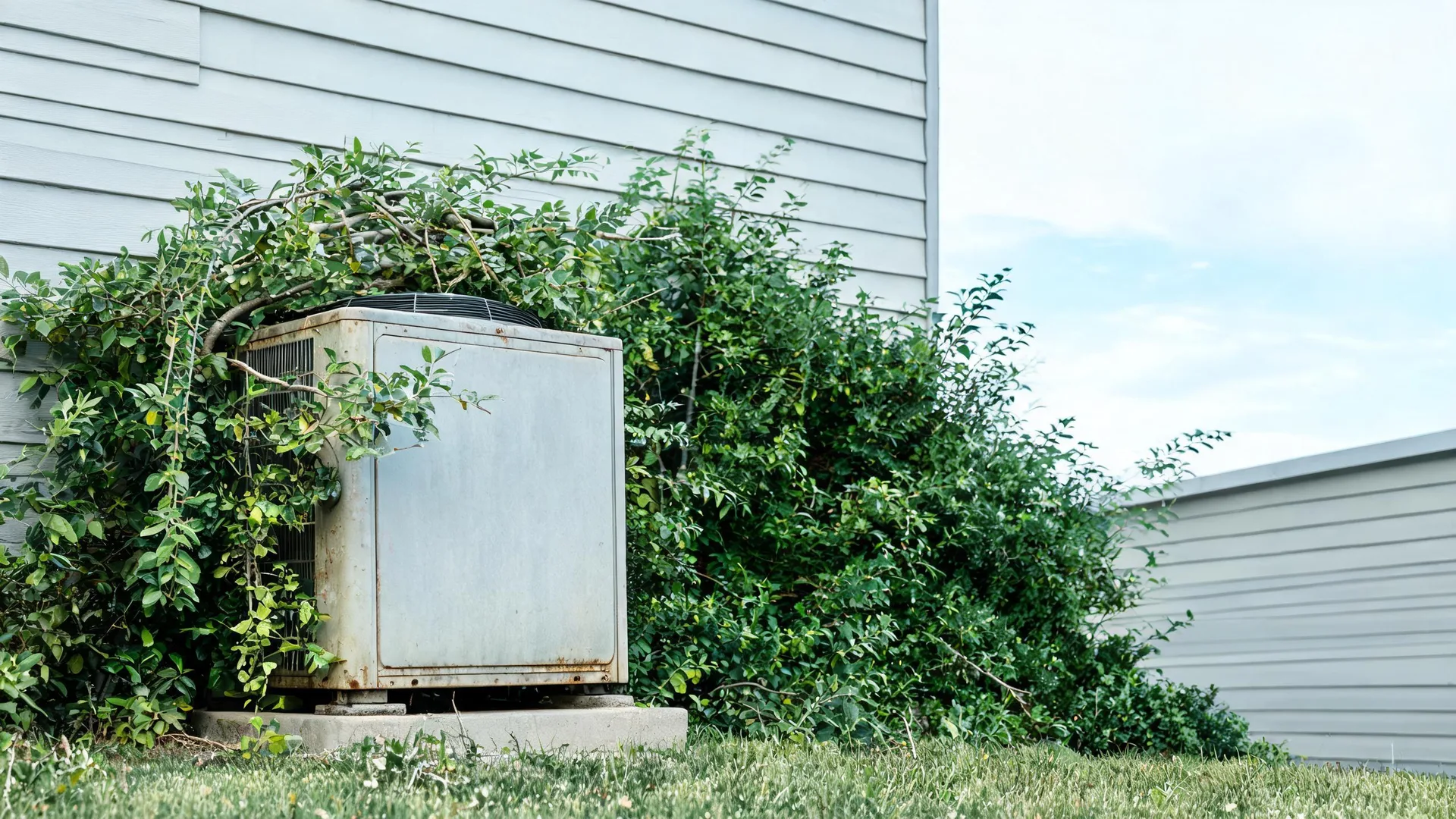
Look at the outdoor unit and make sure nothing is pressed against it, no leaves, no grass clippings, no fallen branch. Check the air filter and swap it if it is gray or clogged. Check the thermostat is set to cool and the temperature is actually below room temperature. Look at the breaker box and see if the AC breaker has tripped. These take a few minutes and rule out the simplest causes.

What to leave alone

Do not pull the access panel off the outdoor unit or touch anything inside it. Do not add refrigerant, even if you can buy it, because overcharging does as much damage as running low. Do not keep flipping a tripped breaker back on if it trips again, that usually means a short or a locked motor, and running it anyway risks burning something out. If the line set or coil has frost on it, shut the system off instead of running it through that.

An outdoor air conditioning condenser unit mounted on a concrete pad next to a blue-sided residential house at sunset.

A new air conditioner would save little on running costs in Burke County, so the repair decision comes down to the unit's condition.

  • A new one at the federal minimum, 13.4 SEER2$60 a year
  • An older air conditioner$70 a year

Estimates for a typical Burke County home, compared with an older unit built to the previous federal minimum, from EIA household energy data, North Dakota fuel prices and NOAA climate normals. Your home will differ.

Repair makes sense when a part like a capacitor or contactor has failed.

Replacement makes sense when the compressor has failed or the system uses R-22 refrigerant, which is no longer made.

Age by itself does not tell you whether to repair or replace. What matters is which part failed and what it would take to fix it. A capacitor, a contactor, a fan motor, these are routine swaps, and paying for them makes sense almost regardless of how old the system is. A compressor is a different question. It sits inside the cabinet, it is expensive to replace on its own, and on an older system a tech may tell you the cost of that one part gets close to the cost of a new unit. Refrigerant leaks fall somewhere in between, since a leak in an accessible line is a repair, but a leak inside the coil itself often is not worth chasing on a system near the end of its run. Ask the tech what failed and where it sits in the system before deciding anything.