A local installer who puts in heat pumps gets your project.
A dual fuel setup pairs your heat pump with a gas furnace and switches between them based on outdoor temperature. In North Dakota, where winters push well below freezing and most homes already have gas service, that switch matters more than it would somewhere milder.
Your heat pump can carry the load through fall and into early winter. Power here is cheap, so running it as long as it can keep up makes sense. But once temperatures drop far enough, a heat pump loses its edge, and that's when the furnace needs to take over without you having to think about it.
Whether dual fuel is worth it for your specific house depends on things a page can't tell you: what your heat pump is rated for, how your gas furnace is sized, what your ductwork can handle, and where the crossover point should sit so you're not paying for electric resistance heat on the coldest nights or running gas when the heat pump would do the job cheaper.
That's a judgment a contractor makes after looking at your equipment, not something to guess at. Getting that answer usually means calling around to a handful of contractors, explaining your setup each time, and waiting on quotes that are hard to compare because nobody's measuring the same thing.
This page connects you with a contractor who works on heat pump and dual fuel systems in North Dakota and will reach out to look at what you have. No repeat explanations, no chasing down separate quotes to figure out if the numbers even line up. You tell them once what you're working with, and they take it from there.
Is a dual fuel heat pump actually worth it in North Dakota?
You already have a heat pump and you're wondering whether adding a gas furnace behind it actually pays off here, or whether it's just another system to maintain. North Dakota winters get cold enough that a heat pump alone struggles, but gas is the fuel most homes already use, and electricity here is cheap. You want to know if the combination makes sense before you spend money on it.
For most North Dakota homes, yes
A heat pump loses its efficiency as the outdoor temperature drops, and North Dakota winters spend weeks below the point where it can keep up on its own. A dual fuel system lets the furnace take over on those coldest days while the heat pump handles the milder stretches of fall and spring, when it can move heat for less than gas costs to burn. Since most homes here already have a gas line, adding the furnace side isn't introducing a new fuel to the house, just a second way to heat it. With power priced low here too, you're running the cheaper option whenever the weather allows it, and falling back to gas only when the cold actually demands it.
Why the switchover point matters
A heat pump loses capacity as the air outside gets colder. Most are set to hand off to the furnace somewhere in the 30s, before the compressor is straining to pull heat out of air that has almost none to give. Set that point too low and the heat pump keeps running on days it should have handed off already, drawing more power to make less heat. Set it right and the furnace only carries the months it actually needs to.
What each side is built for
The heat pump moves heat instead of making it, which is why it works well in the shoulder months and into a mild cold snap. A gas furnace burns fuel to make heat directly, which is what you want when it's well below freezing for days at a stretch. Neither machine is doing the other's job during the months it isn't suited for. That's the whole case for running two systems instead of one.
Dual Fuel vs Heat Pump Alone
Dual Fuel
The furnace carries the coldest stretches of winter, so the heat pump never has to work against single-digit or below-zero air.
Gas is already run to most homes here, so the furnace side isn't asking for new fuel infrastructure.
The heat pump still handles the milder months on both ends of winter, and it covers cooling once the warm months come around.
Power here is cheap, but the furnace still takes over once temperatures drop low enough that the heat pump can't move heat efficiently.
Two systems means two things that can need service instead of one, and a thermostat or control board that's set up wrong can run the wrong one at the wrong time.
Installing the switchover logic and setting the right handoff temperature takes a contractor who's done it, not a universal setting.
Heat Pump Only
One system to install, maintain and eventually replace, with no second fuel source and no switchover logic to set.
Below a certain outdoor temperature, a heat pump loses most of its capacity, and North Dakota winters spend plenty of time colder than that.
Backup heat still has to come from somewhere, usually electric resistance coils, which draw more power than the compressor does on its own.
Electric backup heat runs on the same cheap power as the rest of the house, but it's a much less efficient way to generate heat than a furnace.
No gas furnace to maintain means one less appliance and one less thing that can fail, but also one less option when outdoor air gets extremely cold.
Skipping the furnace works better in places with mild winters, and North Dakota isn't one of them.
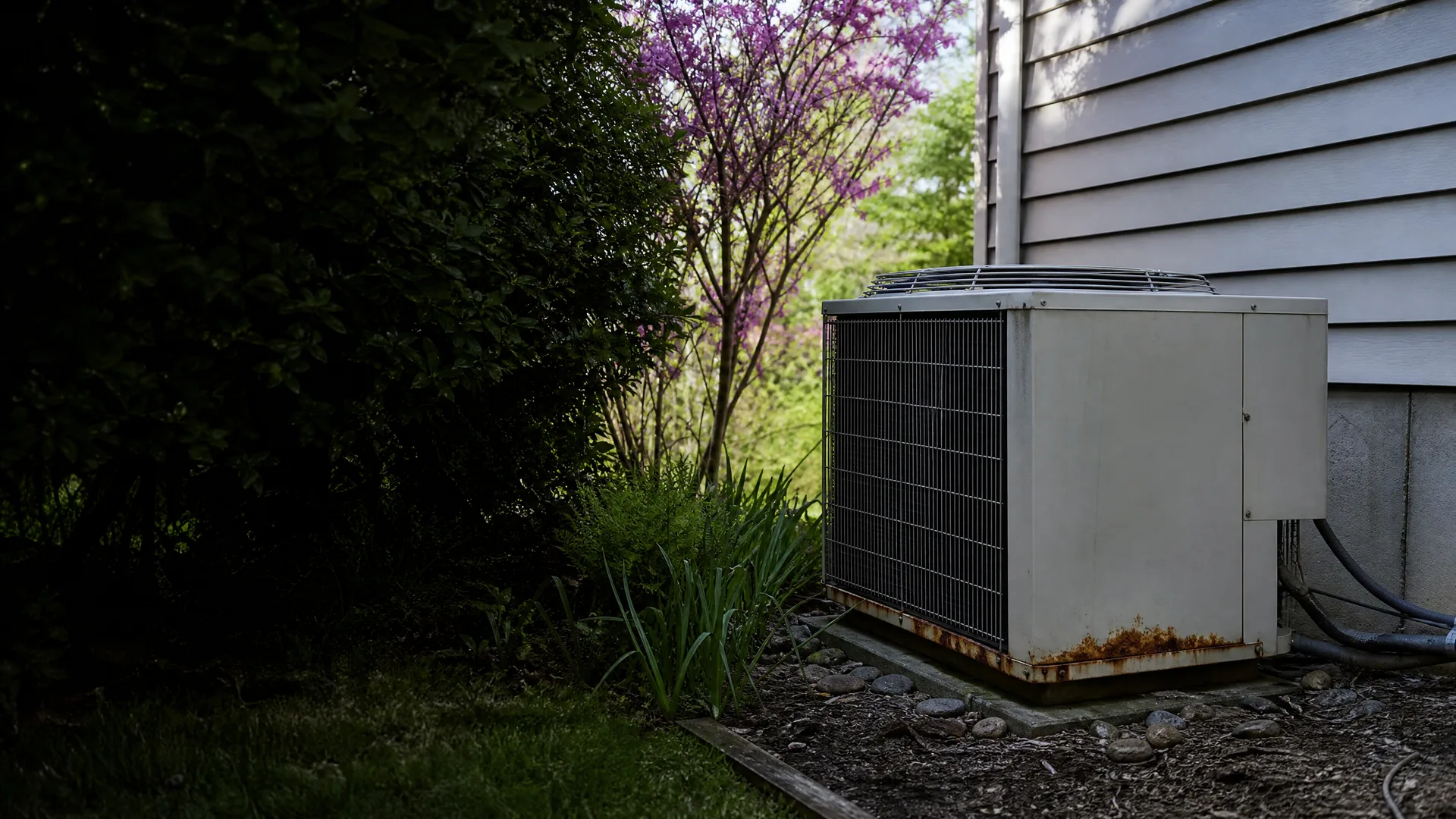
You're out checking the yard in April, the snow finally gone, and you notice the outdoor unit sitting against the fence where it's sat for years. Rust has worked its way along the base, flaking where the metal meets the concrete pad. It still ran fine this winter, cycling over to the furnace on the cold nights like it always has. But you crouch down and the rust is worse than you remembered from last spring. You wonder how many more winters it's good for, and whether it's still handing off to the gas furnace at the right temperature, or losing capacity sooner than it used to and making the furnace pick up more of the load than it should.
The coils are clean and the pad is clear, so the heat pump can pull heat from the air without fighting its own equipment.
Dirty coils and a clogged outdoor unit make the heat pump work harder right when a North Dakota cold snap needs it most.
1
Thermostat calls for heat and the heat pump switches on first
2
Outdoor air temperature drops to the changeover point set on the system
3
Controls shut the heat pump off and lock out its compressor
4
Gas furnace ignites and takes over heating the home
You've read what dual fuel does and why the switchover point matters. What's left is deciding whether it's worth putting into your own setup, with your own furnace and your own heat pump sitting in the yard right now. That's not something you figure out by reading another page. It depends on the age of what you already have, how your ductwork is laid out, and what a contractor who can actually look at your system says about pairing it correctly. Getting that answer yourself means calling around to find someone who installs dual fuel systems, explaining your setup to each one, and sorting through quotes that may not be comparing the same work. Handing that off means one contractor who installs these systems looks at what you have and tells you straight whether it's worth doing here, on your property, with your gas line and your heat pump. That's the piece you can't get from an article.
Summer here doesn't lean on your heat pump the way it would somewhere sticky. Weather records put the dew point at 53°F across June, July and August in North Dakota, which is dry enough that your system cools the air without fighting moisture at the same time. A heat pump has to work harder pulling humidity out of heavy air, and that's not the job it has here. You'll notice it in how the house feels: cool without that damp, clammy edge, and the compressor cycling less than it would in a muggier state to hit the same temperature on the thermostat.
NASA POWER T2MDEW county cells weighted by homes
Is your heat pump running alone through the cold snaps?
Go out and listen when it's below zero. If the outdoor unit is still cycling on its own, working through air that cold, you're asking the compressor to do a job it wasn't built for at that temperature. You'll notice the air coming out of the vents feels cooler than it should, and the system runs longer to make up for it. Left alone through enough of those stretches, that strain shortens how long the compressor lasts. If you've got a furnace sitting unused behind it, or no second system at all, those single-digit nights are the ones that cost you, either in comfort now or in a compressor replacement sooner than it should happen.
Clear coils, working as designed
The lines run clean from the unit up the wall, coils clear, nothing blocking the fan. Air moves through the way it's supposed to, so the heat pump pulls what warmth it can find before handing off to the furnace at the changeover point.
Caked coils, losing ground early
When the coil guard and fan grille are packed with dirt like this, the unit can't move air the way it needs to. It struggles sooner than it should, switching over to the furnace earlier in the cold or running harder to keep up before it does.
Before you get your heat pump installationAfter you get your heat pump installation
Heat pump alone
Keeps running past its changeover point and leans on backup electric strips to make heat, which costs more to run through a North Dakota January than gas does.
Hands off to the furnace at the changeover point, so the coldest nights get burned on cheap gas instead of asking the compressor to work air with almost nothing left to give.
Power costs 11.82 cents per kilowatt-hour statewide
At 11.82 cents per kilowatt-hour, running your heat pump's backup electric strips through a cold snap costs real money. Keeping the gas furnace as backup instead, switching over before the compressor strains, is what keeps a January bill from climbing on you.
EIA-861 2025 statewide residential average
A dual fuel setup makes sense here because of how North Dakota winters actually work. Your heat pump can carry the mild days, the furnace takes over once it drops into single digits, and you stop paying for backup electric strips to do a job gas already does cheaper. That's the whole answer. What it takes to get there is someone who can look at your actual furnace and heat pump, set the changeover point correctly, and wire the controls so the handoff happens on its own. Finding that person yourself means calling around, explaining your setup to each one, and sitting with quotes trying to figure out who actually knows dual fuel systems versus who's guessing. Get matched instead, and a contractor who works on these setups in North Dakota reaches out to you directly. No more calls, no repeating the same details to the next name on the list. You already know whether dual fuel is worth it for your house. What's left is getting it set up right, and that part doesn't have to be yours to sort out alone.